14.7 million South Africans have an ID that will not be recognised in two years



14.7 million South Africans still rely on the green ID book, which will officially cease to be recognised as a valid form of identification on 31 March 2028.
This is part of the Department of Home Affairs’ efforts to reduce fraud and criminality associated with these documents.
The green ID book is significantly easier to manipulate than the new smart ID cards issued by Home Affairs since 2013.
“Independent research has found that the green ID book is one of the most fraudulent documents on the entire African continent,” Home Affairs Minister Dr Leon Schreiber said.
“This is because it is paper-based and contains a manual photograph that can be easily manipulated by people.”
Schreiber has estimated that fraud associated with the green ID book costs South Africa over R1 billion annually.
This is typically done through traditional identity theft, where an individual’s identity is stolen and used to open bank loans, credit cards, and other forms of debt.
This debt is then tied to the original individual whose ID has been stolen, not to the criminal, effectively giving them free money.
“This document sits at the core of the scourge of identity theft in our country. What many people may not realise is that it is also a pull factor for illegal immigrants,” Schreiber said.
“They come here seeking fraudulent papers. The continued use of the green ID book is irreconcilable with the functioning of a modern society.”
This is why the department is moving to end the use of the green ID book and ensure that all citizens have a smart ID card.
“I am announcing today that the Department of Home Affairs will cease production of the green ID book by 31 March 2027,” Schreiber said.
“Following the end of green ID book production, the 14.7 million South Africans who still only have one will have a further 12 months to make the switch to the smart ID.”
This means that from 31 March 2028, the green ID book will cease to be recognised as a valid form of identification in South Africa.
Banks filling the gap
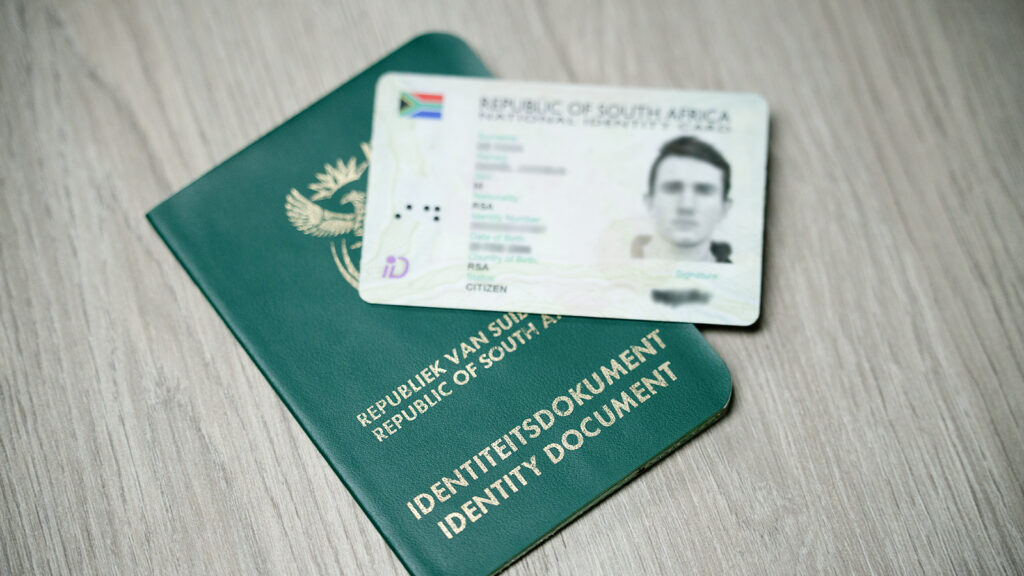
The transition from green ID books to smart IDs has been made possible through Home Affairs’ partnerships with commercial banks in South Africa.
This has significantly increased access to smart ID renewals and taken pressure off Home Affairs branches, allowing them to focus on more complex requests from citizens.
Primarily, this has made it easier for South Africans to replace their green ID books, ensuring that the department can stop recognising them as a form of identification.
“In the last six months, Home Affairs has more than tripled access to smart ID replacement services,” Schreiber said.
“No fewer than 515 bank branches now offer biometrically-based digital services where South Africans can walk in without an appointment.”
This service has proven to be very popular with South Africans. Over 822,000 people have already engaged with it since March 2026.
Schreiber said the plan is for 1,000 bank branches and service points to provide this service by the end of 2026. This compares to 214 locations before he took office.
This has been enabled by the department’s investment in technology, particularly its Online Verification Service (OVS).
Historically, this service has been underfunded and abused, leaving it unable to handle increased demand from more service points in South Africa.
The shortcomings of this system made it difficult to verify South Africans’ identities and scale up the rollout of smart IDs.
Following significant investment, the OVS is highly efficient, enabling banks to process smart ID applications in five minutes.
More importantly, using this system significantly reduces the scope for manipulation and fraud, making the overall process harder for criminals to crack.
“It is all ultimately about manipulation, about the ability to change an outcome. That is only possible with a manual system,” Schreiber said.
“It is only possible when you have someone with the discretion to accept a bribe and change an outcome.”
“Seeing these beautiful machines, you will see in practice what it means when you remove those kinds of avenues for manipulation.”
 Loading ...




Comments