Important government department failed to pay its suppliers R3.6 billion


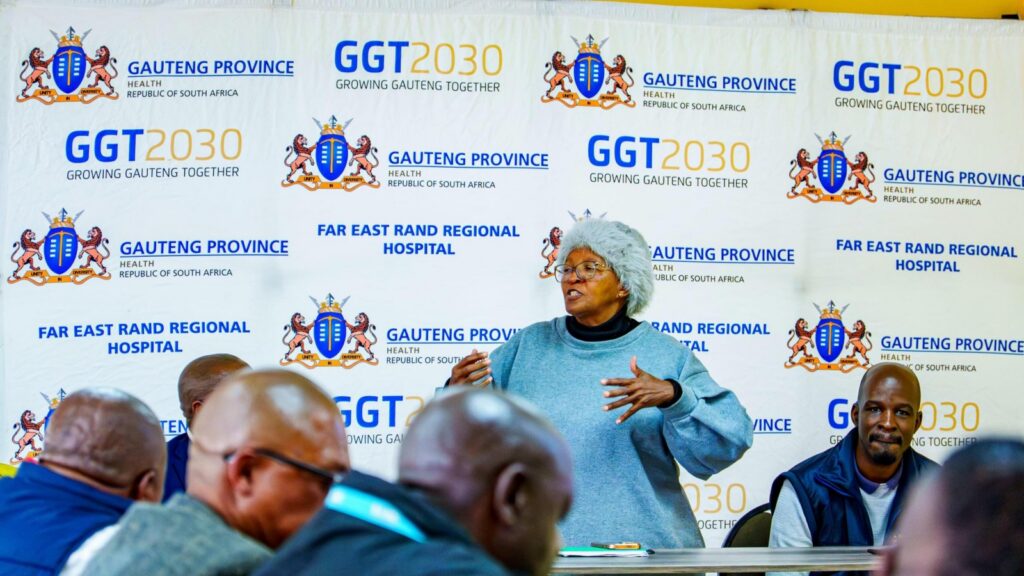
The Gauteng Department of Health has fallen behind on its promises to pay its suppliers, with the amount owed now totalling R3.6 billion.
This is despite assurances from Gauteng Premier Panyaza Lesufi and Finance MEC Nkululeko Dunga in July.
At the Unpaid Service Provider Imbizo that month, Lesufi and Dunga said the department would pay its suppliers.
The Imbizo was held to address provincial backlogs of unpaid invoices for goods and services provided to the Gauteng Provincial Government (GPG).
This backlog amounted to R7.5 billion, with the Gauteng Department of Health accounting for nearly half of the total owed.
Member of the Gauteng Provincial Legislature, Madeleine Hicklin, has now called on Lesufi, Dunga, and the Gauteng MEC for Health, Faith Mazibuko, to urge the department to pay.
“Despite promising weekly updates on outstanding payment matters, the Gauteng Department of Health still has not paid at least two service providers,” Hicklin said.
“Both say they have waited more than a year for payment from the department’s infrastructure division. The suppliers asked to remain anonymous for fear of victimisation.”
The Public Service Commission (PSC) recently found that 48% of provincial invoices were paid within the prescribed 30-day period in the first quarter of 2026/27.
This is down from 53% in the final quarter of 2025/26, which Hicklin said indicates weak financial management and invoice-processing controls across the GPG.
The Gauteng Department of Health performed even worse, paying 48% of invoices within 30 days in the fourth quarter of 2025/26, falling to 43% in the first quarter of 2026/27.
By the end of the 2025/26 financial year, the department owed R3.97 billion for more than 30 days, with R2.52 billion remaining by the end of the first quarter of 2026/27.
“It is deeply concerning that this department continues to delay payments to service providers, which puts patients at risk,” Hicklin said.
“When suppliers go unpaid, they may withhold essential medicines, medical equipment, and other critical supplies, leaving patients to suffer the consequences of government’s failure to pay its bills within the stipulated timeframe.”
Volume 35 of the PSC’s Pulse of Public Service bulletin, published on 2 July, revealed that South Africa’s provincial governments had R15.5 billion in unpaid invoices.
The report covered the quarter from 1 April to 30 June 2026, with South Africa’s provincial governments accumulating 90,856 unpaid invoices older than 30 days.
Of this, provincial departments accounted for 98% of both the number of unpaid invoices and the amount owed.





Comments