Secret meeting between Johann Rupert and Cyril Ramaphosa that saved Vodacom and MTN


Johann Rupert and Cyril Ramaphosa cut a deal in the early 1990s to give trade unions 5% shareholdings in Vodacom and MTN.
This enabled the fledgling telecommunications companies to retain their operating licences and remain private.
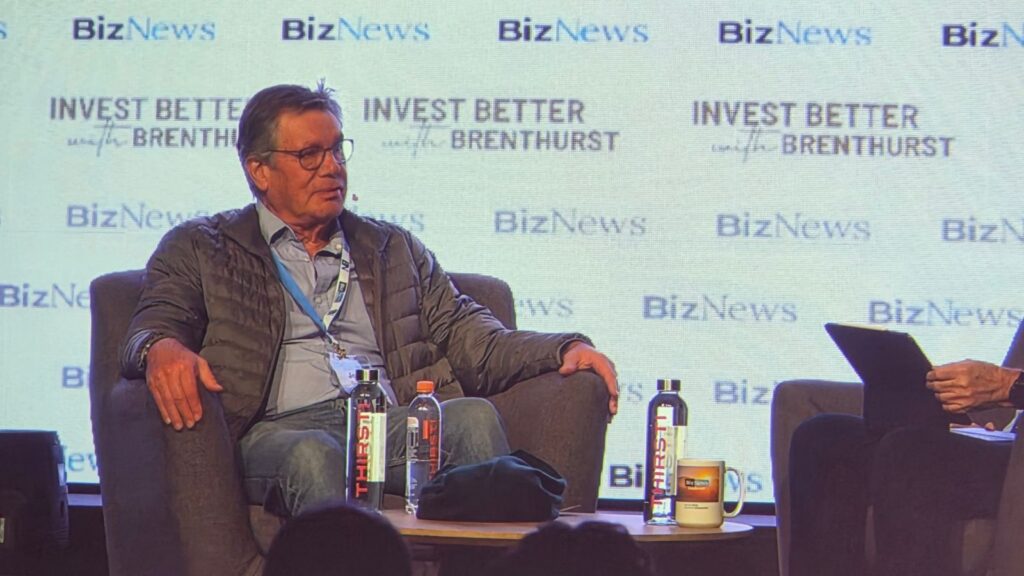
Outgoing Hoskens Consolidated Investments (HCI) CEO Johnny Copelyn recalled the meeting between Rupert and Ramaphosa at the 9th BizNews Conference.
Copelyn, a staunch trade unionist, has turned HCI into a R14 billion investment giant by leveraging its Black Economic Empowerment (BEE) credentials and his business savvy.
In 1997, the Southern African Clothing and Textile Workers Union (SACTWU) bought a controlling stake in HCI to use as an investment vehicle.
The union’s investment freedom until then was constrained by pension fund regulations. HCI would effectively be a private equity firm that generated wealth for its members.
Copelyn was appointed CEO of the company because he was leading SACTWU’s investment arm.
He explained that he was chosen to head up the union’s investments because of his staunch belief in so-called “business unionism”.
“There is a great disdain for what is called business unionism as these organisations are ideologically committed to socialism or communism,” Copelyn said.
“We had to realise that we were operating in a capitalist system and had to work within it. We couldn’t become state-controlled unions as they had in the Soviet Union.”
Copelyn said he was deeply moved by a visit to Prague after the Berlin Wall fell, where his socialist ideals were challenged by the reality of people who had lived under socialism.
“I listened to workers begging for their former factory owner, whose business had been confiscated by the socialist state, to come back to ensure they would be free of the state,” Copelyn said.
“Witnessing workers whose 40-year experience under state control wasn’t great was an eye opener and is probably the reason why I am business union oriented today.”
Copelyn said business has a cold logic that also appeals to him, as it can be immensely rewarding if you play the game well.
“Business is about making money, and it has a certain logic to it. It is not about charity. If you can’t play the game properly, then you can’t make any money out of it,” he said.
Rupert and Ramaphosa seal the deal
One of Copelyn’s earliest business deals was one of South Africa’s most important and happened before he was appointed HCI CEO.
As leader of SACTWU’s investment arm, Copelyn was at the centre of the debate around unions taking an active role in businesses at the expense of their socialist ideals.
Copelyn explained that many in the union movement believed they should never be involved in capitalist businesses as they were the enemy of a socialist utopia.
On the other hand, Copelyn and many others recognised that South Africa was a free-market economy and that unions had to participate in wealth creation for the benefit of their members.
This debate came to a head around the issue of Vodacom and MTN having licences to privately operate telecommunications networks in South Africa.
“In the 1990s, the apartheid government issued two licences, one to Vodacom and one to MTN. These licences became the subject of a big debate in the trade union movement,” Copelyn said.
“It was seen to be selling the family silver just before the liberation movement went into government. Unions felt the government was being cut off from controlling communication.”
The trade union movement wanted the ANC to declare that it would not honour these licences when it came to power.
This would have rendered Vodacom and MTN stillborn and kept control of telecommunications firmly in the state’s hands through Telkom.
To resolve this standoff, a meeting was organised between Rupert, Ramaphosa, and the leaders of the major trade unions. Copelyn was included in this meeting as a representative of SACTWU.
“There was a meeting with Rupert representing Vodacom and Koos Bekker from MTN, and a deal was struck,” Copelyn said.
“They kicked the trade unionists out on the cold, took Ramaphosa to one side, and they cut a deal with him.”
“They said, ‘Look, you give the trade unions 5% of the companies, and then all this talk about the licences has got to stop’.”
Copelyn said there was an intense debate within the trade unions about the deal. The fundamental question was, in his mind, “Do we want to be part of the system or are we against the system?”
“I would say a minority element objected to the deal, but my union in particular just felt this was absolutely ideal. This is what we want. We can get 5% of Vodacom,” Copelyn said.
“This really got us started as an investment firm, and that momentum continued with HCI until today. I would say we had a really great start with this deal.”






Comments