The best-performing clothing retail CEOs in South Africa


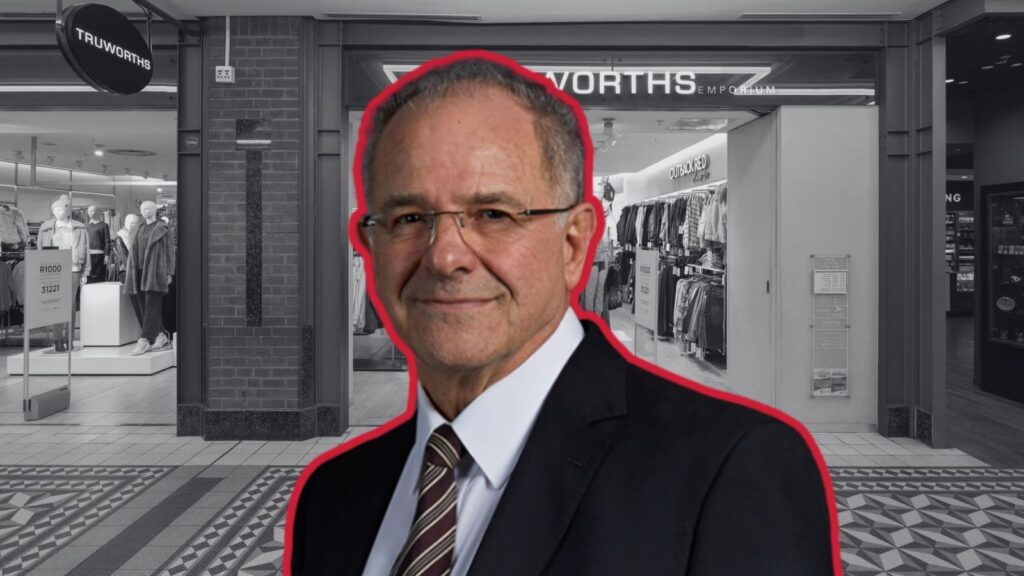
A Daily Investor analysis showed that Truworths CEO Michael Mark has seen the best share price performance during his tenure than any other apparel retail chief executive in South Africa.
Mark, who has led the apparel retailer since 1991, has seen Truworths’ share price grow by 680.9% during his tenure as CEO.
This was revealed in a Daily Investor analysis comparing the share price performance of South Africa’s four major apparel retailers: Truworths, Pepkor, Mr Price, and The Foschini Group (TFG).
Daily Investor analysed the share price performances of these four retailers under their current CEOs, and found that Mark has overseen the strongest share price growth.
The second-best performance was Pepkor, under CEO Pieter Erasmus. Pepkor is the largest retailer in South Africa by footprint, boasting 6,500 stores in its network.
Erasmus only joined the retailer in 2022, making him the shortest-serving CEO included in Daily Investor’s analysis. Pepkor’s share price has risen by 1.16% under his tenure.
The third-place spot was taken by Mr Price’s Mark Blair, who has led the retailer since 2019 and overseen a 29.82% decline in the retailer’s share price.
Last place was TFG’s Anthony Thunström. Since he took the helm in 2018, TFG’s share price has declined by 65.67%.
It should be noted that Mark had the advantage of time on his side, being far and away the longest-serving CEO included in the analysis.
In fact, the start of Mark’s tenure as CEO predates Truworths’ listing on the JSE by seven years, with Mark having taken the helm in 1991 and the retailer having been listed in 1998.
To make the comparison fairer, Daily Investor also looked at the retailers’ share price performance over the same period.
The start of Erasmus’ tenure in October 2022 was chosen because he is the shortest-serving CEO on the list.
This made no difference to the rankings: Mark was still in first place, followed by Erasmus, then Blair, while Thunström came last.
However, over a shorter period, only one retailer’s share price – TFG’s – was in the red, with the rest having improved since 2022.
The results of both analyses are shown in the tables below.
| CEO Name | Company | Tenure Start Date | Tenure End Date | Total Return |
| Michael Mark* | Truworths | 07.01.2000 | 18.08.2026 | 680.90% |
| Pieter Erasmus | Pepkor | 01.10.2022 | 18.08.2026 | 1.16% |
| Mark Blair | Mr Price | 01.01.2019 | 18.08.2026 | -29.82% |
| Anthony Thunström | TFG | 03.09.2018 | 18.08.2026 | -65.67% |
| CEO Name | Company | Start Date | End Date | Total Return |
| Michael Mark | Truworths | 01.10.2022 | 18.08.2026 | 4.11% |
| Pieter Erasmus | Pepkor | 01.10.2022 | 18.08.2026 | 1.16% |
| Mark Blair | Mr Price | 01.10.2022 | 18.08.2026 | -5.31% |
| Anthony Thunström | TFG | 01.10.2022 | 18.08.2026 | -54.74% |
South Africa’s apparel retail market
The share price and financial performance of an apparel retailer, as with any company, do not only come down to its CEO.
However, for many investors, a company’s management team may be the deciding factor when choosing which retailer to invest in.
Particularly in South Africa, market conditions play a significant role in retailers’ performance, with apparel retailers highly dependent on strong consumer spending.
Retailers’ performance is closely tied to the local economy, as their sales are determined by local consumer sentiment and spending.
However, unlike grocery retailers, apparel retailers require consumers with high disposable income, as demand for clothing is far less elastic than demand for food.
In other words, when consumers are under financial pressure, they will continue to buy food, but may cut back on clothing.
Over the past few years, South African apparel retailers have felt the pinch of strained consumer spending.
In its latest results for the 2026 financial year, TFG described the South African macroeconomic environment as “challenging”.
The retailer cited subdued economic growth and intense pressure on consumer disposable income, saying these factors continue to constrain overall retail demand.
It said consumer spending is heavily constrained by ongoing cost-of-living pressures and elevated indebtedness, which are particularly severe among middle- to lower-income customer segments.
Aside from domestic economic conditions, South African apparel retailers have also come under pressure from increased competition from foreign e-commerce retailers, including Shein and Temu.
These Chinese e-commerce giants offer clothing and other products at price points that are extremely difficult for local retailers to match, making it nearly impossible for local retailers to compete on price.
The South African Revenue Service has stepped in to address part of the issue by removing tax exemptions on small-value imports under R500.
Before this change, low-cost retailers could exploit the exemption by splitting large orders into multiple smaller parcels to remain under the R500 threshold.
While this has levelled the playing field somewhat, local retailers are still unable to compete on price with the likes of Shein and Temu.
Faced with increased foreign competition and constrained local consumer demand, South African apparel retailers have had to diversify their revenue streams and expand into other markets.
For some, this has been done to great success. Pepkor, for example, has significantly expanded its financial services offering and is now building its own stand-alone bank.
This shows that while factors outside their control can hurt apparel retailers’ performance, the fortitude and foresight of a management team are crucial to weathering these storms.
This is why many investors interested in the local apparel retail industry will often look to the strength of a particular company’s management team when choosing where to invest.
In a social media post, Mark described the primary responsibility of a management team as ensuring that the business is “still here, still relevant, and still compounding value”.
“No business stands still and survives 109 years. The ones that appeared to be standing still were compounding: quietly, deliberately, and without needing to announce it,” he said. “The race length determines the result.”




Comments