Government wants the private-sector to save critical state-run industry


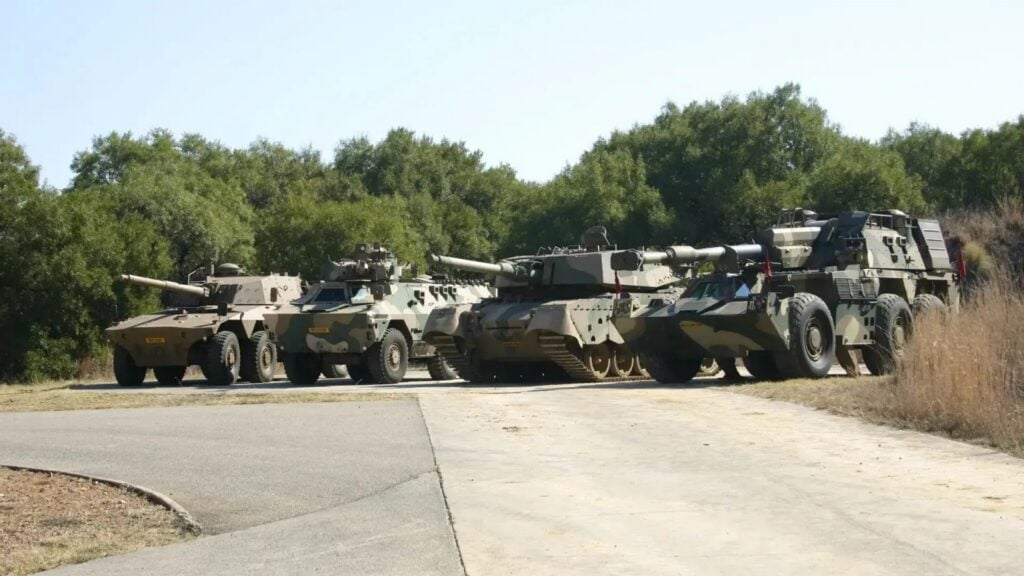
The state-owned Armaments Corporation of South Africa (Armscor) is looking to give South Africa’s defence industry a shot in the arm through private sector assistance.
Armscor is the defence procurement agency of the South African Department of Defence, providing assets and assistance to the South African National Defence Force (SANDF).
The company put out a request for proposal on 21 July 2026, seeking to appoint a consultant for the development of profitable revenue-generating business cases.
This includes engaging external consultants to review its intellectual property portfolio and assess the value of its various defence assets for potential licensing.
“Armscor seeks to systematically expand its value proposition by pursuing sustainable, non-core revenue streams that leverage its unique assets,” the tender said.
“This will enable Armscor to attract and secure new customers, generate sustainable income streams and enhance long-term financial resilience.”
The latest value estimate came in 2016, when a study carried out by Armscor itself found that its entire IP portfolio could be worth more than R400 billion if industrialised.
DefenceWeb projected that this would have created at least 10,000 direct jobs at the time and supported more than 40,000 indirect jobs.
Since then, however, years of military defunding and a shift in national priorities have left much of Armscor’s technology outdated.
Experts argue that this has likely significantly reduced the total value of the company’s IP portfolio, which is why Armscor has now called for an external review.
Under South African law, Armscor is legally required to conduct an intangible asset audit of all Department of Defence intellectual property every financial year.
“All reports, data, financial models and intellectual outputs produced under this assignment will be the property of Armscor,” the tender said.
“The consultant must provide all underlying editable models and supporting assumptions to enable Armscor to review, update and reuse the outputs after completion of the assignment.”
Armscor’s tender closed on 12 August, suggesting that a private-sector consultant had been appointed by the company.
The history of Armscor

Armscor was formally established on 11 August 1976 from the amalgamation of the Armaments Board and the Armaments Development Corporation.
The merger was intended to unite the procurement, development, and industrialisation of South Africa’s defence systems under a single state-owned entity.
Just a year after Armscor’s formation, the United Nations placed an arms embargo on South Africa in response to the Apartheid government’s use of the military to crack down on protests.
As a result, Armscor quickly shifted its focus from importing arms to developing and manufacturing South Africa’s defence systems locally.
The company soon began to develop tanks, missiles, small arms, and naval technologies which were unique to South Africa, such as the Olifant battle tank or the Atlas Oryx helicopter.
Throughout the 1980s, Armscor began exporting South African defence products to foreign markets to offset production costs and scale up manufacturing.
The company soon earned an international reputation for developing reliable, combat-tested equipment which was highly adaptable for the African continent’s extreme weather conditions.
This, in turn, strengthened Armscor’s role as both an acquisition agency and a trade facilitator for South Africa’s defence industry.
In April 1992, Armscor’s arms manufacturing division was spun off into a separate state-owned enterprise, which became Denel.
Armscor retained its primary functions of arms procurement for the SANDF, defence research and development, and foreign trade facilitation.
With the end of apartheid in 1994 and South Africa’s joining of the Missile Technology Control Regime, the country shifted more towards the role of a regional peacekeeper.
With this, Armscor opted to align its procurement and research mandates to better support the South African government’s peacekeeping efforts.
Since then, however, this shift away from maintaining South Africa’s defensive capabilities has led to significant defunding of the country’s arms industry.
As a result, both Armscor and Denel have endured financial struggles over the last few decades, as the state no longer has the capital to fund the recovery of its defences.




Comments