The most expensive suburb in South Africa where two out of every three properties are sold to foreigners


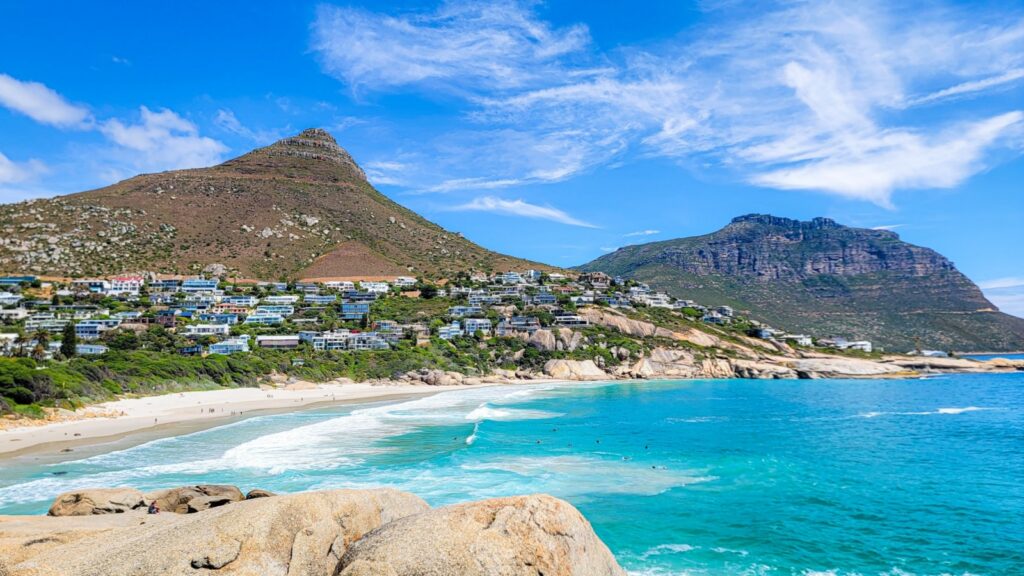
New data shows that two out of every three homes in Llandudno, which is home to South Africa’s most expensive properties, are sold to international buyers.
This is according to Lightstone, which revealed that foreign buyers account for a disproportionate share of South Africa’s high-end property sales.
Overall, foreign buyers accounted for only 6% of the approximately 2.39 million residential transactions recorded in South Africa over the last ten years.
However, Lightstone’s Managing Executive of Real Estate Services, Hayley Ivins-Downes, pointed out that they accounted for 15% of transactions on properties valued between R4 million and R10 million.
In the R10 million to R20 million category, foreign buyers accounted for 26%. For sales above R20 million, they accounted for 39% of transactions.
“That means two out of every five homes valued at more than R20 million were bought by a foreign buyer,” Ivins-Downes said.
The proportion of foreign buyers was highest in the Western Cape at 7.8%. This was slightly ahead of Gauteng at 7.3%.
This pattern was repeated for properties valued at more than R1 million, with the Western Cape’s 11% edging Gauteng’s 10.1%, and Limpopo joined the top three with foreign transactions at 9.1%.
The average foreign transaction price significantly exceeded Johannesburg’s, which explained why Cape Town leads on total foreign spend despite fewer transactions.
The estimated value of properties acquired by foreign buyers in Cape Town over the period was R153 billion, compared with R107 billion in Johannesburg.
When looking at which specific suburbs foreign buyers were favouring, Lightstone found the small coastal suburb of Llandudno in Cape Town to be a standout.
They revealed that, over the past decade, two out of every three properties sold in this area have gone to foreign buyers.
Notably, a previous analysis by Lightstone revealed that, between January and October 2025, this suburb was selling the most expensive properties on average in South Africa.
At an average price paid of R23.7 million, Llandudno outshone other luxury markets like Clifton, Dunkeld, and Bishopscourt.
During this period, only 10 properties were sold in the suburb, with the most expensive property going for R42.5 million.
With fewer than 200 properties, the suburb has a small market, with 67 of the 102 properties transacted since 2015 bought by foreign buyers at an average price of R29.2 million.
Foreign buyers are estimated to have acquired around R1.96 billion worth of property in Llandudno over the course of this period.
Other Western Cape hotspots

Overall, Lightstone revealed that the Atlantic Seaboard had one of the country’s highest concentrations of foreign buyers.
Bakoven and Camps Bay followed similar patterns to Llandudno, with just under 50% foreign-buyer participation and average values of around R16 million to R17 million.
Lightstone said these three suburbs accounted for roughly R8.6 billion in foreign-buyer property value. The higher current values associated with properties bought by foreign buyers could influence values in some areas.
In Bantry Bay, the current value of properties bought by foreign buyers was 31% higher than those bought by South African buyers, at R15.1 million versus R11.5 million.
In Tamboerskloof, the difference was 39%, while in De Waterkant it was 29%. Sea Point recorded the most foreign-buyer transactions (1,118) in Cape Town.
At an average foreign-buyer property value of R5.4 million, it appears accessible to a broader range of international buyers than the Atlantic Seaboard’s higher-value suburbs.
Foreign-buyer activity also extends inland. Constantia recorded 43% foreign-buyer participation at an average value of R19.5 million.
Other popular suburbs, such as Constantia Heights, recorded 34% at R24.4 million, while Bishopscourt recorded 22% at R22.7 million.
The Cape Town CBD recorded 39% foreign-buyer participation across 1,259 transactions, reflecting sectional-title investment stock that attracted lifestyle buyers and buy-to-let investors from abroad.
Two southern Peninsula suburbs added another dimension. Scarborough recorded 41% foreign-buyer participation across 138 transactions, while Kommetjie recorded 32% across 253 transactions.
Both are remote coastal villages that attracted foreign interest at values well below the Atlantic Seaboard’s higher levels.
Western Cape lifestyle villages such as McGregor, Riebeek Kasteel, Riebeek West, Paternoster and Stanford have also attracted foreign buyers.
McGregor and Riebeek Kasteel each recorded more than 100 foreign transactions, with foreign-buyer property values notably higher than those of South African buyers in the same towns.
Lightstone also found that Drakenstein, which includes Paarl and the Franschhoek valley, was popular with foreign buyers.
Pearl Valley Estate and Val de Vie recorded foreign-buyer participation of 35% and 18% respectively, with average property values of R11.8 million and R11.4 million.
Where foreigners are buying property in the rest of South Africa

In Johannesburg, inner-city and near-inner-city neighbourhoods such as Mayfair, Mayfair West, Cyrildene and Yeoville recorded strong foreign-buyer activity.
According to Lightstone, buying patterns in Johannesburg reflect those of established immigrant and diaspora communities.
Unlike the lifestyle markets in parts of the Cape, there was no meaningful price premium, with foreign buyers participating in broadly the same market as South African buyers.
In Tshwane, Laudium recorded 297 foreign transactions, accounting for 29% of the transactions analysed. The suburb appears to attract foreign-linked buyers into an established diaspora community.
In KwaZulu-Natal, Lightstone also found strong foreign buyer activity, particularly along the North Coast, which offers many of the same lifestyle benefits as Cape Town at a much lower price.
KwaDukuza, which includes Ballito, Salt Rock, Zimbali and surrounding beachfront estates north of Durban, recorded 1,239 foreign transactions over the period.
This places it alongside Knysna and Overstrand as one of the largest foreign-buyer markets outside Cape Town, although it attracts less commentary.
Foreign-buyer activity was visible in areas including Simbithi, Zimbali, Sheffield Beach, Compensation Beach, Dunkirk Estate and Brettenwood.
The KZN North Coast profile broadly resembles Cape Town’s premium coastal market, with foreign buyers drawn to secure gated estates and coastal access.
Zimbali recorded an average foreign-buyer property value of R8.1 million, comparable with some high-end Cape Town suburbs.
Another popular area among foreign buyers was Limpopo, with buyers being especially active around Hoedspruit, the Blyde River Canyon and the Lowveld corridor.
Lightstone explained that, in these areas, access to bushveld and game reserves has supported demand in the Maruleng area.
At the opposite end of the price spectrum, Musina recorded 67 foreign transactions in Messina township at an average value of R1.84 million.
Foreign buyers paid approximately 29% more than South African buyers, suggesting demand for formal South African property title and a physical base close to the Zimbabwe border.


Comments