One-of-a-kind South African restaurant with 3D animations that costs R1,500 per person


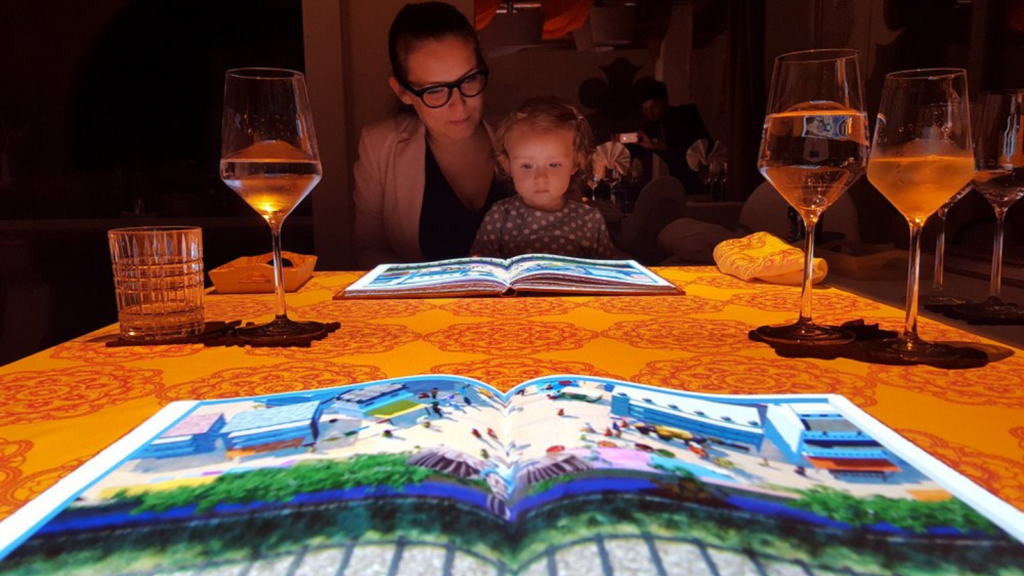
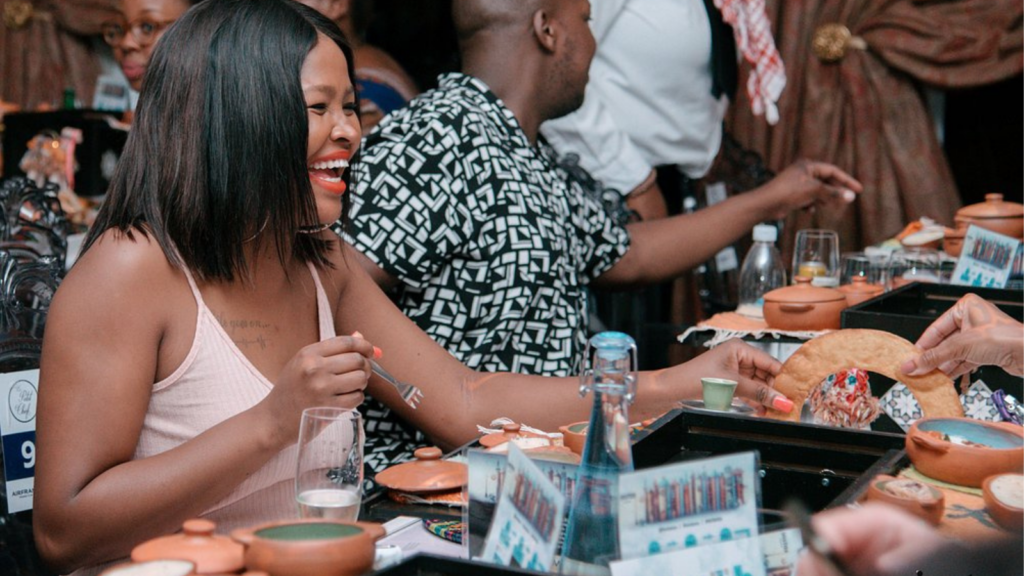
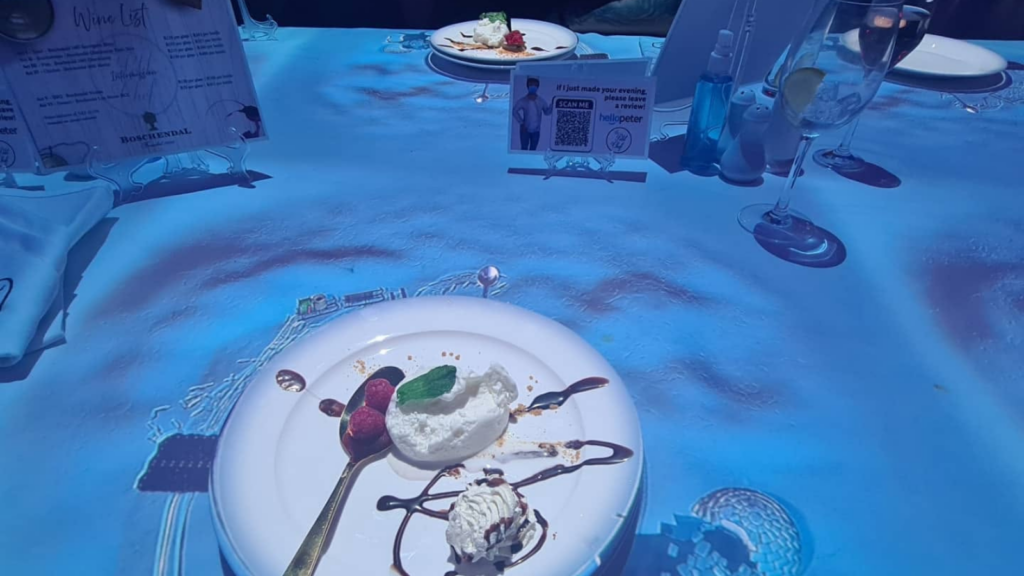
DinnerTimeStoriesSA and Le Petit Chef combine 3D projection mapping, storytelling and a six-course meal to create a unique immersive dining experience, which costs around R1,500-per-person.
DinnerTimeStoriesSA and Le Petit Chef have carved out a niche by combining gourmet food with cutting-edge projection technology and live entertainment.
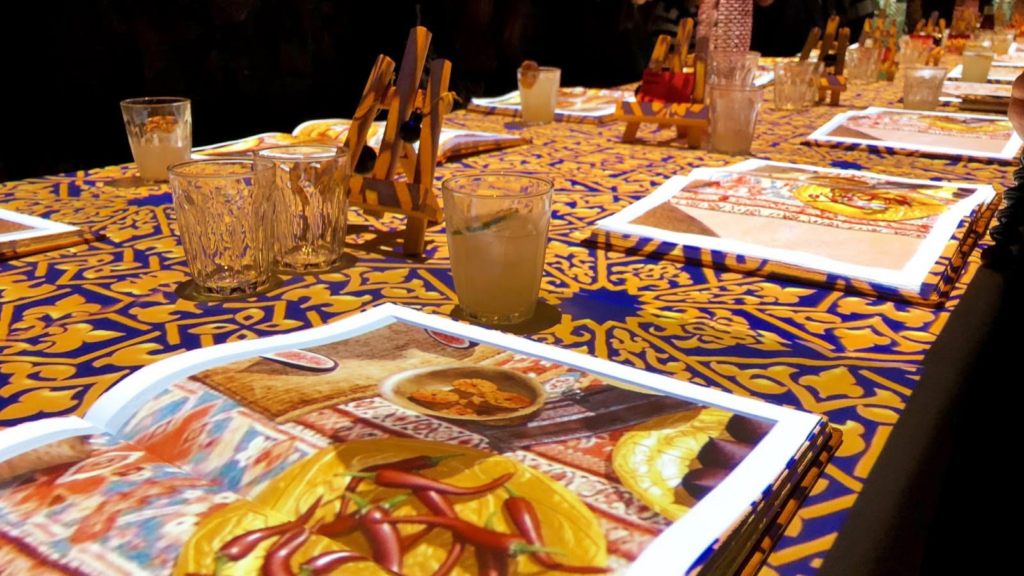
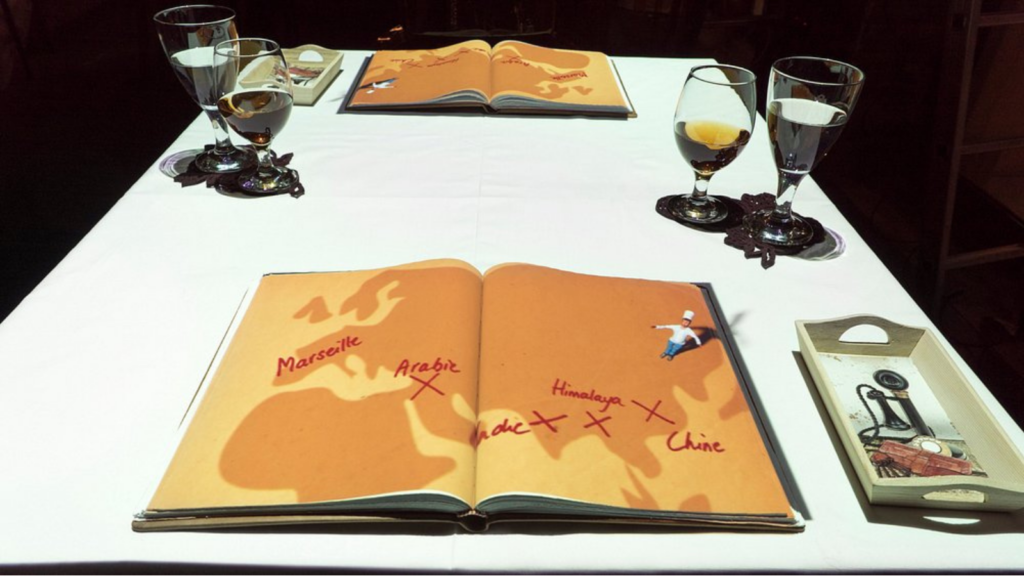
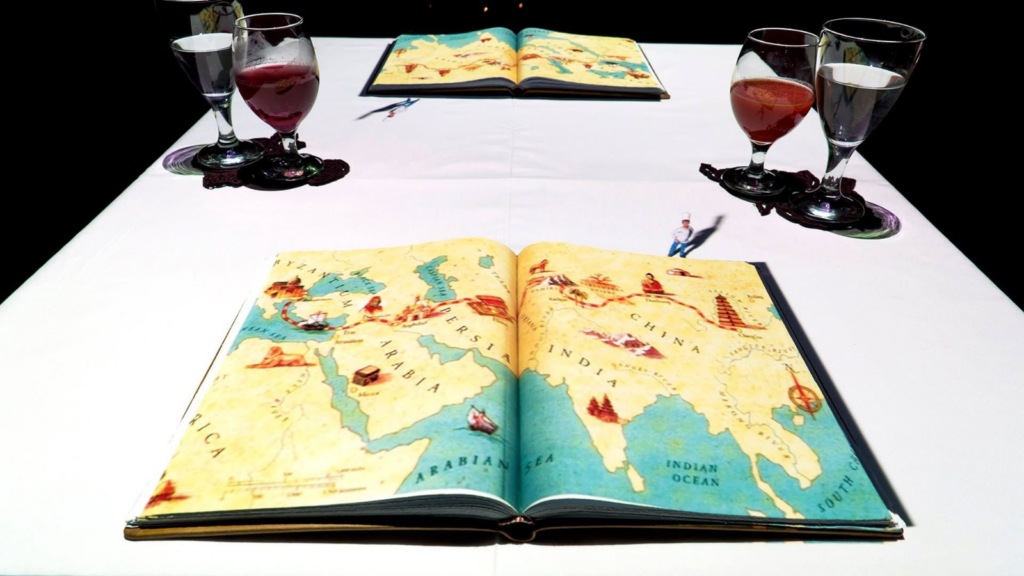
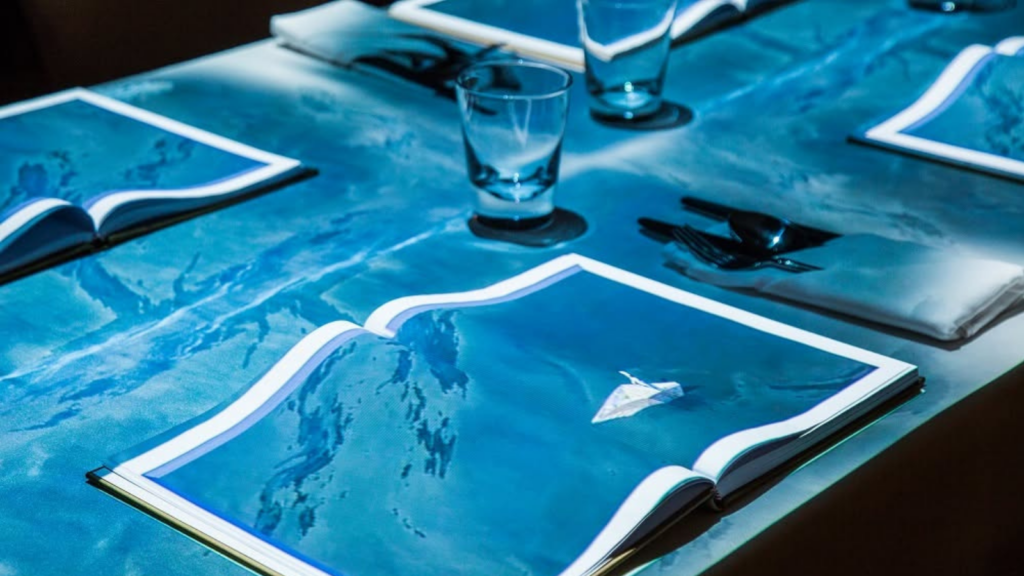
The experience features a tiny animated chef, Le Petit Chef, who appears to cook and tell stories on diners’ tables using 3D projection mapping. Each show is paired with a six-course meal that follows the storyline.
Speaking to The Money Show, DinnerTimeStoriesSA and Le Petit Chef Southern Africa owner and international show producer Paul Rouessart said the goal is to create an unforgettable dining experience.
“DinnerTimeStories Le Petit Chef is trying to create a never-to-be-forgotten tabletop experience,” Rouessart explained.
“We use 3D mapping and augmented reality to project a story onto the table, while serving food that accompanies that story.”
Rouessart said creating each production is a lengthy process, taking around two to two-and-a-half years to develop the graphics.
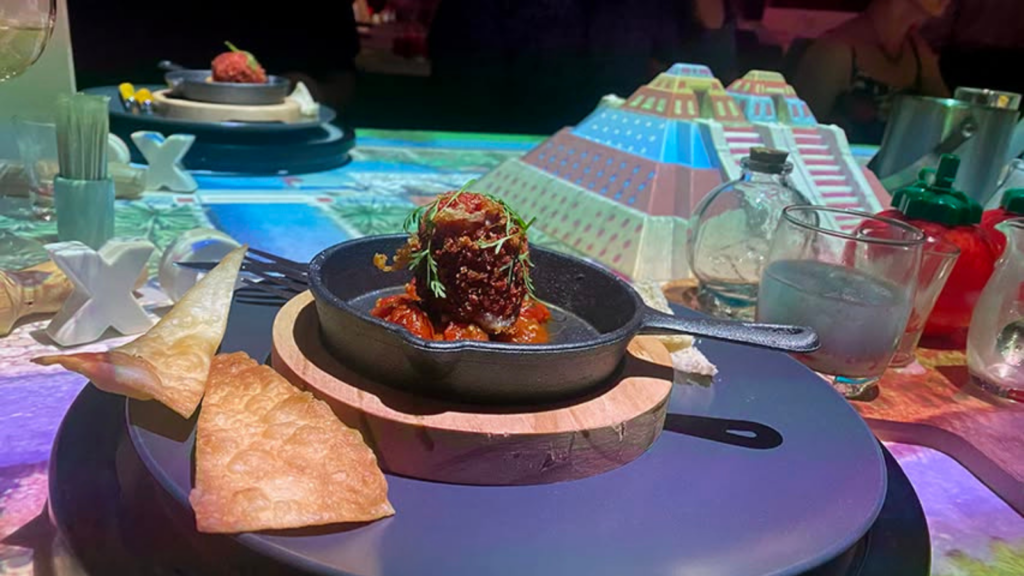
Every projection is carefully mapped so it remains perfectly aligned with plates, tableware and props throughout the show.
Unlike a traditional projector aimed at a flat screen, the technology keeps images in focus across objects of varying shapes and heights. This means the projections can transform the entire dining table as the story is told.
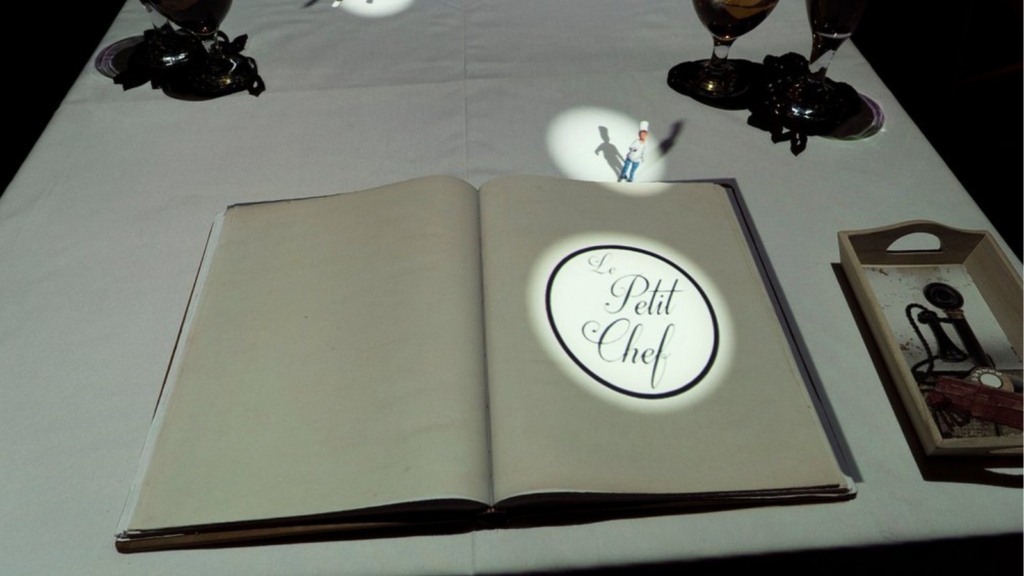
At the centre of every DinnerTimeStoriesSA performance is Le Petit Chef, a tiny animated character who is roughly the size of a toothpick.
The character appears to run across the table and dinner plates before introducing each course. “We serve the food according to what he’s told in that storyline,” Rouessart said.
“By the time you’ve completed the experience, you’ve gone through an entire story and enjoyed a six-course meal that accompanies the projections.”
A fully immersive experience
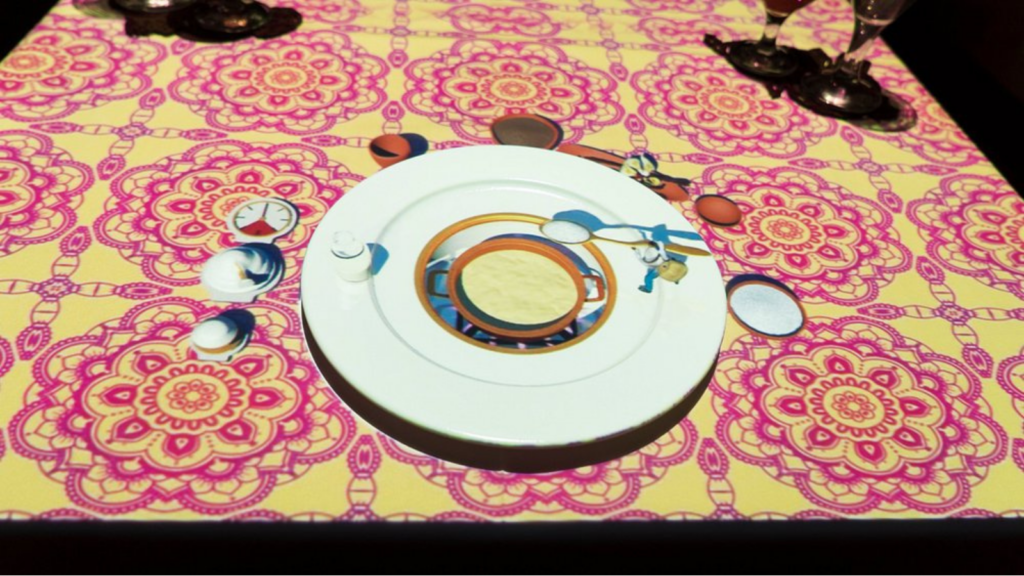
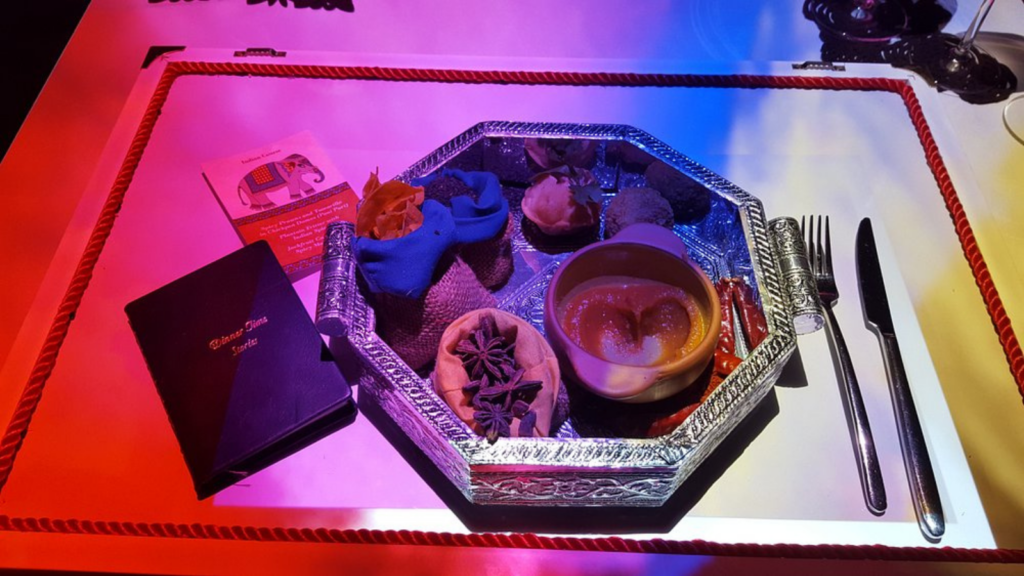
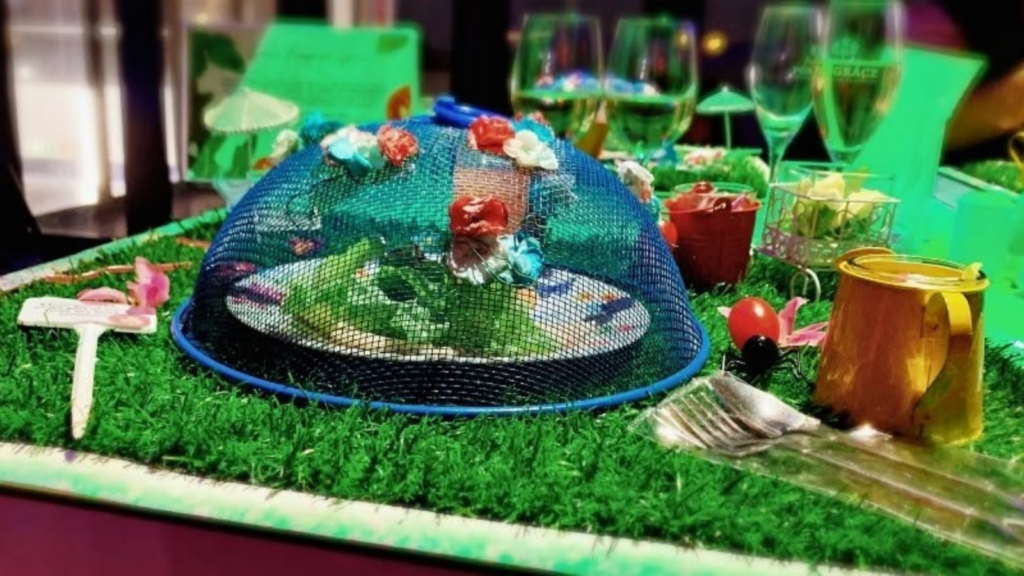
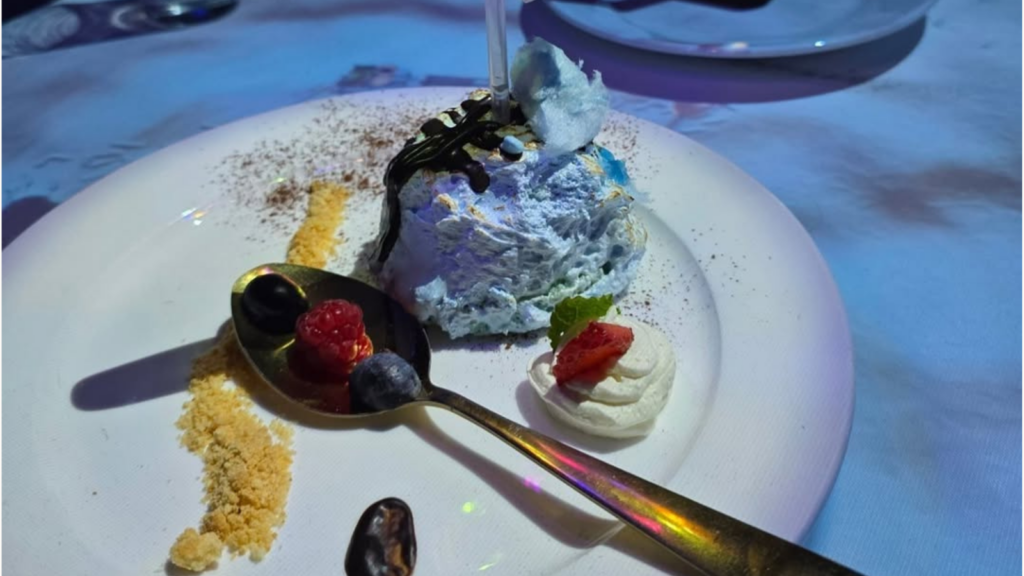
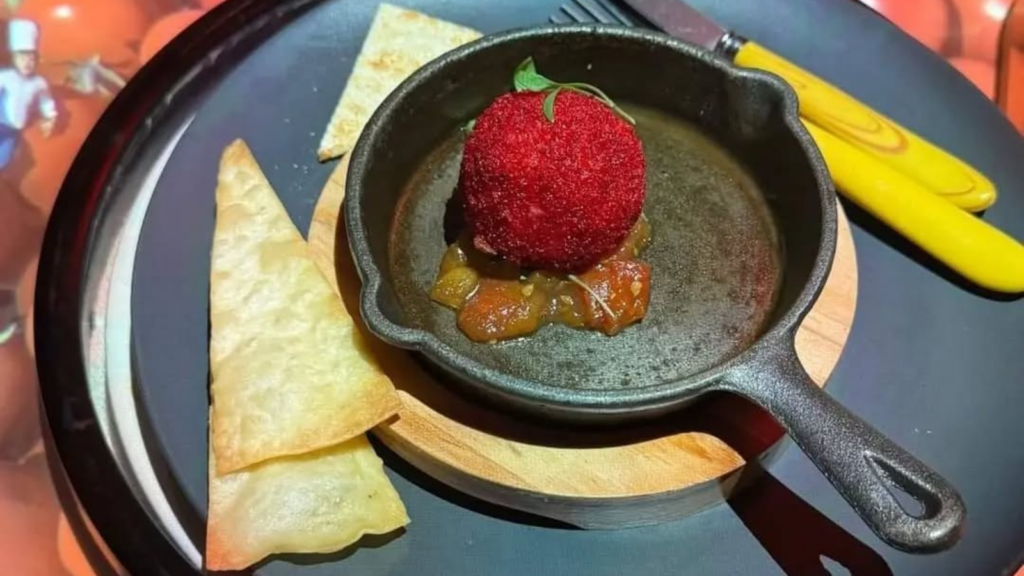
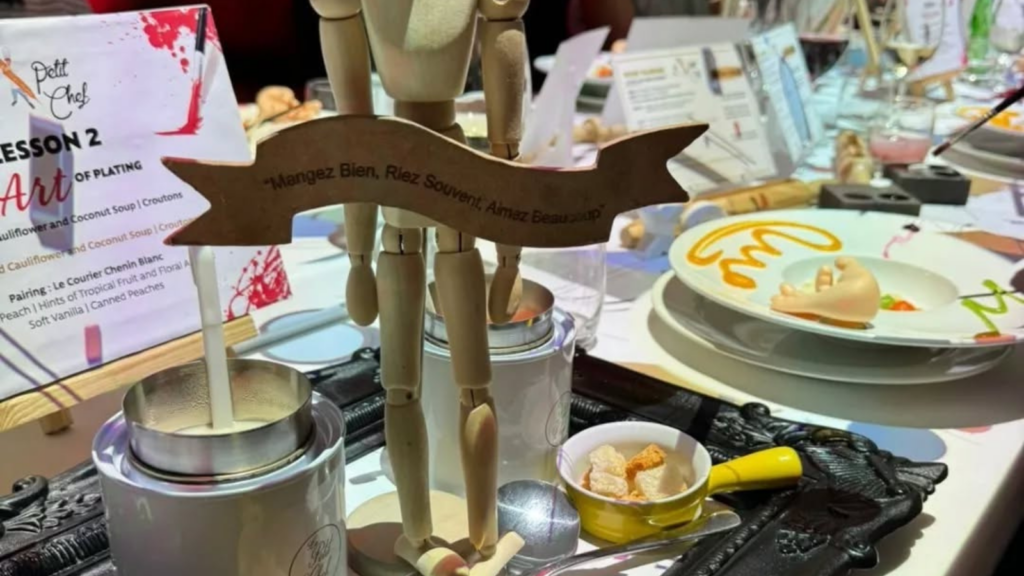
The Le Petit Chef experience includes interactive elements. Some courses allow guests to assemble parts of the meal themselves after watching the animated chef demonstrate how to do so.
The food is prepared fresh during each performance, and dietary requirements are accommodated after guests arrive.
“It’s very cleverly designed so that we can accommodate most dietary requirements without any problem. The show is customised in such a way that we don’t exclude anybody from having this unique experience.”
While the visuals are an essential part of the production, it is not the only thing that sets this dining experience apart. Rouessart described it as a “4D show”.
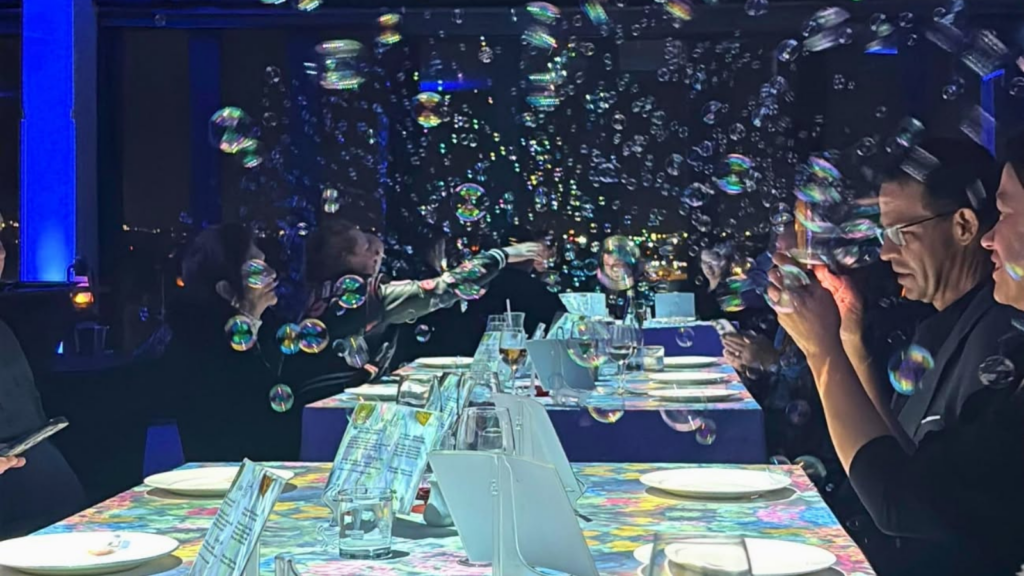
It combines visuals with sound, scents and tactile elements to create a fully immersive environment lasting around three to three-and-a-half hours.
He explained that scents are introduced before certain dishes arrive, while the projections, music and waiter interactions all change to match the story being told.
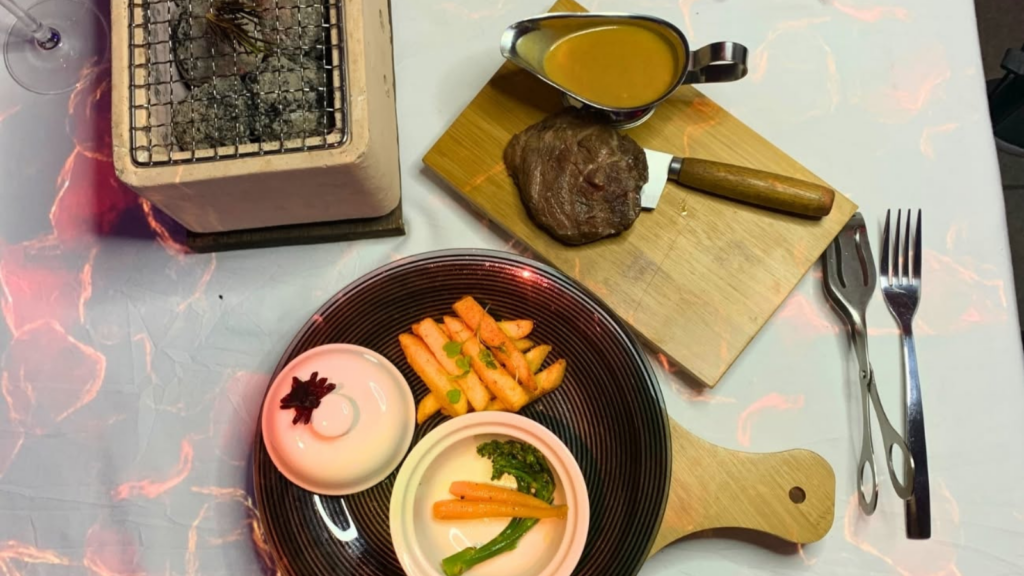
For example, diners may smell meat cooking before the table transforms into glowing charcoal and their next course is served.
“The visuals are projected onto the table continuously. The tablecloth is changing, there’s movement all over the table, and at the same time, the waiters are interacting, together with the soundscaping.”
Rouessart said the experience has become particularly popular as a date-night destination because it naturally creates conversation throughout the evening.
“Just as you’re almost running out of conversation, the next projection starts, and you’ve got something to talk about again.”
However, Rouessart stressed that the Le Petit Chef show caters for all guests, whether they are five or 100 years old.
Children enjoy the experience, and are often willing to try foods they would normally avoid because the tiny animated chef appears to have prepared them.
Just because the show features an animated character does not mean it is only for youngsters. He made it clear that the experience is designed primarily as adult entertainment.
Made for a South African audience
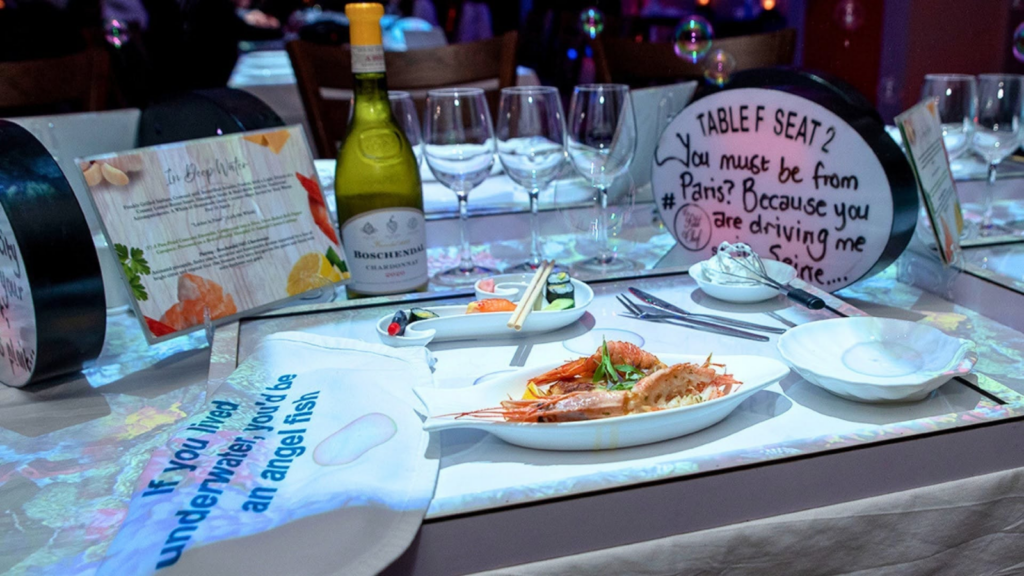
Although Le Petit Chef has more than 120 locations worldwide and also appears on cruise ships, Rouessart said the South African productions stand out.
He explained that the local shows are presented as full-scale productions rather than simply projecting images onto a table.
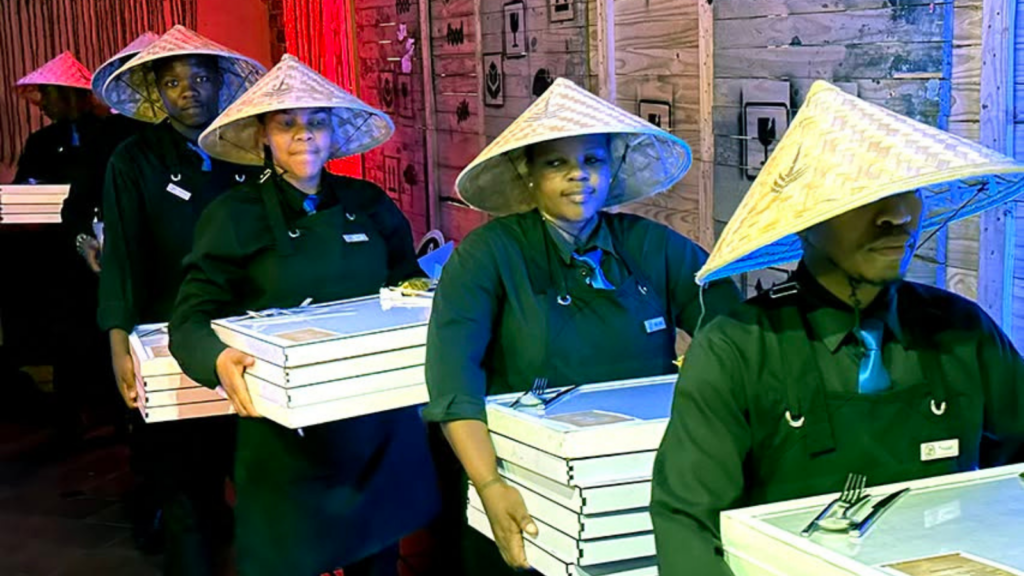
“It is a full production and a full show. You come in, and you are entertained non-stop for a good three-and-a-half hours.”
Rouessart also clarified that the Le Petit Chef production is not a fine-dining experience. Instead, he described it as “fun dining”.
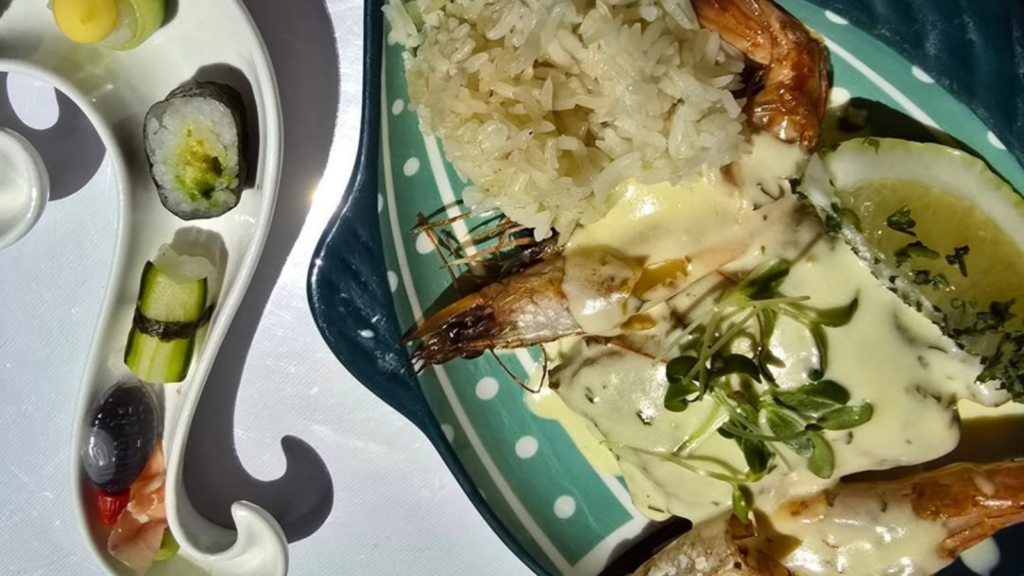
He explained that while there is some French influence, the menus have been developed specifically for South African tastes.
“We’ve customised the show according to the South African palate. The show we currently have running has a very South African-developed menu that is very appealing to South Africans.”
Rouessart said the growing popularity of food television shows, including MasterChef, has also changed what diners expect from restaurants.
“There’s a very definite interest in how food is made and what you’re doing that’s different. To just present a normal plate of food these days is not good enough. You’ve got to do it with pizzazz.”
Le Petit Chef



Comments