The tiny South African company that makes millions selling critical equipment to Boeing and Airbus


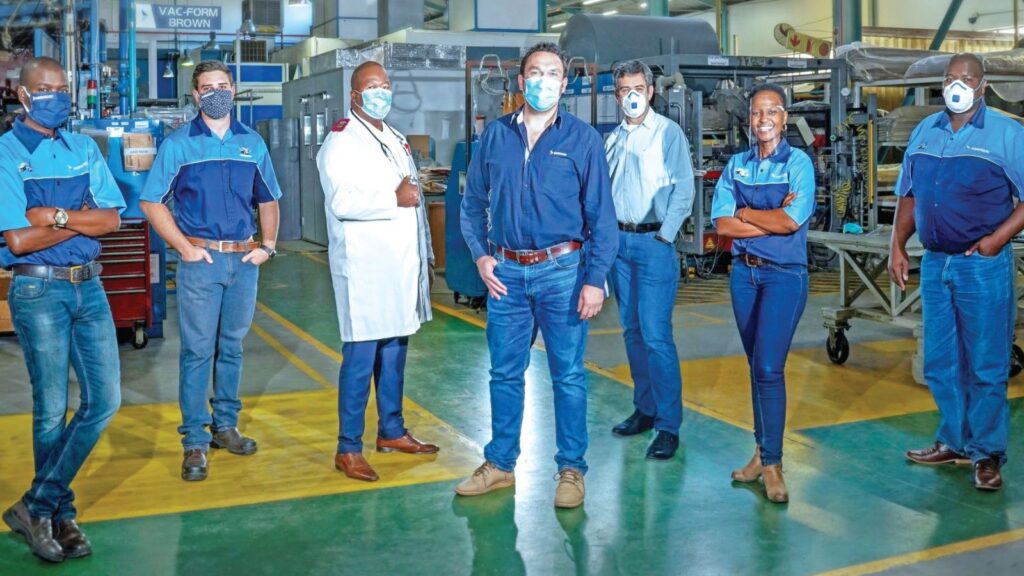
With only 500 employees, Aerosud produces thousands of aerospace parts every day for giants such as Boeing and Airbus.
Based in Centurion, the company has an annual turnover of almost R1 billion and is the largest privately-owned aerospace manufacturer in Africa.
While initially launched to meet the needs of the South African Defence Force in 1990, the company has successfully expanded to sell its products to commercial buyers.
This was borne out of a combination of South Africa’s rich aerospace engineering history and a need to adapt to significantly smaller defence budgets after the end of the Cold War.
South Africa has produced renowned aerospace engineers and products for decades, predominantly through Denel during the apartheid years.
However, as with the military-industrial complex in the United States, many successful private businesses were launched to supply Denel itself.
One such company was Aerosud, which was created by a group of former employees of the Atlas Aircraft Corporation.
This initial grouping included several key designers of the famous Denel Rooivalk attack helicopter and the Atlas Cheetah fighter program.
Setting up shop in Centurion, Aerosud initially focused on the defence sector within aerospace as it was highly lucrative at the time.
Its launch was almost derailed by a years-long feud between it and Atlas in relation to intellectual property, which took over a decade to resolve.
Aerosud’s first major contract involved the re-engining of the Dassault Mirage F1 with the Soviet-sourced Klimov RD-33 engine.
This resourcefulness was driven largely by the sanctions placed on South Africa at the time, which saw the government direct state entities to improve their self-sufficiency.
While the contract displayed Aerosud’s prowess, the government chose to buy the SAAB Gripen instead. To this day, the company uses the Mirage as a demonstrator.
Despite its success in leveraging diverse international components and its history of supplying the defence sector, the collapse of the Soviet Union in 1991 changed everything.
Overnight, governments slashed their defence budgets, seemingly believing there was no longer a need for deterrence or a likelihood of major conflict.
This put Aerosud’s business in jeopardy as its target market shrank and the money dried up, with only a handful of large defence companies winning the majority of contracts.
From war to jumbo jets
The late 1990s saw Aerosud pivot heavily into the commercial aerospace sector, with it designing galleys and other interior systems.
This is a tough market to break into, considering the dominance of Boeing and Airbus as the only two manufacturers of commercial jets.
As such, Aerosud focused on finding ways to supply these large manufacturers rather than taking them on directly or manufacturing the products they specialised in.
Aerosud focused intensely on interior systems to become an internationally recognised supplier.
These systems include seating, environmental controls, galleys, lavatories, and entertainment networks, which are engineered using lightweight, fire-resistant composites.
Aerosud’s next challenge would be to expand its production capacity to meet the exploding demand for commercial jets around the world.
The early 2000s saw the company invest heavily in upgrading its facilities in Centurion, which are now capable of manufacturing 2,000 parts and assemblies per day.
This expansion was driven by Boeing awarding various contracts to Aerosud to supply cabin elements.
In particular, Aerosud was appointed as the sole supplier of interior composites and thermoplastic frames across Boeing’s range.
This forced the company to construct an entirely new facility near Pretoria to supply the American giant, which used the products in its B737 fleet and the B777 cargo plane.
Aerosud never forgot its defence roots and used its close ties with Airbus’ commercial division to get back into the military game.
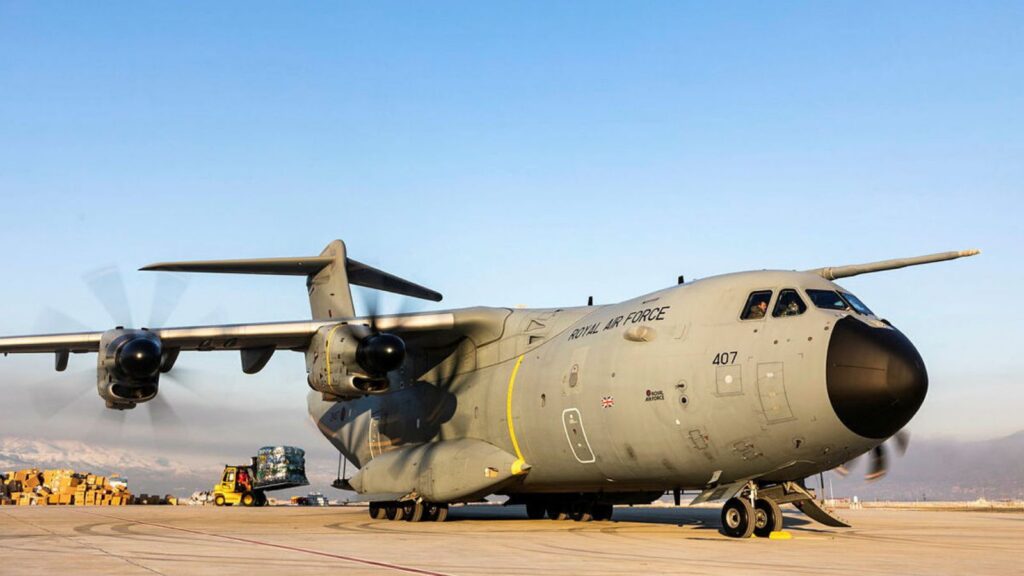
In 2013, it signed a major long-term manufacturing contract for components of the Airbus A400M airlifter. Two years earlier, it had become a subcontractor for the Airbus A320 family of aircraft.
For Airbus, Aerosud largely manufactures leading-edge wing components and the avionics bay subassemblies.
The end of war
Throughout the 2010s, Aerosud engaged in joint ventures with the Paramount Group to supply parts for light attack and reconnaissance aircraft.
These joint ventures were highly successful for both companies, but the Paramount Group wanted in on Aerosud’s manufacturing processes and technology.
In 2014, Aerosud restructured into two parts. Aerosud Aerospace was unbundled and sold to the Paramount Group while the remaining business focused solely on commercial aircraft.
The Industrial Development Corporation picked up a 25% shareholding in the company, while some of the founding members exited the business.
Aerosud would face another near-death experience with Denel’s collapse just a few years after it signed a three-way agreement with the state-owned enterprise and Airbus.
This agreement created a ten-year investment plan to develop more sophisticated manufacturing techniques and entrench Aerosud in Airbus’ supply chain.
The collapse of Denel and South African Airways saw this agreement effectively scrapped, leaving Aerosud to develop new technology by itself.
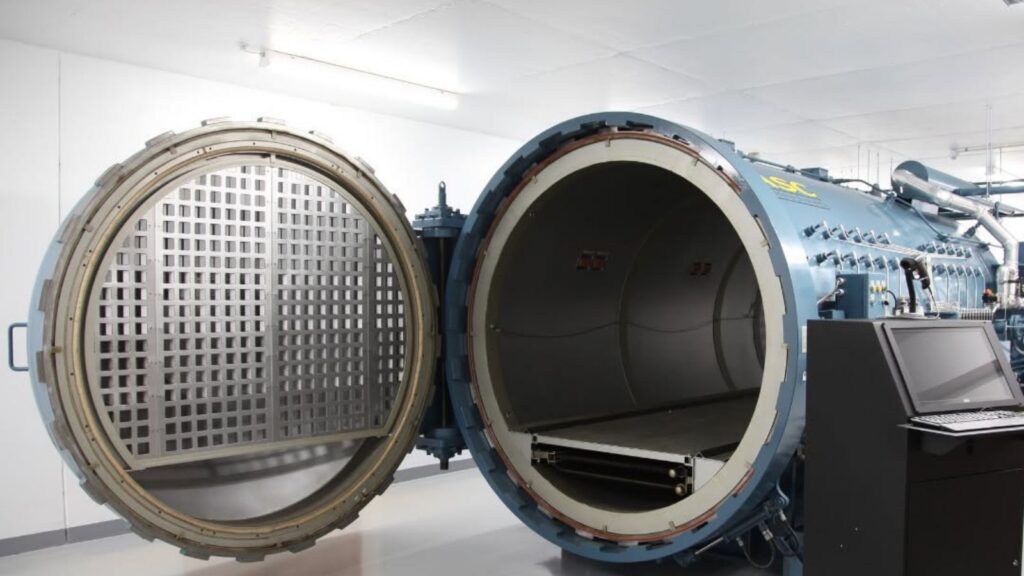
Instead of giving up on the new technology, the company leaned in and developed its patented Cellular Core Technology that enables the creation of complex structural composites in a single curing process.
This enables Aerosud to make lightweight designs with minimal manual labour.
Today, Aerosud specialises in manufacturing metallic components, thermoplastics, and composites for aircraft and other vehicles. The company also makes some welded and integrated assemblies.
The company supplies Safran, Boeing, Spirit Aerosystems, and both Airbus and Airbus Defence & Space.
Its latest financial information indicates that Aerosud generates over $55 million (R895 million) in turnover with 500 employees.




Comments