Billionaire Christo Wiese lost R60 billion in one month


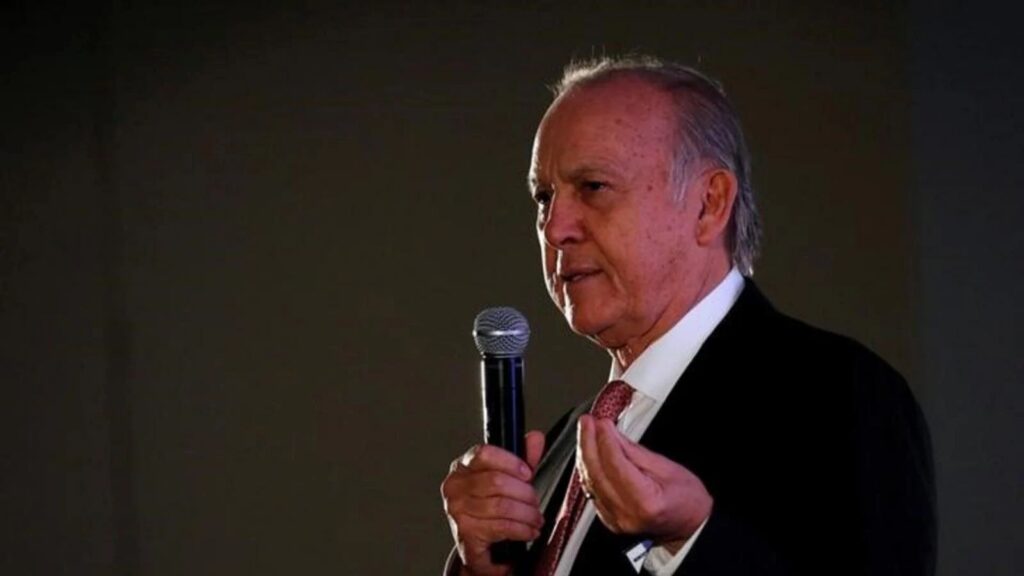
Billionaire Christo Wiese lost R59 billion in the collapse of Steinhoff in December 2017 and his status as a dollar billionaire.
This loss came as the work of his life in building Pepkor into the largest clothing retailer in Africa was effectively undone, as he had sold the company into the Steinhoff stable.
Wiese had owned over 40% of Pepkor prior to the deal to sell his stake to Steinhoff in exchange for shares in the Stellenbosch-based company.
Following a lengthy legal process, Wiese was left with around 5% of Pepkor after Steinhoff collapsed.
Speaking to The Economic Club of Stellenbosch, Wiese said he does not mourn the loss of money despite it being painful at the time.
Prior to the collapse of Steinhoff, Wiese had spent his life building Pepkor and Shoprite into retail giants that dominated South Africa.
Being in the retail game for nearly 50 years had earned Wiese the nickname of “The King of Retail” by investors and fellow businessmen.
Today, both companies are the dominant retailers in their segments, largely due to Wiese’s leadership as chairman of both entities.
“It was extremely difficult for me. Remember that when this happened, I was 76 years old. That is not an age when you want that kind of disaster to happen,” Wiese said.
“If I were 30 or 40 years younger, it would have been water off a duck’s back. But, at that age, it was a big thing to deal with.”
Wiese recalled that it came to him like a bolt from the blue, and he was thrust into the CEO position to try to figure out what had happened at Steinhoff.
“I remember that I looked at myself in the mirror and asked myself, ‘How are you going to handle this?’ and I made three decisions as a result,” Wiese said.
“Number one, I don’t mourn the loss of money. I lost a fortune of R60 billion, which I had worked for over 50 years. But I don’t mourn the loss of money.”
The second thing is something Wiese attributes to his mother, and that is to count your blessings. Wiese’s lifestyle and family were not going to be changed by the loss, so he decided to live without regret for what he lost.
“Thirdly, I decided that I was not going to become a bitter old man. There are a lot of people who suffer that kind of setback and become very bitter. They live in fear. I took the opposite route,” Wiese said.
In the aftermath, Wiese set up his family office and hired investment specialists to manage his assets alongside his son.
The collapse of Steinhoff

Wiese explained that he was caught by surprise when Steinhoff collapsed, with no red flags raised by regulators, analysts, auditors, investors, or the banks.
By the time Wiese was aware of the collapse, he had known Markus Jooste for over 30 years and implicitly trusted him.
“I got to know him in the 1980s, when he was an article clerk for a firm of auditors that did some of my accounts in the diamond mining business,” Wiese said.
“He was a bright young guy, but I lost touch with him for the next 20 years. However, I took note of what he appeared to be building in Steinhoff.”
During this period, Steinhoff was the upcoming investor darling, reporting blockbuster growth and on its way to becoming one of the most valuable companies on the JSE.
To investors and analysts, the company appeared to be a highly profitable retail empire and was expanding around the world to diversify out of South Africa.
“I say Jooste appeared to be building something in Steinhoff, because he had been running a fraudulent business for 20 years,” Wiese said.
“He had made the business look much better than it really was. He had managed, brilliantly, to get by all the gatekeepers – the banks, the auditors, the rating agencies, investors.”
Close to the peak of Steinhoff in the mid-2010s, Wiese said he had reached the stage with Pepkor and Shoprite where they could not really grow anymore in South Africa due to competition regulations.
“I was looking for a way to internationalise our businesses. I looked at what Jooste was doing, and it appeared to be doing the right things. They had great businesses all over the world,” Wiese said.
“I thought it would be a good deal to reverse my business interests into Steinhoff, but still leave me in control at the end.”
Wiese said that initially everything appeared to be going well until the “horrible truth” emerged in December 2017.
“Today, we know that he was defrauding and stealing to maintain his lifestyle, but at the time, there was nothing that I saw. In hindsight, there were one or two signs that I should have been more wary,” Wiese said.