R9.95 billion wipe-out: Spar boardroom drama sends share price plummeting


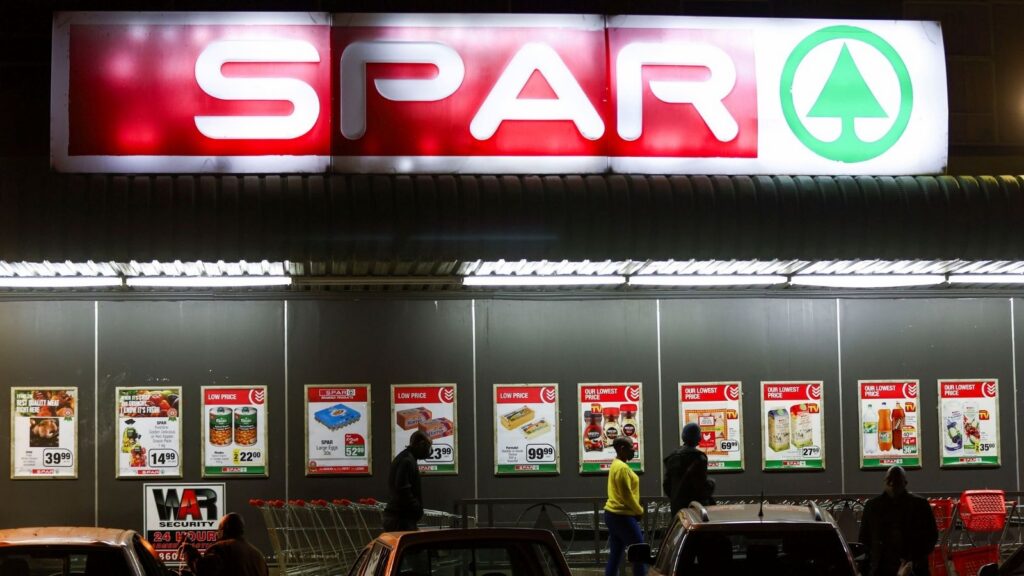
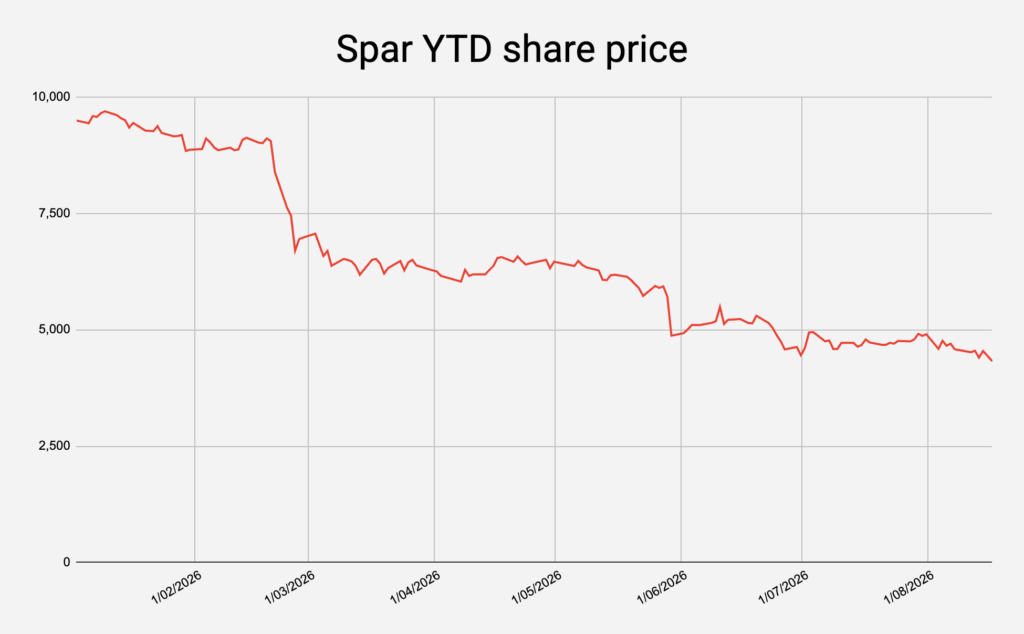
Spar’s share price has more than halved in 2026 to date, with its latest boardroom drama pushing the retailer’s stock down by a further 4.67%.
The 54.36% decline in Spar’s share price since the start of the year has wiped R9.95 billion from the retailer’s market capitalisation,
This share price pain comes as Spar implements a turnaround strategy led by CEO Reeza Isaacs.
Prior to the implementation of this plan, Spar had been struggling for years, with a botched SAP implementation, franchisee disputes, and financial difficulties plaguing the grocery retailer.
Despite these issues, Spar’s share price remained relatively flat between 2023 and 2025, as some investors bought into its turnaround strategy.
However, 2026 has not been as kind to the retailer’s stock, starting with a 4% decline in January and the start of February.
Things took a turn for the worse in mid-February, with the retailer’s share price crashing by 20% between 20 and 25 February.
The crash was catalysed when Spar put out a notice to shareholders on 20 February announcing that its then-CEO, Angelo Swartz, would leave the company at the end of February.
Swartz played an important role in Spar’s turnaround, overseeing the retailer’s exit from several international business units, including the sale of its Polish and Swiss operations.
His departure, therefore, came as a surprise to many shareholders. This was only made worse by the fact that Isaacs, Swartz’s successor, was Spar’s fourth CEO in five years.
Since Graham O’Connor’s retirement in 2021, the retailer has struggled with leadership instability at the C-suite level.
O’Connor had been one of Spar’s longest-serving CEOs, serving at the helm since 2014 before transitioning to a non-executive chairman role in 2021.
O’Connor was succeeded by Brett Botten, who held the top job for two years before retiring in 2023.
After Botten came Mike Bosman, who acted as interim CEO until a permanent replacement was found in 2023.
This was when Swartz took over, and his sudden departure earlier in 2026 reinforced for many shareholders that Spar had yet to resolve its C-suite instability, sending the share price crashing.
The boardroom drama continues
Following Isaacs’ appointment in March 2026, and despite Spar’s reassurances that its turnaround remains intact and ongoing, the retailer’s share price continued to decline.
Investor trust in the retailer’s turnaround amid the boardroom shakeup was not aided by a trading statement that was released shortly after Swartz’s departure was announced.
On 23 February, Spar released a trading update for the 18 weeks ended 30 January 2026, in which it revealed stagnant growth and significant margin pressure.
Around the same time, news also broke that Spar is facing legal action over the bungled SAP implementation at its KwaZulu-Natal distribution centre.
The trading statement and potential legal liability did not go over well with shareholders, and the retailer’s share price continued to take a beating.
Between 23 February and Friday, 14 August, Spar’s share price had fallen by 40.38%, reaching an 18-year low.
On Monday, 17 August, Spar released another update that also failed to impress investors, and sent its share price plummeting even further.
Spar announced that its chairman, Bosman, and deputy chair, Shirley Zinn, had decided to resign from their positions with immediate effect.
The retailer said both Bosman and Zinn had reached their decision to resign separately and retained the board’s full support.
Spar said they concluded that resigning was in the company’s best interests, given the recent challenges experienced by the board and the group.
The retailer also reaffirmed its commitment to implementing the turnaround strategy. However, some investors were unconvinced, and Spar’s share price fell by as much as 6% on Monday, 17 August.
The decline on Monday means Spar’s share price is now down 54.36% in the year to date, which has wiped R9.95 billion from the retailer’s market cap.




Comments