South Africa’s biggest private security company and police ready for national shutdown


South African police said they’re fully prepared for anti-migrant demonstrations that are planned across the nation on Tuesday and warned they would tolerate no intimidation or violence.
“To those who intend to break the law tomorrow, our message is simple: do not test the resolve of the state,” Lieutenant-General Tebello Mosikili told a televised media briefing on Monday.
“The state is ready. Law enforcement is ready. South Africa is ready.”
The demonstrations set to take place on Tuesday are the culmination of weeks of protests that have displaced thousands of mainly African expatriates.
They’re being led by the March and March organisation, which imposed a June 30 deadline for what it describes as illegal immigrants to leave the country.
The protests have stoked fears of xenophobic violence on a scale that erupted in South Africa in 2008, when 62 people were killed, and more than 50,000 others were forced to flee their homes in a wave of attacks.
Five years ago, 354 people died in riots in the Gauteng and KwaZulu-Natal provinces — the two biggest contributors to national economic output — after protests over the jailing of former President Jacob Zuma.
Acting Police Minister Firoz Cachalia has spent the past week addressing parades to convey the message that a large deployment of officers will crack down on any unrest.
The government is spending R600 million on ensuring the protests don’t result in widespread violence.
A total of 25,000 foreign nationals have been repatriated, and the process is ongoing, Mosikili said, without saying when that process started.
Africa’s biggest economy has long been a magnet for people in neighbouring countries like Zimbabwe and Malawi, who are drawn by better job prospects and access to healthcare and education than in their own countries.
The demonstrations have been a manifestation of the anger among some locals who see foreigners as competitors for economic opportunities and state services.
Surveys conducted by the national statistics agency show that more than 3 million immigrants are present in South Africa — which has a population of about 63 million — up from 2.2 million in 2011 and 1 million in 2002.
It doesn’t provide data on which of those immigrants are undocumented.
Poor border management and a lack of enforcement of immigration laws have enabled many foreigners to enter and stay in the country illegally.
Private security to the rescue
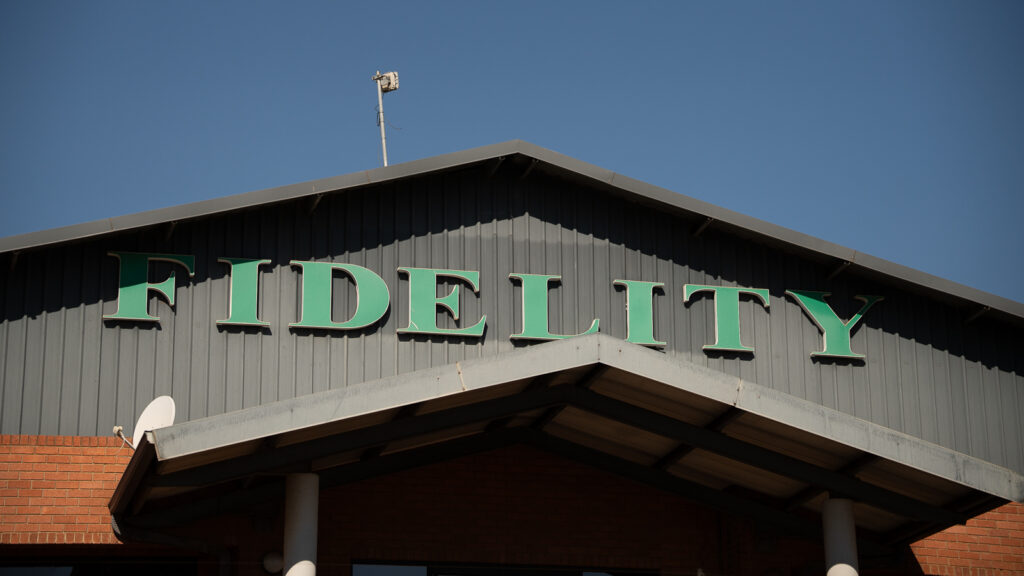
Fidelity Services, South Africa’s largest private security provider, has also prepared for potential social unrest surrounding the anti-immigration protests.
The company said in a statement that it is activating contingency measures and is closely monitoring developments across the country.
Fidelity Services CEO Wahl Bartmann said the company’s National Joint Operations Centre (JOC) is liaising closely with all relevant authorities to ensure preparedness should any unrest occur.
“Our teams are on standby with comprehensive contingency plans in place to manage any potential incidents arising from the planned protest action,” Bartmann said.
Fidelity has placed helicopter and drone pilots on standby and is prepared to deploy additional resources, including specialised personnel and armoured personnel carriers, where required.
“We will also be closely monitoring public-space cameras within our network to assist with situational awareness and rapid response,” Bartmann said.
“We are also prepared to support recovery efforts through both air and ground resources, working in conjunction with SAPS.”
At this stage, KwaZulu-Natal and Gauteng have been identified as potential flashpoint areas.
The immediate threat is assessed as localised but potentially disruptive, with possible impacts including road blockages, delays in staff movement, and intimidation of foreign-owned businesses.
North-West University lecturer and researcher Cobus Steenkamp said SAPS cannot stand alone and eeds the help of Fidelity due to a lack of capacity.
“What does it say about the constitutional health of the state when the chief executive of a private security company effectively becomes the operational right hand of the National Commissioner of Police?” he asked.
“This is not an indictment of Fidelity. It is an indictment of a state that has become dependent upon it.”
This comes as South Africa is experiencing a growing reliance on private security, where those citizens who can afford to pay the associated fees choose this option instead of relying on state resources for protection and security.
Steenkamp said this is not the consequence of a single policy failure, but the culmination of three decades of institutional decline.
Reporting with Bloomberg.




Comments