SPAR’s plan to take on Checkers, Pick n Pay and Woolworths in South Africa


SPAR plans to win market share in South Africa’s highly competitive retail landscape through organic growth and honing in on its independent retail model.
Over the past few years, SPAR has had to implement an ambitious turnaround plan to repair and revitalise its operations after years of struggles.
Now, the retailer is starting to reap the rewards of this turnaround strategy and is banking on organic growth and its unique model to set it apart from the competition.
On Monday, 8 December, SPAR released its results for the 2025 financial year, which showed that the retailer took some pain from its turnaround strategy.
The retailer swung to a full-year loss despite growth in revenue and operating profit from continuing operations. This was due to higher financing costs linked to legacy debt from SPAR’s now-disposed Polish operations.
However, the turnaround strategy, which involved exiting some of the group’s European operations, also allowed SPAR to decrease its debt by 40%.
This has set the retailer up well for the coming years, as SPAR looks to expand its share of South Africa’s retail market.
SPAR CEO Angelo Swartz told Daily Investor that this market has become “exceptionally competitive”.
Shoprite has emerged as the clear market leader, while Pick n Pay, also in the midst of a turnaround plan, is looking to expand its presence in the market.
Woolworths dominates the higher end of the market, which has also become increasingly competitive as more retailers have expanded their offerings to include premium product ranges and stores.
In addition, the past few years have seen the emergence of a new, tech-focused battleground – on-demand delivery – which Shoprite’s Sixty60 service currently dominates.
Pick n Pay is looking to take on the incumbent with its asap! service, while Woolworths’ Dash and SPAR’s SPAR2U are also angling to take market share.
This highly competitive landscape and Shoprite’s unmistakable lead have transformed South Africa’s retail market, making it all the more important for players to hone in on their competitive advantages.
Independent retail

Swartz told Daily Investor that SPAR’s growth in the coming years will be organic, as the retailer remains focused on its independent model.
In South Africa, the four dominant retailers have different models through which their stores operate.
The majority of Shoprite stores, including its brands like Checkers, Uniq, Usave, and LiquorShop, are corporate-owned, although there are some franchise-owned locations, specifically through the retailer’s OK Franchise brand.
Shoprite’s 2025 results revealed that the group has 2,863 corporate-owned and managed stores, meaning this format constitutes the largest share of the retailer’s total 3,478 stores.
Similarly, Pick n Pay has a mix of corporate and franchise-owned stores, although its Boxer brand exclusively operates through corporate-owned stores.
The results for the first half of Pick n Pay’s 2026 financial year showed that the group had a total of 2,238 stores, which include 984 Pick n Pay-owned stores, 631 franchise stores, and 547 Boxer-owned stores.
The remaining 76 stores form part of the retailer’s associate business in Zimbabwe.
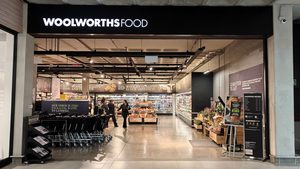
Woolworths is unique in South Africa’s retail market as the high-end retailer has no franchise stores, with all of its stores corporate-owned and managed.
This allows the retailer to have better control over brand, quality and logistics, but limits its physical footprint growth somewhat.
SPAR’s model is also unique, as the company identifies more as a warehousing and distribution business than a traditional retailer.
SPAR owns several country licences for the SPAR retail brand, which is then used by a network of independent retailers who trade under the brand.
These independent retailers are supplied on a voluntary basis through SPAR’s distribution centres.
Swartz believes this model is SPAR’s key to success, as these store owners are driven by “defending their home turf”, which has allowed for organic growth.
“We really, as a group, see our purpose as being unleashing the power of independent retail. Our business is a wholesale business that supports independent retailers,” he said.
He added that SPAR’s expansion into other retail categories is also set to benefit the group in the coming years.
SPAR recently made its entry into stand-alone pet stores with its Pet Storey offering, and the retailer is also looking to tap into the high end market with the rollout of SPAR Gourmet stores.
Swartz told Daily Investor that SPAR may look to expand into other new categories as well, with plans to add another two to three to its stable in the medium term.
Analyst opinion

Sasfin senior equity analyst Alec Abraham told Daily Investor that SPAR’s model presents some advantages, as it is better than a pure-play wholesaler because of the captive market of guild members.
In addition, he explained that it is better than a pure-play retailer because it enjoys the benefit of a large market share without operating a store network.
This means SPAR can be more capital-light, operating only six distribution centres and a delivery fleet.
Historically, he said the group has also enjoyed the benefit of generally the most convenient neighbourhood locations.
This is because many café-owners converted to SPAR stores because of the service they delivered to independent retailers.
“Furthermore, these retailers had good relations and an in-depth knowledge of the buying behaviour and preferences of the community within its catchment area,” he said.
However, Abraham said much of this has changed over the past few years, which has arguably negated some of the advantages SPAR’s model held.
Firstly, he pointed out that national retailers have invested in loyalty programs and data systems, allowing them to collect vast amounts of intelligence on customer buying behaviour and preferences.
In addition, these retailers have also opened smaller store formats closer to customers and in convenient locations.
This, combined with the fact that retailers have delivered on-demand functionality, has essentially negated SPAR’s historic advantage.
“Furthermore, during good times independent retailers are generally more willing to invest in their stores, but when times get tough, many would be reluctant to invest, resulting in stores possibly starting to look shabby,” he said.
“On the other hand, a large corporate retailer such as Pick n Pay, Checkers, etc, may have deeper pockets and be more willing to invest in their stores and infrastructure throughout cycles to ensure that the store fleet remains attractive to customers.”
Therefore, Abraham said that while SPAR’s model historically presented advantages, sector developments have evolved to arguably negate these benefits.
Overall, he explained that South Africa’s retail market is very competitive, and SPAR’s turnaround and plans to win market share will be difficult to pull off.
“What I can say is that they need to execute far better; the group has made far too many mistakes including the two most severe mis-steps being the disastrous SAP implementation and the deteriorating retailer relations,” he said.
 Loading ...



Comments