President Cyril Ramaphosa cracking down on one group of people in South Africa


South Africa’s leader announced a crackdown on undocumented migrants in the country following a spate of protests and xenophobic attacks, while reiterating that citizens shouldn’t take the law into their own hands.
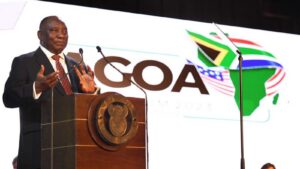
The government will penalise businesses employing undocumented migrants, secure the nation’s borders, step up deportations and work on reducing corruption, President Cyril Ramaphosa said in a televised address to the nation on Sunday.
“‘We are and will continue to crack down on the violation of our immigration, labour, and other laws,’ he said. “We will continue to prevent people from entering the country irregularly and illegally.”
South Africa has seen a surge in xenophobic attacks over recent months, with foreigners being blamed for fueling unemployment and crime, and for placing further pressure on already overstretched government services.
About 60 people died, and 50,000 were displaced in a spate of attacks directed against migrants in 2008, and fears are mounting of renewed and intensified violence.
South Africa is but one country where there has been a widening global backlash against immigrants.
In Germany, the far-right AfD party has capitalised on voter anxiety over asylum and integration, while US President Donald Trump has made mass deportations a central pillar of his second term.
And in the UK, immigration has become one of the nation’s most combustible political issues.
Incidents of xenophobic discrimination in South Africa last year were the highest since 2008, according to Xenowatch, which monitors violence targeting foreigners.
Anti-immigrant sentiment in the country has been on the rise for two decades and has become more pronounced since the Covid-19 pandemic, according to the Human Sciences Research Council in Pretoria.
“One of the reasons for this increase in hostility in recent years is that immigrants are increasingly being perceived as an economic threat,” it said in a May 7 report.
Demonstrations have been led by loosely organised movements, including one known as March and March, and another headed by Nkosikhona Ndabandaba, a Zulu cultural activist popularly known as Phakel’umthakathi, which roughly translates as “wrongdoer being handed due punishment.”
Ndabandaba has led calls for all undocumented foreigners to leave the country by June 30.
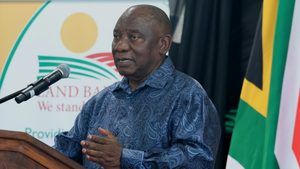
“I must make it clear that only the authorised government officials may act against violations of the law, including violations of our immigration laws,” Ramaphosa said.
“We will act against forces who are exploiting the concerns of our people, about illegal immigration, to further their own political, personal and criminal agendas.”
Last week, South Africa’s cabinet backed a National Action Plan on migration developed by an inter-ministerial committee.
That came two months after the government approved a revised policy on immigration that proposed a points-based economic migration system, the introduction of new visa categories and expanded digitalisation initiatives.
The protests have drawn criticism by African governments, including Nigeria, Ghana and Mozambique, which have offered evacuation flights to their citizens who want to return home.
Other nations, including Kenya and Malawi, have urged their citizens in South Africa to exercise caution amid the unrest.
Ghana has been particularly vocal in its criticism, with Foreign Minister Samuel Okudzeto Ablakwa calling for the African Union to ensure Pretoria takes stronger measures to protect migrants.
His South African counterpart, Ronald Lamola, said Ablakwa had also hinted at retaliatory measures after Ablakwa said in an interview with Joy Online on Saturday that there had been calls for a “nuclear option” against South African businesses operating in the West African nation.
Ramaphosa said he would be sending envoys to a number of African countries to outline the measures his administration was taking to deal with undocumented migrants and discuss how they could cooperate to tackle the issue.
Comments