Reserve Bank Governor sends a warning to the United States


Reserve Bank Governor Lesetja Kganyago has warned that the United States government’s over-indebtedness is becoming a growing concern.
The governor said the political will to lower debt appears to be missing in many developed nations, even as new spending pressures are building.
Kganyago noted that the tables seem to be turning in the global world order, as emerging markets are learning from their past mistakes and reforming, while developed nations are tolerating unsustainable debt growth and attacking central bank independence.
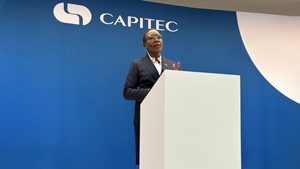
The governor made these statements in a recent address at the PSG Think Big Series held in Sun City on 6 May 2026.
In this address, Kganyago identified four risk factors that have emerged in recent years and severely muddied the global outlook.
One of the risk factors the governor identified is rising sovereign debt levels, saying that government over-indebtedness has typically been a problem of poorer countries.
However, this situation has seemingly flipped in recent years, and now “the warning lights are also flashing for developed countries”.
Kganyago pointed out that the United States’ debt-to-GDP ratio now stands at over 120%, the highest level since the Second World War.
“Meanwhile, the political will to lower debt is hard to find, while new spending pressures are building for items like defence as well as pensions for ageing populations,” he said.
The governor warned that rising sovereign debt levels pose many challenges for governments, as it forces them to divert their resources to interest costs.
“For countries with sustainable fiscal policies, debt works as a tool that smooths income, supports development, and ensures the safe assets governments create stay safe,” he said.
“Unfortunately, this is difficult to do, which is why debt crises are a routine feature of history. The trend in modern sovereign debt levels suggests this history could be repeated.”
“It is very hard nowadays to find experts who think government debt levels are safe. Even the doves are sounding hawkish. Unfortunately, many governments do not seem to be listening.”
South Africa vs the United States

South Africa has seen the situation Kganyago described play out over the past decade, with the state now spending around R1.2 billion a day servicing its debt, crowding out expenditure on more productive areas like education and healthcare.
However, the difference between South Africa and other economies, Kganyago said, is that South Africa is not in denial.
“We endured large and costly fiscal deterioration after the global financial crisis. Debt rose from about 30% of GDP to nearly 80%, and we lost our investment-grade credit ratings,” he said.
“The result of this painful experience is that we are now pursuing fiscal adjustment with determination – and the market believes us.”
Kganyago said if other economies’ learning curves are not shorter and flatter than South Africa’s, their outlook is not healthy.
However, he pointed out that the United States is in a highly unique situation, due to its status as the world’s largest economy.
Normally, countries in deficit are punished for high debt levels through funding flows that dry up, higher interest rates, weaker currencies, and slower growth.
In contrast, the United States, as the prime issuer of global safe assets – namely the US dollar and Treasury bonds – captures all the world’s financial flows, while everyone else gets crowded out.
At the same time, Kganyago warned that the United States and other developed countries are regressing into territory previously occupied by emerging markets.
“It is not that emerging markets are suddenly all grown up. Rather, the hierarchy has been flattened a bit,” he said.
“Many have learnt from past mistakes and reformed. At the same time, some of the advanced economies are regressing, for instance, by tolerating unsustainable debt growth and attacking central bank independence.”
He referred to comments made by former US Treasury Secretary and Federal Reserve chair Janet Yellen, who said recent moves in the United States resemble “the rhetoric of a banana republic”.
Yellen made this comment after US President Donald Trump put pressure on the Federal Reserve to lower interest rates.
Kganyago said Yellen made a good point, though it may be unfair to actual banana republics.
“After all, the biggest producer of bananas is India, which has an independent, inflation-targeting central bank. We are more worried about the banana-importing republics,” he said.





Comments