Major South African food producer battles business rescue


Business rescue practitioners (BRPs) are hoping to stabilise state-owned Daybreak Foods in the coming months after the Public Investment Corporation (PIC) pumped over R200 million into the company.
The plan is complicated by the view that Daybreak Foods is a national strategic asset, which means that the state is unlikely to allow it to fail or significantly reduce its operations.
Daybreak is also seen as a vital player in South Africa’s agricultural sector and provides employment for over 3,000 individuals.
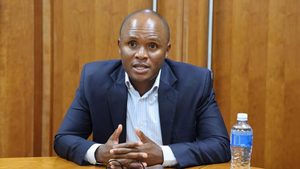
BRP Tebogo Maoto recently outlined the challenges he faces in implementing Daybreak’s business rescue plan to Newzroom Afrika, specifically focusing on creating a sense of urgency at the company.
Daybreak entered business rescue in May after facing severe financial challenges and accusations of animal cruelty that resulted in the mass culling of chickens.
The company failed to pay workers in April, which pushed the PIC to appoint a new board of directors and pledge additional funding worth R200 million.
South Africa’s largest asset manager, which manages the investments of the Government Employees Pension Fund (GEPF), first bought Daybreak for R1.19 billion in 2015.
The shareholding was split evenly among the GEPF (33.3%), the Compensation Fund (33.3%), and the Unemployment Insurance Fund (33.3%).
“The focus of the business rescue plan is mainly the emergency phase and the reactivation plan,” Maoto said.
Daybreak’s operations have effectively halted after the mass culling of chickens in May, as the company was accused of animal cruelty.
The National Council of the Society for the Prevention of Cruelty to Animals said in May that it had to cull more than 350,000 birds from various farms that rear them for Daybreak after they were left without feed for days, resulting in mass cannibalism.
The NCSPCA said staff at several sites had not been paid, and thousands of dead chickens were left in the growing sheds.
Saving Daybreak

Daybreak formally entered voluntary business rescue on 12 June, with the PIC’s newly-appointed board highlighting governance issues, a lack of regulatory compliance, and poor financial reporting.
It felt that more drastic measures were needed to save the company, with business rescue giving more freedom to enact sweeping changes.
Maoto said one of his first tasks will be to begin paying worker salaries. The company has been in arrears with wage payments since April.
“We are still in arrears in terms of worker salaries, and we are beginning to put measures in place to start paying salaries going forward and are engaging with employees who are no longer working,” Maoto said.
He explained that Daybreak’s monthly wage bill sits at around R33 million and is unaffordable due to only two divisions of the company actually operating.
These divisions are also not generating much in terms of revenue and income for the company, meaning it has next to no cash from which it can pay salaries.
“We are relying on the support of the shareholder and the funder to pay salaries currently, which is unsustainable going forward,” Maoto said.
One of the few options he has is to begin a labour rationalisation process to reduce the wage bill and focus the company’s resources on the few divisions that are operating and generating income.
The main shareholder and funder, the PIC, apart from keeping the business alive, is looking for some return on its investment, which has ballooned from the initial R1.19 billion to around R2 billion.
“The PIC as a shareholder obviously has an expectation to recover the R2 billion it has invested in the company and perhaps generate a return,” Maoto said.
“However, given the issues Daybreak faces, they have to adopt a patient approach for us to realise a better recovery plan going forward.”
Maoto said it would take years for Daybreak to fully recover from the years of mismanagement, poor compliance, and a lack of capacity in terms of skills.

Comments