Chinese cars taking over South Africa


Nedbank CEO Jason Quinn said Chinese cars are set to continue growing in South Africa’s car market, as manufacturers have learned from previous failed attempts to breach the local market.
Speaking at the Nedgroup Investments Treasurers’ Conference on 19 August 2025, Quinn outlined the strength of South Africa’s vehicle market.
Despite facing severe challenges, the local vehicle market has remained strong, with this buoyancy led by the boom of Chinese cars in South Africa.
In particular, Chinese brands such as GWM (Haval), Chery, and Omoda have gained popularity and are even starting to challenge traditional Asian giants like Hyundai and Kia.
It should be noted that Chinese manufacturers are not alone in transforming South Africa’s car market. Other foreign manufacturers, particularly from India, Japan, and South Korea, are also showing strong growth.
However, China has established itself as the dominant source of automotive aftermarket parts in South Africa.
Since 2018, China has been the top supplier, and in 2021, a striking 64% of all imported aftermarket parts into South Africa were made in China.
In addition, the popularity of Chinese cars has surged in South Africa, with adverts for their models on AutoTrader growing 83% year-on-year and enquiries skyrocketing 183%.
Chinese brands also saw a 92% sales increase in the used car market, while used car sales decreased by 2%.
Furthermore, the Chinese have made inroads into the electric vehicle market, with brands like BYD breaching the top 10 used EV sales list.
Speaking at the Nedgroup conference, Quinn explained that, in his 25 years in banking, he has seen Chinese car manufacturers attempt to enter the South African market three times.
The first attempt was not sustainable, as the manufacturers attempted to enter the market with products that were inferior to established offerings.
The second attempt saw more experimentation, but was also ultimately unsuccessful. Quinn attributed this to the manufacturers relying more on price than on other factors to draw customers.
He explained that the manufacturers did not quite understand the competitive nature of the South African market. “They thought price was the leader and on its own should win,” he said.
However, the third attempt, the one South Africa is currently seeing, has seen manufacturers learn from previous mistakes.
Quinn said this has resulted in Chinese manufacturers having a far more sustainable path to growth in the South African market.
He explained that Chinese cars now offer customers longer and better warranties and a slightly better price than most traditional manufacturers. “So we’re seeing a lot of opportunity in that segment of the market once again,” he said.
Pressure on local manufacturers
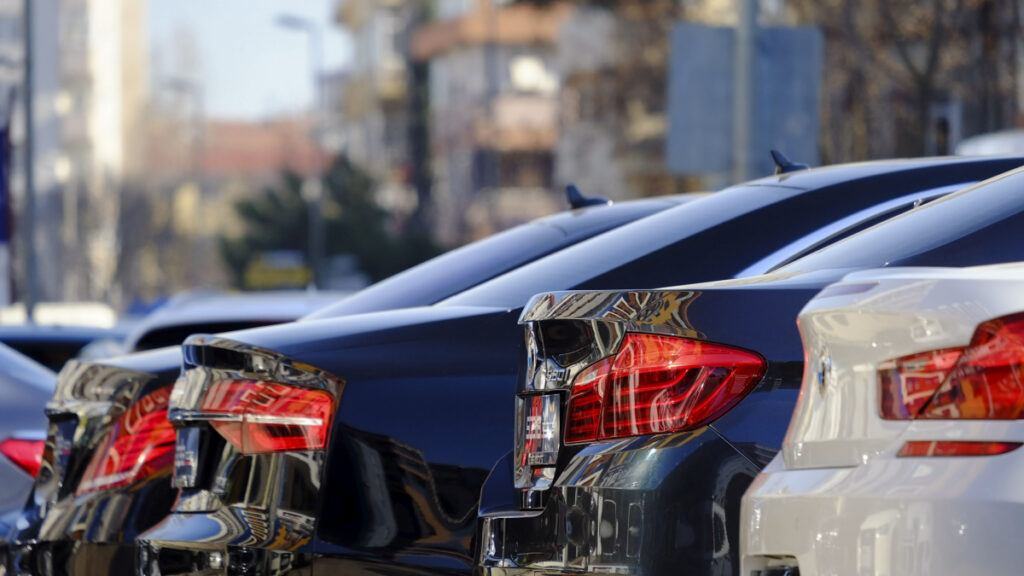
While the boom of Chinese and other foreign cars in South Africa has strengthened the local vehicle market, it has also put significant pressure on local manufacturers.
In Combined Motor Holdings’ (CMH) latest 2025 Integrated Report, CEO Jebb McIntosh lamented South Africa’s difficult trading environment for local car brands.
CMH represents many leading motor vehicle brands in South Africa, including Ford, Jeep, Land Rover, Mahindra, Honda, Mazda, and Nissan.
McIntosh stated that the pressure on local car brands was primarily caused by pricing pressure, which was intensified by the influx of low-priced foreign imports and the resulting decline in sales volumes of traditional, locally sourced brands.
He explained that this affected nearly every part of CMH’s operations, from manufacturing to the car rental business.
At the manufacturer level, he cited the unrestricted proliferation of Chinese and Indian vehicle imports as a significant challenge, saying it placed extreme pressure on local producers.
He warned that many jobs may be lost unless there is more government support for local manufacturers.
According to Dylan Petzer, National Vice-Chairman of the Tyre, Equipment, Parts Association (TEPA), the challenge is finding a balance between welcoming foreign investment and ensuring local businesses are not sidelined.
“How does a small, independent parts manufacturer in a town like Springs compete with high-volume, high-tech factories in Asia?” Petzer asked. “This is a tough reality, and there is no simple answer.”
“These companies face difficult decisions – should they prioritise cost-saving measures or continue supporting local suppliers to meet government industrial targets?”
Despite the challenges, Petzer believes opportunities exist through specialisation and high-quality manufacturing. This can be boosted by targeted government support in areas such as EVs.
Government support is vital in this environment, with initiatives such as the Automotive Investment Scheme (AIS) and the National Association of Automotive Component and Allied Manufacturers (NAACAM) programmes playing an essential role in supporting local industry.
“These interventions are not just helpful; they are critical for survival,” Petzer said. “They protect not only businesses but also local jobs and the development of crucial skills.”
 Loading ...



Comments