Technically insolvent fund that gets R47.8 billion from the government every year wants the biggest increase to fuel levy in history


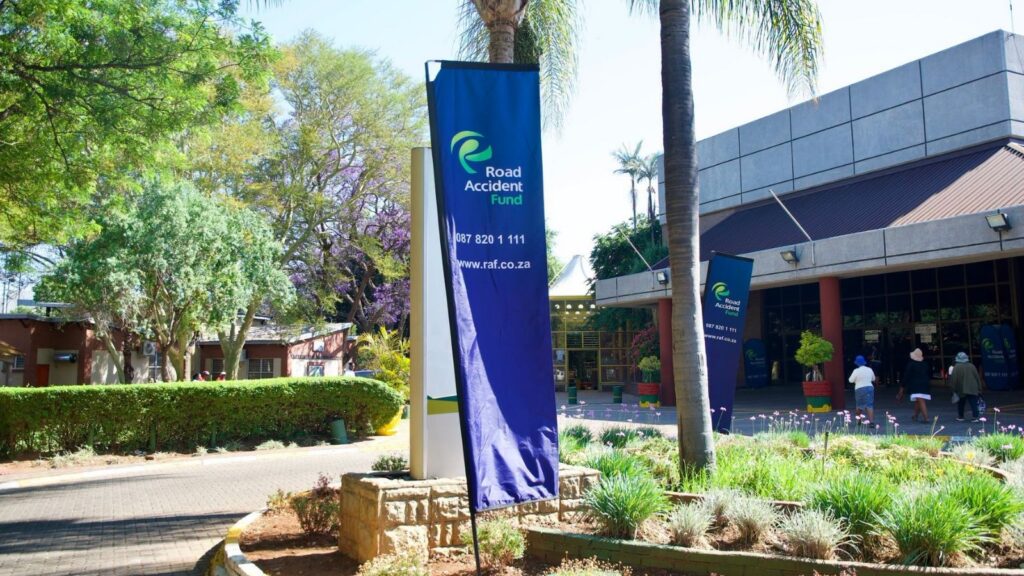
The Road Accident Fund (RAF) proposed a 33% increase in its fuel levy, which Transport Minister Barbara Creecy is unwilling to agree to.
This comes as the RAF’s longstanding financial and administrative failures continue to put the fund into a precarious position.
This was revealed in a Parliamentary question posed to Creecy by National Assembly Member Adil Nchabeleng.
Nchabeleng asked the minister what justification the RAF put forward for proposing a further 33% increase in its fuel levy despite its longstanding financial and administrative failures.
He noted that this request came in light of the RAF collecting R47.8 billion in levy revenue in the 2025/26 financial year, while South Africans are facing petrol prices exceeding R30 per litre.
In South Africa, the price motorists pay for petrol and diesel consists of various components.
When setting petrol and diesel prices, the Department of Mineral and Petroleum Resources considers global oil prices, the rand-dollar exchange rate, and administered elements.
The final price motorists see at the pump reflects three major components:
- The Basic Fuel Price (BFP), which is determined by global oil prices and the rand-dollar exchange rate
- Wholesale and retail margins, and storage, transport, and distribution costs
- Taxes and Levies
Outside of the BFP, taxes and levies are the largest component of the price motorists pay at the pump, at 21%.
South Africa has five fuel-related taxes and levies, but the largest contributors by far are the General Fuel Levy (GFL) and the RAF Levy.
The GFL is a tax levied on every litre of petrol sold. It is administered by the National Treasury and treated as a general tax.
The RAF Levy funds the RAF, which uses this money to compensate victims of road accidents.
In the 2025/26 fiscal year, the RAF Levy increased by 7 cents per litre, bringing it to R2.25 for every litre of fuel.
As Nchabeleng pointed out, the RAF collected R47.8 billion in levy revenue in the 2025/26 financial year, accounting for the vast majority of its R48.1 billion revenue.
Cash-strapped
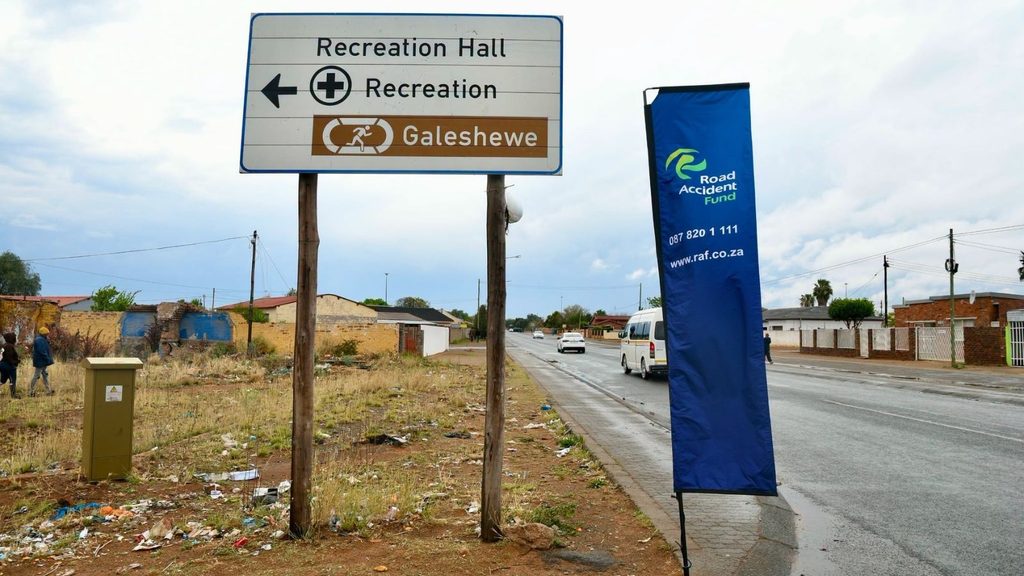
While the RAF has consistent funding from the RAF Levy, the state-owned fund is in a precarious financial position.
Its 2025/26 fiscal year results revealed that the fund is technically insolvent, meaning its liabilities outweigh its assets.
In its annual report for that year, the RAF reported total liabilities of R452.4 billion and total assets of R12.9 billion.
“This reflects a structural mismatch between revenue and obligations,” the RAF said in its report.
“The current model provides approximately 3 cents of assets for every R1 of liability, underscoring long-term sustainability challenges.”
Operationally, the fund has also been unstable, having had four CEOs in seven months in 2025.
While a permanent CEO has since been appointed, the RAF remains in a highly precarious position and will likely require state support if this continues.
The fund also faces a backlog of 329,369 claims, 133,903 of which were in an incomplete finalisation stage in 2025/26.
It is in light of these struggles that the RAF requested a 33% increase in the RAF Levy. This would be the biggest increase in the RAF Levy in its history.
In response to Nchabeleng’s question, Creecy said that she “will not agree to an increase of the Road Accident Fund’s portion of the fuel levy at this time”.
Nchabeleng also asked what measures have been implemented to improve the RAF’s financial and operational performance.
Creecy said the RAF has implemented a change in its accounting treatment for claims liabilities, which improved its audit outcome to an unqualified audit opinion.
“Furthermore, the Interim Board implemented a change to the strategic direction of the Fund and claims management approach,” she said.
“The Claims Assurance mandate has been revised and maintained as a key control aimed at preventing inappropriate claims payments.”
She also said the RAF has enhanced its IT control environment to prevent and detect duplicate, incorrect, and overpaid claims.
“The RAF acknowledges the financial pressures facing road users, workers, pensioners and households, and does not support the position that motorists should bear the consequences of institutional weaknesses,” she said.
“Accordingly, the position is that any consideration of future funding measures must be balanced against the interests of road users and taxpayers.”
Login or register for unlimited free access.




Conversation
12 commentsStart at the top !!!
Executive remuneration at R32.5m ,
ADD ( believe it or not !!!) ……..PERFORMANCE BONUSSES R6.7M
it is a money making business for incompetent senior excecutives ( note that I delibaretly do not refer to any race group involved …. the names says it all ) ….WAKE UP WAKE UP !!!!