South Africans are paying R5.32 less per kilogram for beef mince and steak now than a year ago


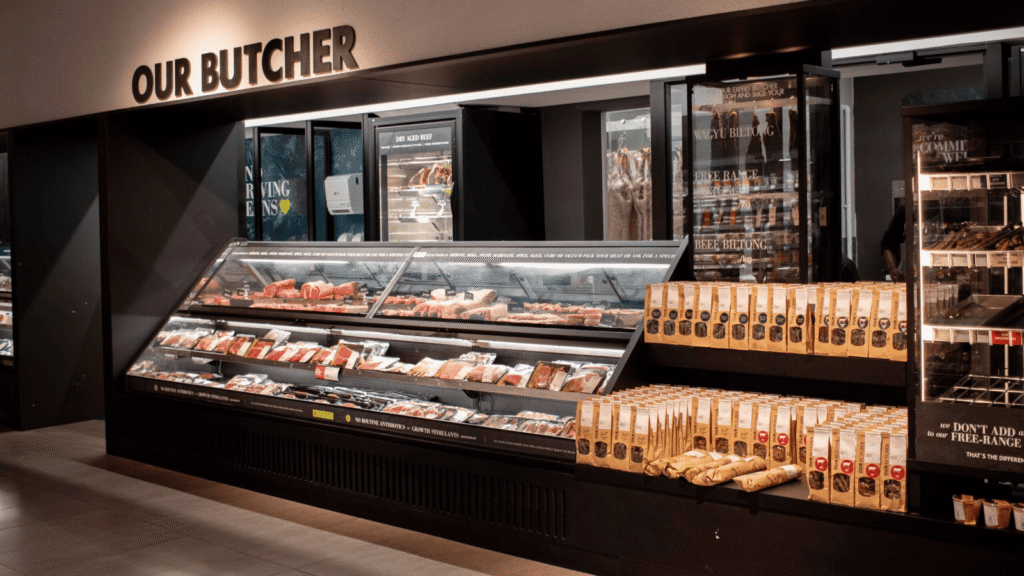
South Africans are paying less for several beef products than they did a year ago, with prices of beef mince and steak falling by more than 4% between September 2025 and September 2026.
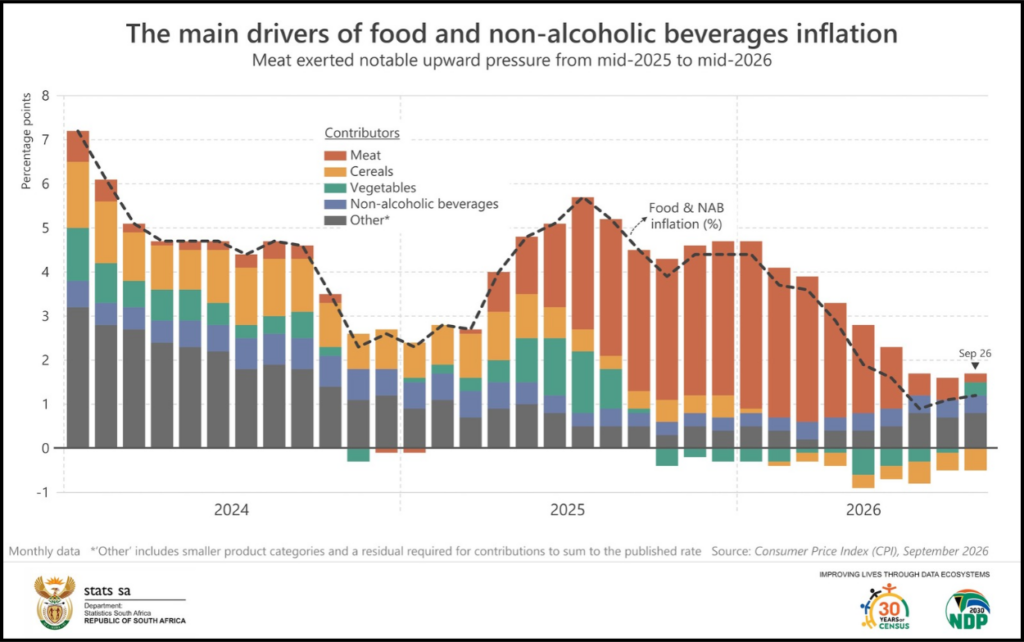
Statistics South Africa’s latest Consumer Price Index (CPI) report shows that annual meat inflation slowed to 0.7% in September 2026.
This is down from 11.7% a year earlier, and is the lowest annual meat inflation rate since March 2025, when it stood at 0.4%.
The decline follows a sharp increase in meat prices during 2025 and early 2026. Annual meat inflation reached 12.6% in December 2025 before peaking at 13.5% in January 2026.
It then fell steadily, reaching 11.6% in March, 9.4% in April, 7.3% in May and 5.1% in June. It slowed further to 1.5% in July and August before reaching 0.7% in September.
However, the latest figures do not mean all meat products are becoming cheaper. Stats SA recorded annual price decreases for several beef products, including:
- Stewing beef: down 7.2%.
- Beef mince: down 4.6%.
- Beef steak: down 4.4%.
- Beef offal: down 0.4%.
Other meat products continued to become more expensive. Corned meat recorded an annual increase of 10.7%, bacon rose by 10.1%, and ham increased by 8.1%.
The figures also show that meat inflation has fallen much faster than inflation across the broader food category.
Annual inflation for food and non-alcoholic beverages increased for a second consecutive month, reaching 1.2% in September from 1.1% in August and 0.9% in July.
Meat had been a major contributor to food inflation from mid-2025 to mid-2026. Its influence has since weakened as price increases slowed.
Meat also carries a significant weight in the consumer price basket. It accounts for 5.1% of expenditure in all urban areas and 5.36% across the country.
Its importance is even greater for some lower-expenditure groups, accounting for 7.51% of spending in rural areas and 6.42% for expenditure decile five.
What is driving the decline in beef prices
The latest figures from the Red Meat Producers’ Organisation (RPO) and Standard Bank show that beef prices have declined at producer level over the past year.
RPO data shows that the average A2/3 beef carcass price was R70.70/kg for the week ended 26 September 2025.
For the week ended 25 September 2026, it was R65.38/kg. This represents a decrease of R5.32/kg, or approximately 7.5%.
The latest Standard Bank Agribusiness report, published on 30 October 2026, also found that average beef prices were 7.9% lower year-on-year.
However, prices were more mixed in the latest week covered by the report. The average A2/A3 beef price declined by 0.7% week-on-week to R65.20/kg. In contrast, AB2/AB3 prices increased by 2% to R64.32/kg.
B2/B3 prices rose by 4.5% to R64.01/kg, while C2/C3 prices increased by 2.3% to R58.97/kg.
This suggests that the annual decline has not meant prices are falling consistently across all beef categories or from one week to the next.
The Standard Bank report also tracks the beef-to-maize price ratio, which increased by 1.9% to 16.1 in the week covered. This followed a 2.5% decrease in the average yellow maize price.
The report does not directly attribute the annual decline in beef prices to a particular factor. However, it pointed to developments in the regional livestock market that could affect supply and trade.
South Africa and Namibia are considering new protocols for importing sheep and cattle following recent foot-and-mouth disease (FMD) outbreaks in both countries.
Namibia confirmed its first FMD case in September 2026 on a commercial farm in the Kharas region. This was the first outbreak detected in the country’s WOAH-recognised FMD-free zone.
Before the outbreak, the two countries operated under a common livestock import framework. Import requirements were largely based on the animal health status of the exporting region and veterinary certification.
Industry stakeholders are now working towards separate protocols for sheep and cattle movements to address the different disease risks.
The sheep trade is treated differently because sheep pose a lower FMD transmission risk and are economically important to both countries. More than 90% of Namibia’s sheep exports are destined for South Africa.
These exports account for approximately 8% to 15% of South Africa’s annual sheep slaughter. The final protocols will be determined by the veterinary authorities of both countries before trade can fully resume.
Login or register for unlimited free access.





Conversation
1 commentsThat depends on where you buy it … and the quality