The South African police squad that gets R1.63 billion a year but cannot answer its phones



The South African Police Service’s (SAPS) Flying Squad receives a R1.63 billion allocation from the state each year, yet it fails at performing one of its most critical functions: answering the phone.
The Acting Minister of Police, Firoz Cachalia, revealed this shortcoming in response to a Parliamentary question in October 2026.
In his response to a question from MP Ian Cameron, Cachalia revealed that the Flying Squad answered 37.12 million of the 49.96 million calls it received over the past five fiscal years.
Of this total, 12.84 million calls were also dropped. In addition, only 119 of 207 allocated phone lines are operational.
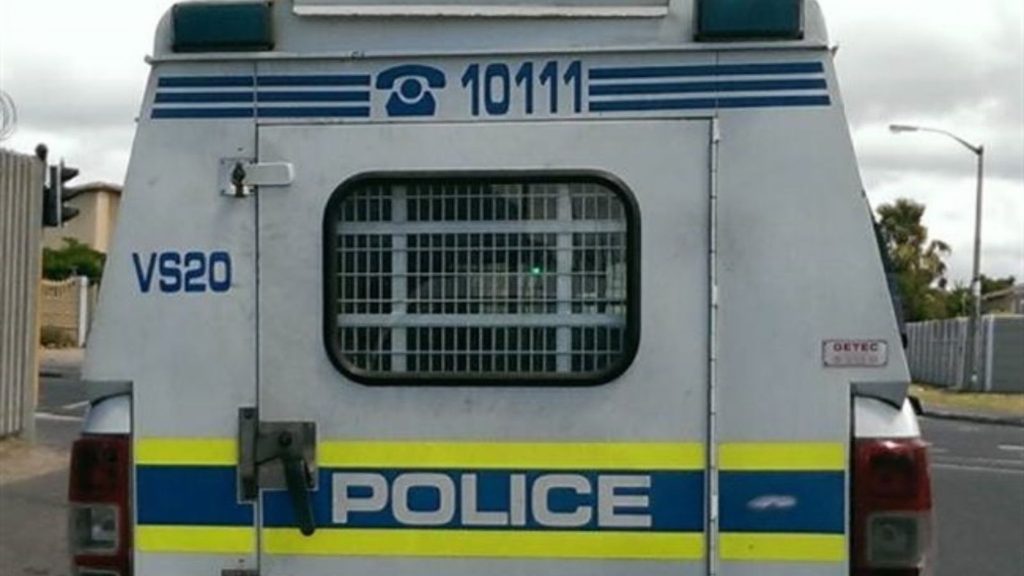
SAPS’ Flying Squad plays a critical role in the police service’s Rapid Response unit, linked to 10111 emergency centres.
Its core role is to act in immediate, high-speed response to serious, violent, and priority crimes currently in progress.
This includes responding to armed robberies, hijackings, and kidnappings. South Africa currently has 33 Flying Squads across nine provinces.
In the day-to-day, the Flying Squad also plays an important role in terms of visible policing through vehicle patrols along South Africa’s major routes.
According to SAPS, the Flying Squad constantly monitors the police radio, allowing members to respond quickly to serious and violent crimes in progress.
The Flying Squad also assists in crime prevention operations and, at times, serves as backup during policing of major events.
In SAPS’ Annual Performance Plan for the 2026/27 fiscal year, it reported that R1.63 billion would be allocated to the Flying Squad.
This is up from R1.56 billion in the 2025/26 fiscal year, and R1.4 billion in 2024/25.
Phone calls go unanswered
In October 2026, Cameron asked the Acting Minister of Police what number of phone lines are allocated to each Flying Squad in each province.
He also asked how many of these lines are operational and how many calls were received from 10111 dispatch in the past five financial years.
In response, Cachalia revealed that, out of the Flying Squad’s 207 allocated telephone lines, only 119 were operational.
He provided a breakdown of these phone lines per province, which showed that the non-operational lines were concentrated largely in Gauteng.
Gauteng accounted for 66 non-operational lines, representing 75% of the national total. Major deficits were found in Tshwane (30 lines down), Germiston (10), and Soweto (6).
In one Gauteng municipality, Sedibeng, all 13 of its allocated phone lines were non-operational.
The Eastern Cape also had a high number of non-operational phone lines, accounting for 20.5% of the national total. Out of 29 allocated lines, only 11 are operational.
Positively, five South African provinces had no non-operational phone lines. These provinces are KwaZulu-Natal, Mpumalanga, North West, the Western Cape, and the Northern Cape.
However, Cachalia’s response also revealed that, of the 49.96 million calls the Flying Squad received, only 37.12 million, or 74.3%, were responded to.
Of the 49.96 million calls received, 12.84 million (25.7%) were dropped. The average response time to calls was 53 seconds.
Cachalia did not explain in his response why these calls went unanswered. However, he did explain why so many phone lines were out of service.
The minister attributed it largely to the phasing out of legacy analogue lines and IP Telephony (IPT) upgrades.
He said the vast majority of inactive allocations, including those in Tshwane, Soweto, and Germiston, were historical analogue connections that are being phased out.
As units migrate to more modern infrastructure, a baseline number of IPT lines have been activated while requirements for additional IPT licences and devices are being validated.
Outside of these upgrades, Cachalia also addressed specific regions where phone lines were non-operational for other reasons.
For example, Sedibeng, the municipality where all 13 Flying Squad phone lines were non-operational, had its legacy PABX switchboard decommissioned.
In Gqeberha, where all 14 of its lines were non-operational, Cachalia said the municipality’s IPT platform depended on copper infrastructure, which was disrupted by theft.
He said a temporary cellular number was assigned to the community while the units transitioned to a different system.
Login or register for unlimited free access.






Conversation
1 commentsImagine a business with no managers at all.
This is SAPS.