South African prisoners found with R1 million in cash and 102,720 cellphones in their jail cells


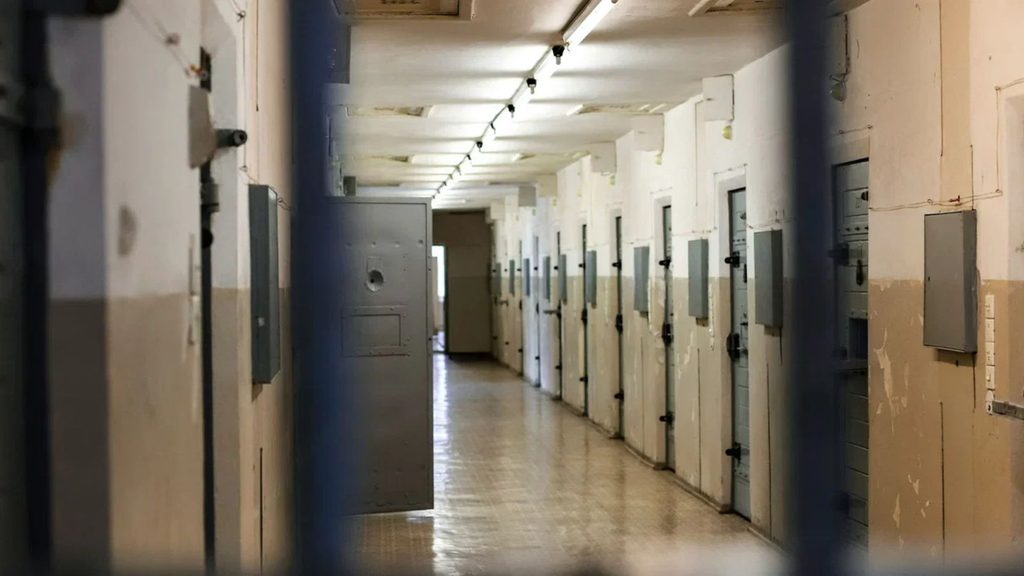
The Department of Correctional Services has found R1.01 million in cash in prisoner cells during searches for contraband in the past three financial years.
Alongside the cash, 59,788 sharpened objects have been found, 102,720 cellphones, and 657.8 kilogrammes of illicit substances.
This is an indication of how crime continues behind prison walls, with influential prisoners having regular contact with the outside world and effectively running mini-economies.
Correctional Services Minister Pieter Groenewald revealed these statistics in a response to a parliamentary question from MP Jahno Engelbrecht.
Engelbrecht asked the minister to provide details about the number of searches his department has conducted in South Africa’s prisons and what the searches have uncovered.
Groenewald revealed that his department has conducted 128,476 searches in the past three financial years.
These searches typically focus on contraband and cellphones to prevent mini-economies forming in prisons and to limit contact with the outside world.
The searches also often reveal the identity of government officials who help criminals access cellphones and contraband.
Groenewald’s searches focused heavily on prisons in Gauteng and the Western Cape, with 19,379 and 29,283 searches being conducted in these provinces, respectively.
This is due to their high numbers of prisoners and the concentrated nature of the prisons in these regions. These prisons are also often in urban areas, making external contact more likely.
Groenewald also detailed the contraband found in these searches across South Africa’s prisons, with illicit substances being relatively common.
Across the past three financial years, Groenewald’s department has found 657.8 kilogrammes of illicit substances in prisoner cells. This is coupled with a large amount of hard cash of R1.01 million.
The department has also uncovered 102,720 cellphones, with the number found in each financial year increasing significantly year-on-year.
Sharpened objects are also popular among prisoners, with the department finding 59,788 across its prisons.
The table below outlines the total contraband confiscated in correctional facilities over the past three years.
| Contraband | 2023/24 | 2024/25 | 2025/26 | TOTAL |
| Cellphones | 30,251 | 33,227 | 39,242 | 102,720 |
| Cellphones Accessories | 43,491 | 53,767 | 60,879 | 158,137 |
| Sharpened Objects | 16,511 | 19,177 | 24,100 | 59,788 |
| Substance in Grams | 204,275.72 | 205,559.95 | 247,966.04 | 657,801.71 |
| Money | R286,311.71 | R357,421.01 | R361,516.49 | R1,005,249.21 |
Prisons are a hotbed of crime
South Africa’s prisons are home to highly active criminals who can extend their influence and reach outside of correctional facilities.
This gives them access to illicit contraband and cash, alongside other objects that can be traded within prisons to create a mini-economy.
Groenewald’s department has tried to crack down on this by increasing the number of searches and identifying prison officials who may be helping prisoners access illicit substances and cellphones.
The minister gave details about some of the officials dismissed and disciplined for moving illicit contraband into prisoners’ cells.
Groenewald revealed that 46 prison officials have been dismissed or resigned after disciplinary action for moving contraband into correctional facilities.
Many of these officials moved cellphones and marijuana into prison cells, with a handful giving prisoners cigarettes.
Groenewald’s response shows that prisons in South Africa are often used by criminals to continue illegal activity, despite being convicted.
The Global Initiative Against Transnational Organised Crime’s data shows that cellphones in South African prisons are often used in basic fraud operations.
These prisoners use prisons and pre-trial detention centres as simple scam centres, similar to those seen in Russia, Ukraine, and Colombia.
The prisoners use cellphones to contact ‘free’ individuals and dupe them into giving away personal information that can be used to access bank accounts.
“For those in charge of such operations, the benefits are obvious – a captive workforce often dependent on the hierarchy for their quality of life and strong protection against prosecution,” the organisation said.
The report noted that in some cases, the prison guards themselves are the head of the criminal enterprise and use prisoners as their workforce.
“But such operations are also limited. Scammers may have to rely on simple phone calls using supplied numbers, without being able to draw upon the arsenal of tech tools more sophisticated efforts use,” it said.
These operations are also limited by the poor skill set offered by prisoners, with specialised skills that would be available freely outside being unavailable.
Login or register for unlimited free access.






Conversation
2 commentsMessage to minister; Groenewald, it is your duty to stop all that happening.