Johannesburg needs to repair 12,000 km of pipes, but it only managed 17 km last year


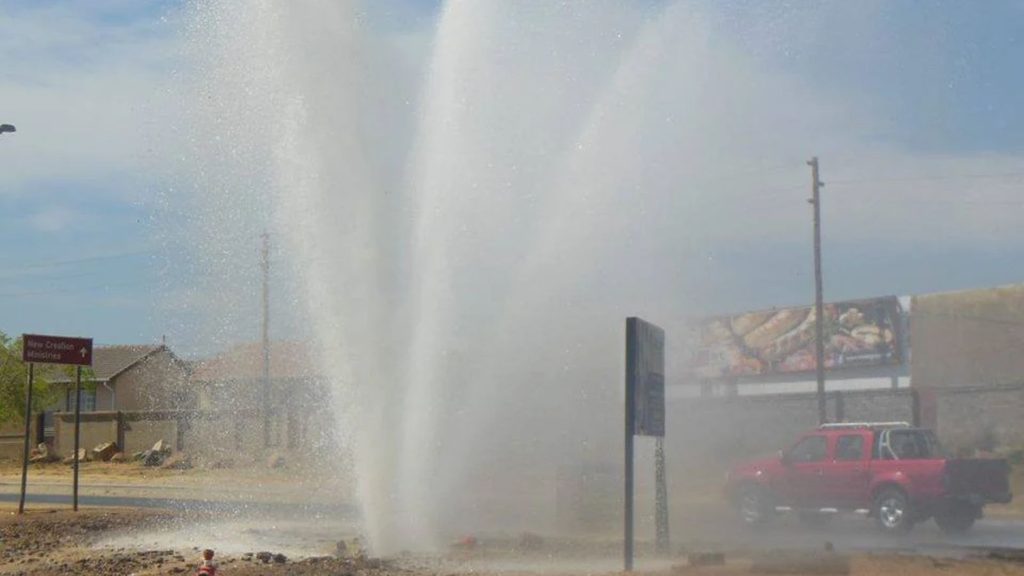
The City of Johannesburg has a network of 12,000 kilometres that needs to be repaired or replaced. However, in the past reporting cycle, only 17 kilometres were attended to.
This indicates the scale of the challenge the city faces in addressing sporadic water shortages that can last weeks in some areas.
It also points to the main cause behind the city losing 655 million litres of water every day, which amounts to R71.5 million in lost water tariff revenue.
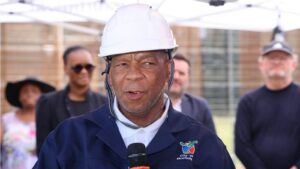
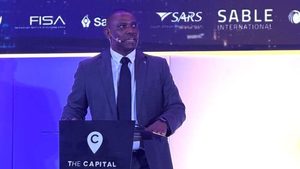
Former technical manager at the Auditor-General, Themba Dlamini, revealed how bad a position Johannesburg is in during a presentation at the State of Nation podcast.
“Before I can finish my presentation and this breakfast, the city would have lost more water than everyone in this room combined will drink in a lifetime,” Dlamini said.
“47% of the City of Johannesburg’s water does not earn the city a cent. It is leaking out through burst pipes from Brixton to Bryanston.”
Another challenge that forms part of the broader definition of non-revenue water is illegal connections, which Dlamini estimates consume R3.6 billion worth of water a year.
Illegal connections and leaking pipes are symptoms of a system that has not been adequately maintained or invested in over the past two decades.
Increasingly, this lack of maintenance means that investment in repairs is no longer enough, with entire sections needing to be replaced.
As infrastructure ages, it becomes expensive to repair and maintain, making it more cost-effective to replace it entirely.
In Johannesburg, neither maintenance nor replacement is happening, resulting in water shortages across the richest city in Africa.
Here is a detail that I think would keep any accountant awake. The city has over 12,000 kilometres of water pipes, and in the last reporting cycle, it could only replace 17 kilometres,” Dlamini said.
“I will say it again, 17 kilometres in a system that has over 12,000 kilometres of pipes. That is not us replacing a network. That is watching one collapse.”
At this rate, it would take the City of Johannesburg 705 years to replace its existing water pipe network.
More than a water problem

Dlamini explained that this shows the problem in Johannesburg is not a lack of water, but an inability to get water to the end consumer.
“Most people will come and say, ‘Well, South Africa has a drought problem. We are a dry country, and our dam levels are low.’ This is not the case,” Dlamini said.
In the case of Johannesburg, the dams supplying the city are relatively full and Rand Water is able to provide ample bulk supply and even breach its upper supply limit for some periods.
The main problem is the collapsing network in the city that fails to get that water from the bulk supplier to the end user.
“This is a bookkeeping problem that you can actually touch. This is what happens when no one reconciles what happens year in and year out. No one has been held accountable,” Dlamini said.
Data from the Centre for Risk Analysis (CRA) shows that dam levels in Gauteng and the regions that supply it are at 95% of capacity.
However, 28% of households in the city experienced water outages lasting 48 hours or longer over the past year. 20% lost supply for 15 days or more.
This points to a major issue in delivering water from the bulk supply to the end user, with a large portion lost en route.
Nationally, 47.3% of water is lost en route to the end user. Johannesburg is in a worse position, with losses reaching 50%.
This not only results in water shortages but also has significant implications for the city financially.
The CRA noted that Johannesburg loses 655 million litres of water a day to burst pipes alone. This is a third of its total supply from Rand Water.
Under the commercial water tariff rate of R63.85 per kilolitre in Johannesburg, this amounts to R48.1 million in revenue lost per day by the city.
Using the residential scale, R71.5 million of revenue is lost daily. This can be seen in the table below.


Conversation
1 commentsInability to assess risk and weigh amongst priorities.
Not uncommon amongst incompetent folk way out of their depth.
You probably find water isn’t the only problem. We know 260 bridges are not getting maintenance.