Top economist warns that the South African rand can collapse after the November elections


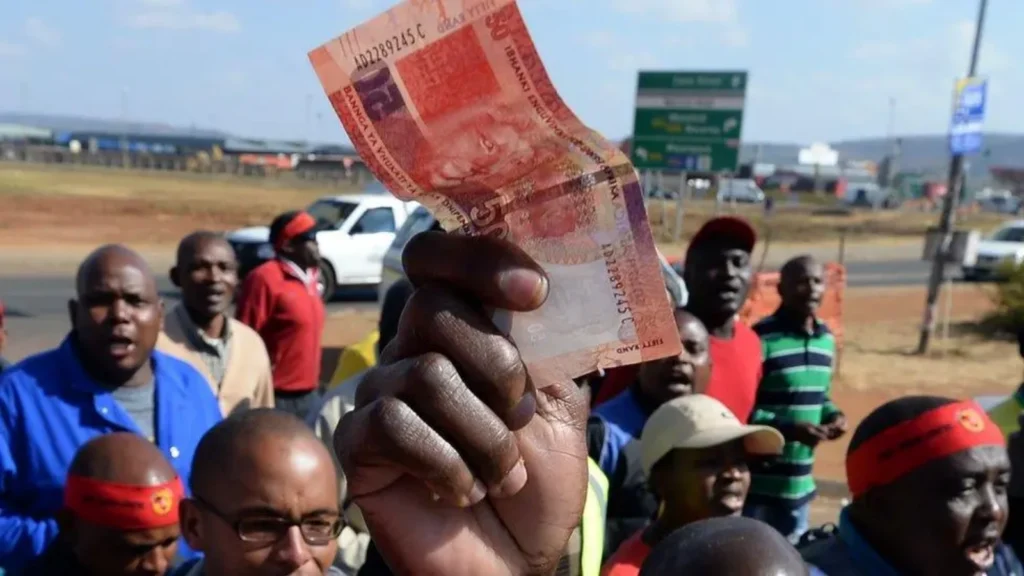
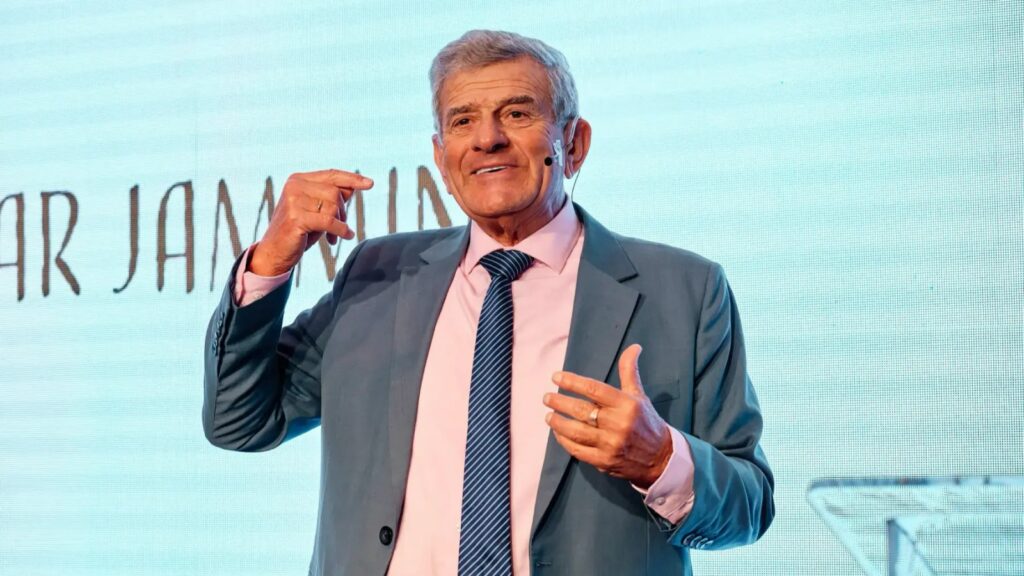
Econometrix chief economist Dr Azar Jammine warned that the rand could collapse if a more populist party were to come into power in South Africa.
Jammine put forth this notion in an interview with Newzroom Afrika, as part of a discussion on South Africa’s economic growth prospects.
The International Monetary Fund (IMF) recently raised its growth outlook for South Africa, expecting it to match 2025’s 1.1%.
Jammine pointed to the formation of the Government of National Unity (GNU) as being a key factor behind South Africa’s more positive global perception over the last two years.
“The GNU is giving the impression of pursuing fiscal rectitude and a disciplined government,” Jammine said. “They are controlling government spending far more than people had feared.”
Around the time of South Africa’s last national election in 2024, Jammine said there had been concerns that populist parties such as the EFF or MK would come into power.
Many South Africans feared these parties would embark on massive government spending sprees, exacerbating state capture and corruption.
While this did not happen in 2024, that uncertainty has not necessarily dissipated and may return as the country moves closer to the local government elections in November.
Jammine warned that if the EFF or MK were to come to power, whether in a national unity government or not, investor confidence in South Africa would likely suffer.
“If we land up in a situation where the EFF or MK, with populist policies, were to suddenly be in charge and dominant in government, investors would take fright,” Jammine warned.
“The rand would collapse, inflation would soar, and interest rates would rise sharply. We would see economic growth faltering very badly.”
While Jammine conceded that the GNU was not a perfect solution for South Africa, he said it was at least protecting South Africa’s economy from a complete meltdown.
This can be seen in the National Treasury’s recent decision to withhold state funding from 69 municipalities for failing to properly manage their finances.
Rand remains resilient
Despite the looming uncertainty with regard to South Africa’s upcoming local elections, for now, the country’s economic prospects appear stable.
While the IMF predicted South Africa’s economic growth in 2026 would be 1.1%, the South African Reserve Bank expects it to be 1.2%.
According to Jammine, however, a 0.1% difference was negligible and pulled attention away from the more important takeaway.
“What is encouraging is that they didn’t revise South Africa’s economic growth forecast downwards, whilst they did so for the world economy,” Jammine said.
“That means they have seen a relatively slight improvement in South Africa’s growth position compared with the rest of the world. But it is relative.”
Jammine explained that South Africa has one of the lower growth rates for emerging economies, with population growth still outpacing economic growth.
However, certain global factors have helped to keep South Africa’s growth prospects positive, such as rising platinum and gold prices over the last year.
The short-term decline in oil prices over the past few months has also diminished some of the economic pressure placed on it by the outbreak of the Iran war.
The rand itself has shown resilience over the course of the conflict, maintaining a stable average exchange rate of around R16.50 to the dollar over the last four months.
Jammine cautioned, however, that South Africa remained particularly vulnerable to potential oil price shocks in the event of the conflict escalating again.
“Unlike many other emerging markets, South Africa doesn’t produce its own oil,” Jammine explained. “It has a few synthetic fuel refineries, but it’s not enough.”
“If the oil price were to double, then South Africa would be in serious trouble. It appeared as if that might be the case a few months ago, but that scenario has been avoided.”
While the price of oil has dropped significantly from its peak in late April, it picked up again slightly following the collapse of the US-Iran ceasefire on 8 July.
While this could negatively impact South Africa as a net importer of oil, Jammine said it also presented the potential for economic benefit.
A protraction of the conflict could see more people turn to safe haven assets such as gold, driving up prices of this and other precious metals such as platinum.
As the world’s largest platinum producer and tenth largest gold producer, South Africa’s economy would stand to gain from these higher prices.





Comments