South African politicians speak about ‘state money’. It is just wrong.


Many South African politicians speak about state money as if it were revenue generated by the state. This is misguided, as it gets all of its money from taxpayers.
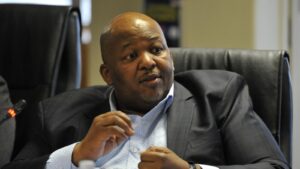
The first example comes from the chairperson of Parliament’s Standing Committee on Finance, Joe Maswanganyi.
During an oversight visit to Daybreak Foods, they saw what remained after the company’s collapse following the Public Investment Corporation’s (PIC) investment in it.
The once-promising poultry business is in severe financial distress due to poor governance, weak financial controls, and irregular expenditure.
“This is not state money, but hard-earned money of the workers who have put their money in the Government Employees Pension Fund for the PIC to manage,” Maswanganyi said.
“Our conscience must be clear. We need to make sure the entity is turned around in the best interest of the investors, the workers.”
Maswanganyi’s intentions are noble. However, his view on state money is misguided as he thinks it somehow differs from that of “hard-earned money of the workers”.
Just like pension fund contributions, state money comes from workers, which the South African Revenue Service (SARS) takes from them.
Just like with the money that goes toward the PIC, the state has a responsibility to ensure it does not waste the money it takes from taxpayers.
Transport Minister Barbara Creecy also made a distinction between state money and taxpayer money when she discussed a new Road Accident Fund (RAF) funding model.
She said they were considering a hybrid funding model that will include “both private and public contributions”.
Creecy added that the new hybrid RAF funding model can include state support and contributions from motorists.
The RAF is currently primarily funded through the RAF levy, one of the components of the fuel price. This is a tax added to every litre of petrol and diesel sold. Simply put, motorists fund it through a tax on fuel.
To speak of a hybrid model, where the state funds some of it and motorists the rest, is completely misguided. The state has no money. All of it comes from motorists and taxpayers.
There is no such thing as public money. There is only taxpayer money.

Former United Kingdom Prime Minister Margaret Thatcher explained the misguided view by politicians 40 years ago.
In her speech to the UK’s Conservative Party Conference in 1983, she said people should not forget a fundamental truth about state spending.
“The state has no source of money other than money which people earn themselves,” Thatcher told delegates at the conference.
“If the state wishes to spend more, it can do so only by borrowing your savings or by taxing you more.”
“It is no good thinking that someone else will pay. That someone else is you. There is no such thing as public money. There is only taxpayers’ money.”
Thatcher highlighted that prosperity would not come from inventing ever more lavish public expenditure programmes.
“No nation ever grew more prosperous by taxing its citizens beyond their capacity to pay,” she said.
Renowned economist Thomas Sowell also warned about the view that the government somehow generates its own money.
“The government cannot give anything to anybody that it doesn’t first take from somebody else,” Sowell said.
He highlighted that renaming tax revenue as ‘public funds’ is a deliberate political strategy to make the state appear generous while it takes money from working people.
This is an opinion piece.





Comments