South Africa a day late and a dollar short


The risks South Africa faces from the knock-on effects of the Middle East war and other global shocks could have been mitigated had the country not been so slow to implement necessary reforms.
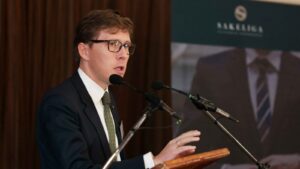
Everest Advisory Services CEO Thys van Zyl argued that while the conflict in the Middle East has increased uncertainty around the inflation trajectory, South Africa’s biggest economic risk is not inflation, but its inability to address structural bottlenecks quickly enough.
“The country is not losing to global shocks – we are losing to our own delay in fixing known problems,” he said.
“Weak logistics, energy uncertainty and slow reform are holding back growth. Every global shock exposes the same weaknesses, and each time the price is paid in lost growth.”
Van Zyl explained that South Africa’s weak economic performance is increasingly being driven less by global factors and more by domestic execution.
He said countries that manage inflation risk effectively do not necessarily avoid shocks, but rather have the ability and capacity to reduce their exposure to them – something South Africa currently lacks.
“South Africa does not have a resource, capital or knowledge problem, but rather an execution problem. The country knows what needs to be done, but it is doing it too slowly,” he said.
South Africa’s government has made some progress toward implementing reforms, with Operation Vulindlela (OV) having made measurable progress toward critical improvements.
However, the government has repeatedly been criticised for the pace of these reforms, as well as some setbacks that have emerged.
The Bureau for Economic Research’s (BER) Impumelelo Growth Lab recently introduced a reform barometer to assess whether structural reforms are translating into measurable improvements in economic performance.
This barometer showed that while progress has been made, particularly through OV, this progress has been slow and uneven.
“There has been some progress, particularly in reforming regulatory and legal frameworks,” the BER’s Rose Murunzi and Roy Havemann said.
“However, the report reveals emerging issues, such as the slow pace of water-sector implementation and ongoing municipal financial distress, which expose the gap between policy design and operational outcomes.”

Little protection
Van Zyl pointed out that, despite these ongoing reforms, South Africa’s economic growth currently remains around 1.5%, well below the levels achieved by other emerging markets.
South Africa’s economic growth has averaged about 0.8% between 2014 and 2024, while its GDP per capita growth has averaged near zero per cent.
Van Zyl argued that this weak growth and the country’s inability to implement reforms quickly enough to address it have left South Africa with little protection against global shocks.
This has become glaringly apparent amid the ongoing US/Israel war against Iran, with concerns rising about fuel prices and availability in South Africa.
“As a net importer of fuel, South Africa remains particularly exposed to oil price shocks,” Van Zyl said.
“If oil prices remain above $100 per barrel for an extended period, this could quickly filter through to fuel, transport and food prices.”
However, he emphasised that the issue is not only the oil shock itself, but how little protection the country has against it.
“Limited strategic reserves, weak refinery capacity and insufficient diversification make the economy more vulnerable than it needs to be,” he said.
Ashburton Investments’ head of fixed income, Albert Botha, recently pointed out that South Africa’s fuel reserves have never recovered from the corrupt sale of 10 million barrels of reserves in 2015/16.
This, along with the country’s diminished refining capacity, with only two operational crude oil refineries, puts South Africa in a highly vulnerable position with regard to fuel supply if the Iran war persists longer than expected.
“The question is not whether inflation could rise again or whether global risks will persist. The real question is whether South Africa can improve its speed of execution,” Van Zyl said.
“Because in the modern economy, countries do not compete on plans – they compete on speed. And until South Africa combines urgency with action, we will continue to perform below our true potential.”
 Loading ...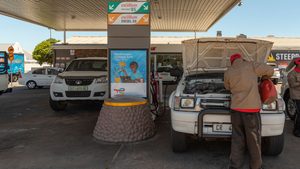


Comments