Civil servants in South Africa earn R700,000 per year on average


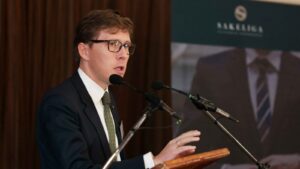
Dawie Roodt said South Africans should be angry at civil servants demanding large increases, as they already earn an average of R58,000 per month.
Roodt is the Chief Economist at the Efficient Group and the most widely quoted economist in South Africa.
In his 2026 Budget presentation, he said South Africa has 1.2 million civil servants, excluding state-owned enterprises and local authorities.
What concerns Roodt is the wage bill associated with these civil servants, which has been increasing significantly over the last two decades.
“The Finance Minister plans to increase the civil servants’ wage bill by 4.4% per year over the next three years,” he said.
He argued that this group is underworked and overpaid, and that it puts a tremendous strain on the country’s budget.
Roodt explained that civil servants account for approximately 1.9% of the South African population.
However, their wage bill as a percentage of the South African economy, or gross domestic product (GDP), is 10.5%.
Put differently, salaries paid to civil servants account for a significant portion of the country’s gross domestic product.
On average, civil servants receive salary packages of approximately R700,000 per year, or R58,000 per month.
Roodt explained that the planned 4.4% annual salary increases for civil servants are well above the 3% inflation target.
This is despite the fact that they are, according to Roodt, already overpaid and, in most cases, underworked.
“This is the real state capture. We have been captured by 1.2 million civil servants who are completely overpaid,” he said.
South Africa cannot afford such a high wage bill

Roodt said that South Africa cannot afford such a high public sector wage bill, especially not with above-inflation increases.
He said he wanted civil servants to be well remunerated for their work. However, it has spiraled out of control.
He added that it was misguided for civil servants to argue for the same salaries as in the private sector.
“Private sector workers always run the risk that they can lose their jobs because the business can go under,” he said.
This is not the case for civil servants, as the state will never go under. “The state can always just increase taxes,” he said.
He said state employees should be paid less than private-sector workers. “In the case of South Africa, they are hopelessly over-remunerated,” he said.
Added to the problem is the very poor quality of services provided by the state, mainly due to poor civil servants.
“If we look at the quality of civil services in South Africa, we are paying a lot of money for truly bad service levels,” Roodt said.
 Loading ...




Comments