Crime is out of control in South Africa


South Africa’s government is losing control of crime, with it increasingly turning to military deployments to tackle organised criminal syndicates and hotspots across the country.
These deployments are also an admission that the government does not have faith in the police’s ability to do their job and that it feels it has no control over the police.
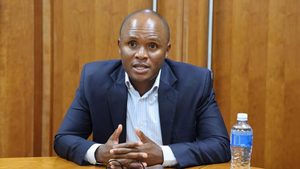
This is feedback from Efficient Group chief economist Dawie Roodt, who said the deployment of the army to tackle organised crime shows that something is being done about it, but that he is not sure it is the right thing for the government to do.
Roodt’s comments are in response to President Cyril Ramaphosa’s 2026 State of the Nation Address, where the President implied that South Africa’s police force is dysfunctional.
“Organised crime is now the most immediate threat to our democracy, our society and our economic development,” Ramaphosa said.
“Our primary focus this year is on stepping up the fight against organised crime and criminal syndicates, using technology, intelligence and integrated law enforcement.”
However, this is not enough, with Ramaphosa also deploying the South African National Defence Force to the Western Cape and Gauteng to deal with gang violence and illegal mining.
“I’m not so sure I agree with that, but I guess it’s something worth trying, especially in the Cape Flats, where the police are not capable of maintaining law and order,” Roodt said.
This is a tacit admission from Ramaphosa that the police cannot do their job in parts of South Africa, where they fail to keep people safe and maintain law and order.
However, Roodt is positive that Ramaphosa is admitting that South Africa has a crisis on its hands, which requires immediate action.
“The way that the President is addressing this, I must say, I am quite positive, and I think something will come of this,” Roodt said.
“The President has not been very successful at doing things that he said he was going to do. But, this time round, I think something could be coming from this.”
Roodt said this action is positive as it is an admission that crime has gotten out of control in South Africa and that the police are incapable of doing their job.
“Crime has gotten completely out of control in South Africa. The President is putting huge emphasis on tackling crime in South Africa,” Roodt said.
“Unfortunately, things have deteriorated to such an extent that it is probably too late and is going to be extremely difficult to fix. But at least Ramaphosa is recognising that we do not have a functional police force in South Africa.”
Ramaphosa losing control

As Ramaphosa’s party edges closer to its elective conference in 2027, he is increasingly at risk of becoming a lame duck president.
The ANC is becoming increasingly preoccupied with internal succession politics, with Ramaphosa unable to exercise executive authority over his party or the government.
This is coupled with elevated opposition from coalition partners within the national executive and increasing pushback from civil servants in the military and law enforcement.
Overall, Ramaphosa has been unable to take decisive action to resolve South Africa’s myriad of crises, from economic stagnation to crime and corruption.
Roodt explained that he is deeply concerned about this situation, as the country is heading towards a period of significant instability and even a potential change in government.
In particular, he is worried about the rise in high-ranking officials in law enforcement and the military criticising the government, without consequence.
Most recently, this played out when Iran participated in a BRICS naval exercise, despite Ramaphosa declaring otherwise.
This shows an alarming lack of authority on the part of the South African President, with military officials seemingly overruling him or ignoring directions from the executive.
“It is the job of civilians, political parties, and the government to do these sorts of things. I disagree with who our politicians align themselves with internationally, but that is their job,” Roodt said.
“If you do not like it, then you can vote them out. That is not the job of a military official to dictate foreign policy or critique local policy.”
Roodt said that when events like this occur in a country, it indicates that the government is weak and unwilling to act. In other words, it shows that they are losing control.
“What it tells me is that the President and the government are very weak. I will not be surprised if we see some dramatic changes in the ANC,” Roodt said.
“I do not want to use this word, but I am very concerned about the political stability of South Africa.”
“Clearly, what we are seeing is an implosion among the top leadership of the government, and they have clearly lost power and full control over those institutions, which they should, particularly the military and law enforcement.”




Comments