South Africa’s lucky escape


South Africa appears to have avoided the worst consequences from Iran’s participation in the naval exercises off the country’s west coast.
Despite threats from US politicians and President Donald Trump, no additional tariffs, sanctions, or diplomatic pressure have been imposed against South Africa.
This is not because South Africa was adept at handling the crisis, but rather because Trump’s attention has firmly shifted towards the Western Hemisphere.
The small South African economy and its limited strategic importance mean that the US administration is unlikely to pay it much direct attention while it reasserts dominance over its ‘backyard’.
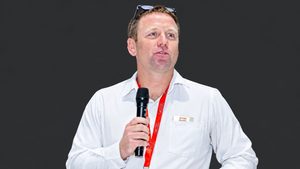
This is feedback from Symmetry’s chief investment strategist, Izak Odendaal, who explained that South Africa appears to have suffered limited blowback from the debacle of Iran’s participation in recent naval exercises.
Despite orders from President Cyril Ramaphosa and various reports that Iran would be downgraded to “observer status”, the country’s corvette appeared to participate in the Will to Peace 2026 exercises.
This resulted in calls from US Senate Foreign Relations Committee Chairman Jim Risch for America to take stronger action against South Africa.
Risch called for the Trump administration to treat South Africa as an adversary of America, saying that the time for deals or envoys has passed.
Trump has threatened a 25% increase in tariffs on imports to the United States from countries that do business with Iran, alongside other measures to combat “anti-American” activities from members of the BRICS bloc.
However, South Africa appears to have emerged from this debacle unscathed, apart from issues with the South African National Defence Force failing to obey an order from the President.
In geopolitical terms, South Africa has avoided the significant backlash expected from the United States.
This is not because of the country’s skilful implementation of foreign policy, Odendaal said, but rather the Trump administration’s shift in focus towards the Western Hemisphere.
“Smaller countries can maintain sovereignty and look after their domestic interests without completely rolling over before the Great Powers or needlessly antagonising them,” Odendaal said.
“This will require skilful implementation of foreign policy, however. The recent debacle over Iran’s participation in naval exercises off the Cape coast is an unfortunate reminder of how South African diplomacy often falls short.”
Luckily for South Africa, it appears as though Trump might ignore South Africa as it is no longer the chair of the G20, and other issues have taken precedence.
South Africa running on luck

South Africa appears to be running on luck to avoid the worst consequences of its deteriorating relationship with the United States.
There has been little indication of any progress towards a deal between the two countries, with South Africa unwilling to address some of the United States’ concerns.
Odendaal explained that South Africa is a small boat adrift on a large ocean, buffeted around by global events and superpowers.
Despite this, the country has an obsession with local politics, as decisions made in Washington and Beijing have as significant an impact on the country as those made in Pretoria.
For example, much of the focus on the rand’s rally to levels last seen in 2022 has been on South Africa’s improving economic fundamentals.
However, much of the rand’s appreciation versus the dollar is due to the greenback’s strength being eroded by radical shifts in US policy and elevated uncertainty.
South Africa’s currency has also benefited from soaring prices of precious metals, particularly gold and platinum, which have boosted the country’s terms of trade and the currency.
These factors are largely beyond the country’s control and have masked some of the challenges it faces at the local level.
Odendaal has previously explained that the country has gotten lucky with the timing of local political tensions and global events, resulting in their relatively limited impact.
To avoid relying on luck that will eventually run out, South Africa has to get its own house in order and ensure its economic growth is sustainably raised.
“Most importantly, the grass is greenest where it is watered. If South Africa can create a business-friendly climate, investors will want to be here irrespective of the geopolitical noise,” Odendaal said.
“Geography also still matters, even in this high-tech age. Deepening trade integration in South Africa’s own neighbourhood, the African continent, should therefore remain a priority.”
Simply put, South Africa can still get lucky, but luck is not a strategy. Odendaal said the country needs to get its house in order to truly benefit when the global environment is favourable and to shield itself when it is not.



Comments