Two metals crushed gold over the last year


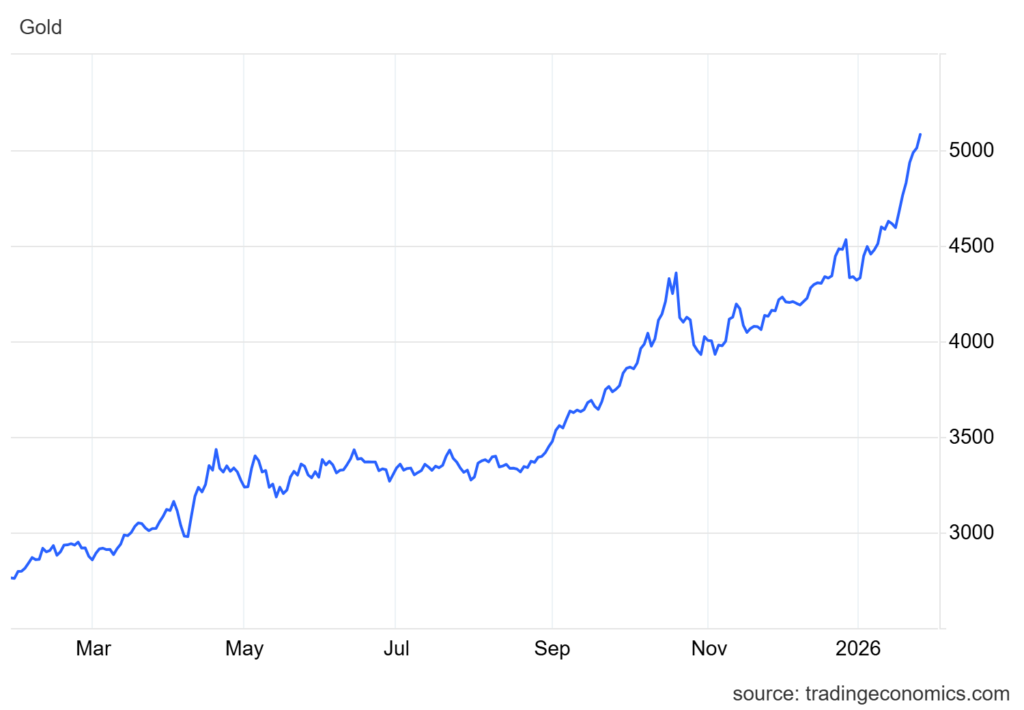
Gold has recently hit an all-time high of $5,111.21 after a tremendous run over the last year. However, silver and platinum recorded even better growth.
Precious metals have had a superb run in 2025 as uncertainty remains high on United States trade and global policies under the Trump administration.
Added to this uncertainty is the increased threat of military conflicts proliferating, with many nations on the edge.
There has also been escalating friction between the United States and NATO over Greenland, further fueling fears of a shifting geopolitical order.
Persistent instability in the Middle East and Eastern Europe kept a risk premium permanently baked into gold prices.
Central banks, particularly in emerging markets, have been diversifying their reserves away from the US dollar, a trend known as de-dollarisation.
For example, China, India, Turkey, and Poland have been on a gold-buying spree, with central banks now holding nearly 20% of all official global reserves.
The strong demand for gold as a safe haven saw its run continue in 2026, and it extended to other precious metals, such as silver and platinum.
Silver has seen a staggering rally, tripling in price over the last 12 months to surpass $100 per ounce.
Apart from being seen as a safe-haven investment, silver is the most electrically conductive metal on Earth, making it valuable for the energy transition.
The rapid build-out of data centres and hardware to support Artificial Intelligence has created a new, intense demand segment, which includes silver.
High-performance chips and data centre infrastructure rely on silver for superior signal integrity and thermal management.
The global rollout of 5G also requires silver in printed circuit boards and antennas to handle higher frequencies.
These factors, along with inelastic supply, led to silver’s price rising from $24 per ounce to $110 per ounce over the last year.
Platinum showed stronger growth than gold
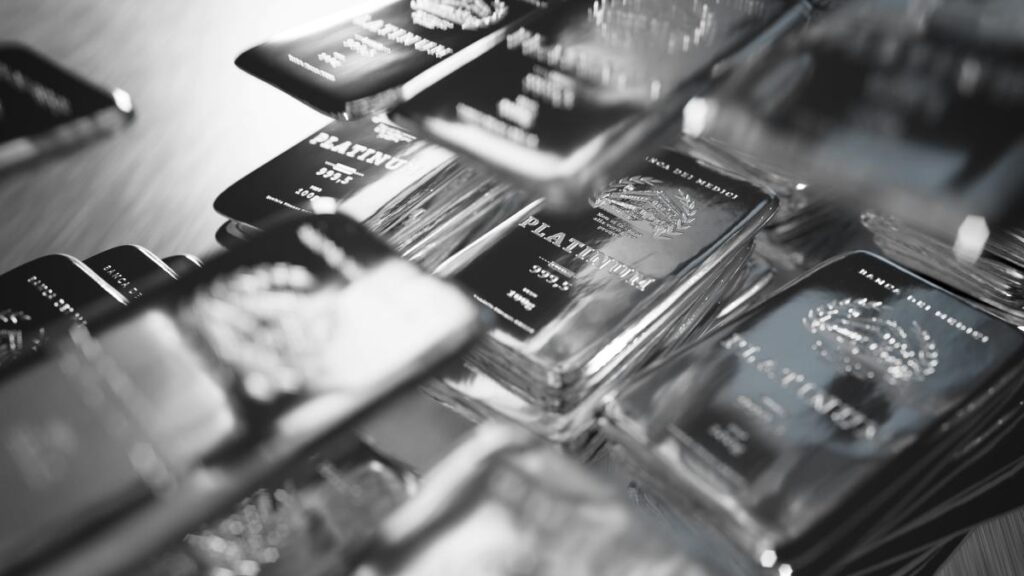
Platinum is another precious metal which had a tremendous run over the last year, increasing from $952 per ounce to $2,910 per ounce on 26 January 2026.
The rise in the platinum price is a result of a perfect storm of structural deficits, geopolitical shifts, and a surge in investment demand.
Years of undersupply of the metal have eroded reserves to low levels, estimated at just five months of demand cover.
Platinum mining is highly concentrated in South Africa, where output fell by roughly 5% in 2025 due to operational challenges.
Another factor is China’s aggressive import of platinum, partly for its expanding chemical sector and as a strategic reserve amid global trade tensions.
In late 2025, the Guangzhou Futures Exchange (GFEX) launched platinum futures, which provided investors with a direct, regulated way to trade the metal.
Another factor which bolstered the platinum price is the slower-than-expected uptake of electric vehicles (EVs).
Platinum is used as an industrial catalyst to reduce harmful emissions in automotive catalytic converters.
With internal combustion engines now expected to be produced for much longer than previously anticipated, demand for platinum has increased.
Platinum is a critical catalyst for Proton Exchange Membrane (PEM) electrolysers and fuel cells.
While still a small part of the market, the rapid scale-up of green hydrogen projects has turned platinum into a green transition play for long-term investors.
Gold price
Silver price

Platinum price







Comments