South Africa’s oldest food producer under fire for plans to shut down critical factory


Solidarity has raised concerns about Premier Group’s decision to shutter its Tulbagh factory, which could affect 3,000 workers.
In a press statement released on Friday, 7 August, Solidarity’s general secretary, Gideon du Plessis, said the trade union currently has more questions than answers.
Premier, South Africa’s oldest food producer, confirmed plans to shut down its canning factory in Tulbagh at the end of July 2026.
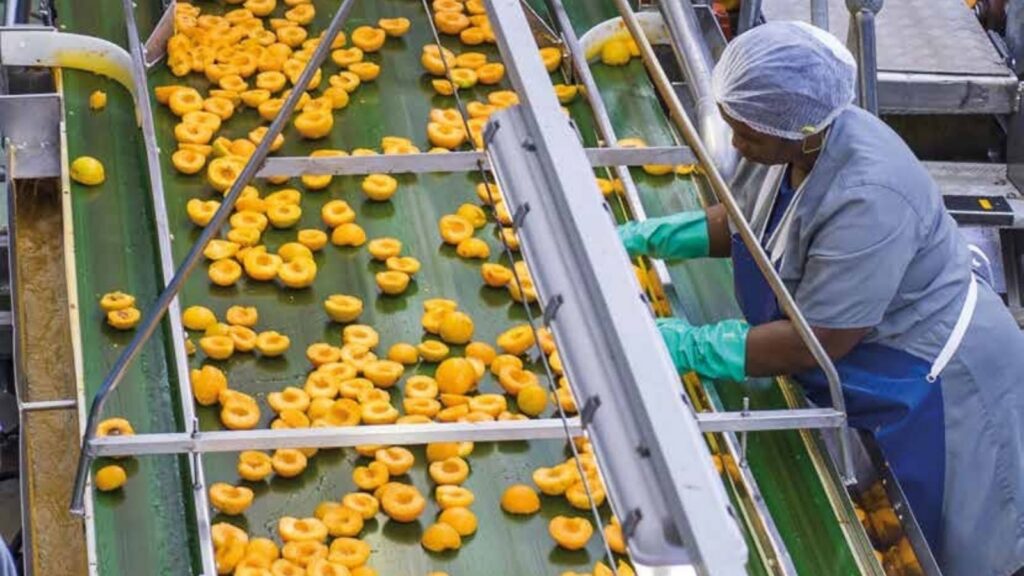
The company processes apricots, peaches, and pears at this factory through its Fruit Products Western Cape (FPWC) business.
As part of the factory’s planned closure, Premier instituted a Section 189 consultation process with affected employees. The plant supports 3,000 permanent and seasonal workers.
Solidarity, which represents some of these workers, said the first consultation regarding the plant’s possible closure took place on 6 August.
The consultation was facilitated by the Commission for Conciliation, Mediation and Arbitration (CCMA).
In this consultation, the parties agreed that the trade unions would submit their questions to the employer in writing within a week, after which the employer would respond in writing.
However, Du Plessis said the trade unions, including Solidarity, left the first consultation with more questions than answers.
He pointed out that the consultation process is required by labour legislation to run for a minimum of 60 days.
However, according to Du Plessis, there are already several indications that “it may be little more than a formality aimed at complying with legal requirements”.
“Fruit producers have already been informed that no further fruit purchases will be made,” he said.
“Discussions with contractors regarding the termination of commercial agreements appear to have already taken place.”
The next phase of the consultation will consist of a written question-and-answer process and is expected to provide greater clarity to trade unions, employees, and fruit producers.
“If a final decision to close the factory has already been taken, this should be acknowledged openly,” Du Plessis said.
He urged Premier not to allow uncertainty to continue through a consultation process that offers no genuine opportunity for engagement or alternatives.
Impact on Tulbagh

Located in the Land van Waveren mountain basin, Tulbagh is one of the oldest towns in South Africa, having been proclaimed in 1804.
It is known for its multiple wine estates, including Saronsberg Cellar, Rijk’s Wine Estate, and Krone at Twee Jonge Gezellen.
The town is also renowned for its stone fruit, which includes plums, peaches, and pears. This is what attracted Premier to the town.
The canning factory was established in Tulbagh in the 1940s to process high-yield peach, pear, and apricot harvests from the Western Cape’s fertile Witzenberg region.
Since its inception, the factory has been an export engine, with the vast majority of its products exported to Europe and North America.
In 2010, the factory was acquired by Rhodes Food Group, one of Premier’s biggest competitors.
Rhodes invested heavily in the factory, pumping R200 million into modernising and upgrading its capacity.
Following these investments, the plant could process 55,000 to 60,000 tonnes of stone fruit a year. It generated between R1 billion and R1.2 billion in export value.
In 2025/26, Premier acquired Rhodes in a R6.5 billion deal, which included the Tulbagh factory. That same year, newly imposed US tariffs directly affected South Africa’s deciduous fruit industry.
At the time, 90% of the Tulbagh factory’s canned fruit was exported, which meant the US tariffs and rising shipping charges eroded its profit margins.
This is what led Premier to announce plans to shut down the factory, citing that it was no longer financially sustainable.
If the plant is shut down, 3,000 jobs in the town could be affected, and it would deal a serious blow to Tulbagh’s economy.