How Andre de Ruyter would save South Africa


South Africa is at an inflexion point, with the country needing urgent course correction to avoid spiralling into a failed state.
To avoid the worst outcome, the country needs to implement drastic policy changes, including a moratorium on equity empowerment deals, a successor to the Scorpions to fight corruption, a commitment to fiscal prudence, and protection of private property rights.
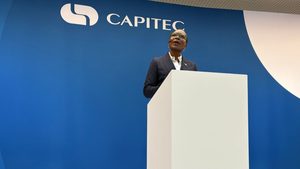
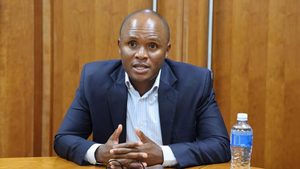
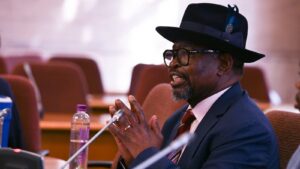
This is feedback from former Eskom CEO Andre de Ruyter, who outlined what he would say at his fantasy State of the Nation Address (SONA) next year if he were in the President’s shoes.
De Ruyter told delegates at the second annual BizNews Investment Conference that South Africa is experiencing a similar set of circumstances to that of the era immediately preceding 1994.
“We have seen exactly the same situation play out that prevailed towards the end of Apartheid. The parallels are actually remarkable,” De Ruyter said.
“Our state has been hollowed out by corruption and incompetence, rampant criminality and unsustainably high national debt.”
“We have uncontrolled government expenditure and waste. We have corruption that seems to rear its head everywhere, like Hydra.”
He said South Africa’s lost decade under former President Jacob Zuma has been extended by seven years under President Cyril Ramaphosa’s lack of decisive leadership.
“That is telling. That is 17 years we have been in the doldrums without a clear direction, and the scoreboard tells a very sorry tale of what we are achieving,” De Ruyter said.
This set of circumstances has resulted in Ramaphosa’s next SONA in 2026, which will occur when South Africa is at a major crossroads, with vital decisions needing to be made about its future.
“What is he going to say? Is he going to double down on policies that have seen a catastrophic increase in unemployment? Capital flight? Greater inequality?” De Ruyter asked.
De Ruyter explained that there are parts of the ANC that are working to effect meaningful change in South Africa.
However, these efforts are undermined by complex resistance emanating from ideological interests, corruption, and criminal interests.
“The President, driven by the need to maintain consensus in his party, is shocked by this sorry state of affairs. But he can no longer point the finger at others,” De Ruyter said.
“So what does he do? Does he engage in quiet quitting or does he wait for the axe to fall at the next ANC conference and go off into the sunset?”
“Or does he seize the moment and, in a single speech, transform his legacy from an officeholder who presided over the fall of South Africa to the leader who pivoted the country into a new direction of renewed nonracialism and prosperity?”
De Ruyter’s ‘fantasy SONA’

De Ruyter explained that he has had some time to think about what he would say at a “fantasy SONA” in 2026 over the past two years since he vacated Eskom’s top job.
This was an attempt to create a speech that would have the same effect as FW de Klerk’s famous speech in February 1992, when he released Nelson Mandela and set South Africa on the path towards democracy.
De Ruyter’s first announcement would be a means-tested economic empowerment mechanism aimed at the poorest of the poor, without any racial component.
“Instead of the largesse doled out to the politically connected through BEE deals. Let’s address inequality through economic empowerment of those who need it the most,” De Ruyter said.
“Given our nation’s pervasive inequality, the vast majority of such a policy will be black anyway. We will achieve the objective without racialising the policy.”
De Ruyter said beneficiaries would get access to empowerment based on their needs rather than their race.
He also claimed this would be the best way to effectively outmanoeuvre South Africa’s global critics and pull the rug from under US President Donald Trump’s administration.
The second proposal would be to create a Chapter Nine institution that is the successor to the Scorpions, which is properly budgeted and resourced to tackle corruption.
This institution should be impartial and be empowered to go after corruption wherever it may be found, as the Scorpions did before its disbandment.
De Ruyter’s third announcement would be a moratorium on the need for equity empowerment deals for all investment in gross fixed capital formation.
This would significantly increase investment in South Africa by effectively removing the need to have a roughly 25% carry attributed to non-value-adding shareholders.
In effect, the return on any investment for the investor would increase by 25% through the removal of an empowerment deal.
This would significantly reduce the hurdle of investing in South Africa, increasing the number of investable projects.
De Ruyter also said he would clearly commit to the Reserve Bank’s independence as his fourth announcement.
This would remove all doubt as to whether the institution’s shareholding would change or if its mandate would be altered to quicken economic growth at the expense of stability.
The fifth announcement would couple a commitment to fiscal prudence with zero-based budgeting at state-owned enterprises.
“It is clear that there is a lot going on in the budgeting process at these companies and at the national level, which is far from ideal,” De Ruyter said.
To aid efforts for fiscal prudence, De Ruyter would announce a significant reduction in the size of the Cabinet.
“Deregulate and stop state-owned enterprises from investing in projects where they crowd out the private sector with government-guaranteed funds,” De Ruyter said as his seventh announcement.
One area where De Ruyter did not have an issue with the current policy is the government’s aim to be non-aligned, but urged the army to stay out of foreign policy and move away from America’s enemies.
De Ruyter added that he would commit to private property rights, dismiss any concern of expropriation without compensation, and ensure that any state purchase of land would be at market value.
Finally, De Ruyter would reconsider racial quotas for jobs, saying that South Africa would naturally transform if the economy grows based purely on demographic trends.
The country needs the best and brightest it has to offer to revive the economy and ensure that South Africa can prosper as a modern state.

Comments