Dawie Roodt’s warning about expropriation without compensation


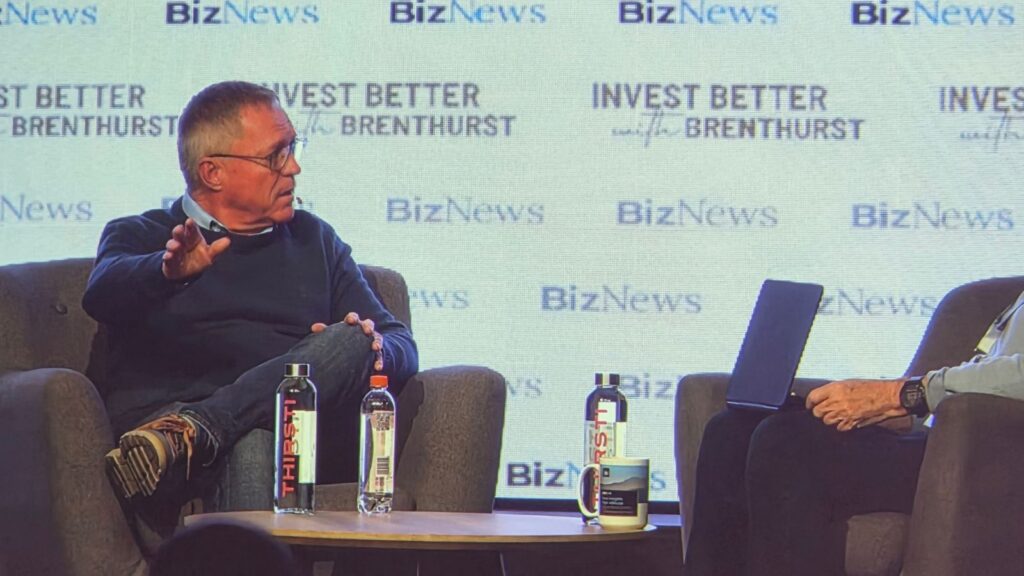
Efficient Group chief economist Dawie Roodt warned that expropriation without compensation will break the foundation of South Africa’s modern society and economy – private property rights.
Roodt said private property rights are the bedrock on which civilisation, prosperity, and economic progress are built.
Any threat to these rights will have severe economic consequences, resulting in South Africa continuing on the path of the past decade.
Individuals will become poorer as the economy steadily declines and an incompetent state takes increasing control of private assets.
Speaking at the 9th BizNews Conference, Roodt explained that private property rights are among the most important concepts ever conceived by humans.
“Thousands of years ago, many important things happened, including the domestication of animals and the creation of modern agriculture,” Roodt said.
“Most importantly, for the first time in our history as we became agricultural societies, the concept of private property rights was established.”
“For the first time, I could say that I own something. Whether that was a cow or a house, it was mine, and I could use it to create economic value.”
The advent of private property rights enabled humans to trade what they own for something someone else owns. Individuals and societies could now also store wealth.
“We had discovered something called trade, and that is why it is so crucially important to protect private property rights,” Roodt explained.
“Without private property rights, you cannot trade, and without that, you cannot have these free lunches where wealth and value are created.”
These transactions, particularly under free trade conditions, are win-win situations. Both the buyer and the seller gain something from the exchange.
The government’s enabling of expropriation without compensation under the Expropriation Act is a direct threat to this.
Roodt said this is the clearest threat to private property rights in South Africa and will break the economy if assets are expropriated without compensation.
The free lunches created by trade will be lost, South Africans will not be able to build wealth, and no one will want to invest in the economy.
For an example of the negative impact of state control over assets, Roodt pointed to South Africa’s mining industry. Its output has declined steadily for the past two decades.
This is because in 2002, legislation was introduced, giving the government ownership of all untapped mineral reserves in South Africa, even on private land.
The implementation of expropriation without compensation will have the same impact, but across the entire economy.
The government is living in the past
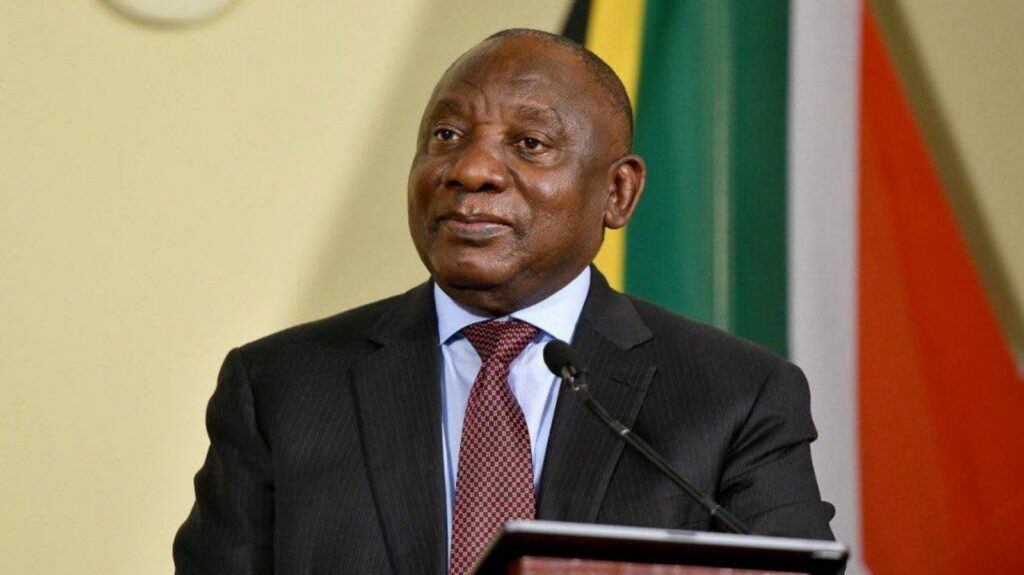
Roodt also pointed out that the government’s stated aims of expropriation without compensation will not be borne out in reality.
The government views this policy as a means to redistribute wealth in the economy more evenly and enable black South Africans to play a larger role.
However, Roodt said this will not be done by taking land, assets, and capital away from rich people and giving it to poor people.
Much of the asset value will not go to people on the ground, but is likely to sit with the state, which has a history of value and capital destruction.
This will slow economic growth and make South Africans poorer as assets are taken away from people, creating wealth, jobs, and value to the government, which does the opposite.
Roodt also said that the government’s appropriation fantasy is based on an outdated idea of where wealth is created in a modern economy.
“Wealth is no longer in the land. Wealth is not even really in capital. Wealth is in knowledge and technology, but the politicians still obsess about land,” Roodt said.
“Rich people are not creating wealth on farms. It is not happening in mines and factories anymore. It is happening on the internet and the cloud.”
“Taking stuff away from rich people and giving it to poor people is not going to change that and is not going to solve the problem of slow economic growth.”
Only 20% of South Africa’s economic output stems from land, mining, and manufacturing. The vast majority is services-based. This includes sectors such as finance, healthcare, education, law, and consulting.
“But services, particularly certain kinds, are getting increasingly expensive and that tells us a lot about the economy and about the way in which we should manage it,” Roodt said.
“Today, if you look at economic activity, it is mostly service-oriented. It is driven by people providing services to other people, not products produced from the land.”
“This is why our politicians are so extremely wrong. It is not about the land, but about what is done with the land that matters.”



Comments