One mistake costing South Africa billions


South Africa’s economic growth is being held back by its rigid labour market that is dominated by trade unions, which push wages up at a rate faster than productivity increases and make it more difficult to do business in the country.
This is coupled with a significant skills deficit in South Africa, which prevents businesses from growing and absorbing individuals into their workforce.
Despite the progress made in key reform areas, such as electricity and logistics, South Africa’s rigid labour market will ensure its growth never reaches the 4% to 5% it needs to meaningfully address its unemployment crisis.
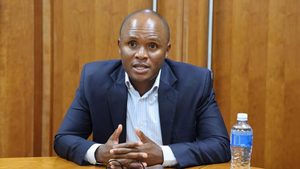
This is feedback from Efficient Group chief economist Dawie Roodt, who said trade unions have become too powerful in South Africa.
Roodt said it was a major mistake for South African lawmakers post-1994 to give trade unions the immense power they have today.
“Tito Mboweni himself, who was one of the architects of South Africa’s labour legislation, admitted that he made a mistake in giving far too much power to organised labour,” Roodt told BizNews.
“Organised labour in South Africa has become the tail that wags the dog. It dictates state policy through the Tripartite Alliance.”
“We have organised labour in government through the ANC governing organised labour. It is a very unhealthy relationship to have organised labour in government.”
Roodt said it would be far better for South Africa’s democracy and economy for COSATU to go it alone politically and compete with other parties.
Organised labour in South Africa makes it extremely difficult for businesses to hire and fire employees as part of their operations.
This prevents them from absorbing South Africa’s large number of unemployed individuals, as they are aware that they will have to engage with unions before restructuring the business.
Apart from this, unions regularly demand blanket above-inflation wage increases regardless of the business’s performance or employees’ productivity.
This distorts the labour market, skews incentives, and creates a headache for the Reserve Bank in managing inflation as wage increases outstrip productivity.
The hidden handbrake

Roodt’s comments echo those of Old Mutual chief economist Johann Els, who said South Africa’s rigid labour market will prevent the country from ever growing at 4%+ per annum.
While South Africa’s economic performance will improve significantly in the coming years due to the reform of the electricity and logistics sectors, its labour market will continue to hold it back.
Els explained that for South Africa to meaningfully address its unemployment crisis, it would need to grow its economy by over 5% per annum.
In the mid-2000s, when South Africa’s economy grew at an average annual rate of 4%, it created around 500,000 jobs per annum.
Currently, around 600,000 individuals enter the workforce every year, indicating that even higher growth would be needed just to stabilise South Africa’s unemployed population.
A key part of reaching this higher growth and increased employment is reforming South Africa’s labour market to make it more dynamic and easier for firms to hire and fire workers.
While issues in the energy, logistics, and water sectors are being addressed, and local governance is also being tackled, South Africa’s rigid labour market has yet to be touched.
Els explained that South Africa’s rigid labour market, significant skills deficit, and overregulation of labour will prevent 5% to 6% economic growth on a sustained basis.
Another major problem with South Africa’s labour market is the lack of individuals with the right skills that businesses demand.
The Organisation for Economic Co-operation and Development (OECD) said an increasing mismatch between worker qualifications and available jobs characterises South Africa’s labour market.
The mismatch is compounded by a severe lack of university infrastructure and the high cost per student in the country, which prevents many from accessing higher education or further training.
Skills shortages persist due to a lack of quality education, despite the significant progress made in recent decades.
The organisation added that this reflects severe inadequacies in technical and vocational education and training programmes.
This is part of a broader issue within South Africa’s higher education sector – its failure to align its programmes with the skills demanded by the labour market.





Comments