Major international fashion retailer taking over shopping malls accross South Africa


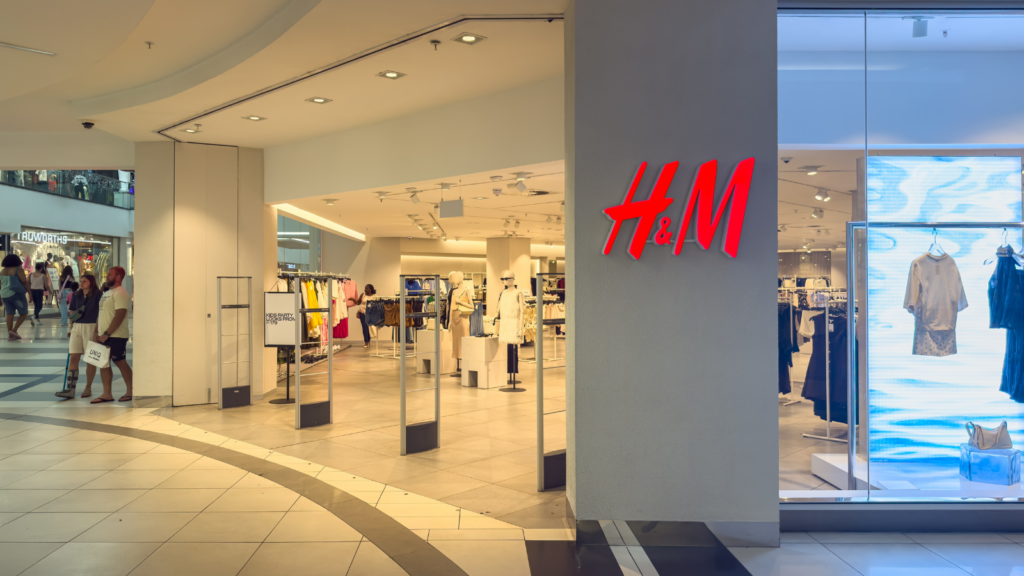
As leading local clothing retailers, Truworths and TFG, battle weak sales, falling profits, and growing competition, international fashion retailer H&M is expanding its South African footprint.
H&M South Africa is currently set to open its 30th store in the country at Paarl Mall in the Western Cape on 31 October 2026.
Since launching in South Africa in 2015, H&M has continued to expand its presence. The Paarl store launch signals the next step in the global fashion brand’s local growth journey.
H&M Paarl will offer an assortment for women, men and kids, including both staple pieces and trendy, seasonal items.
The brand said customers can expect an elevated shopping experience with curated collections offering value for money, in line with H&M’s focus on making fashion more accessible.
Spanning 1,831m², the new store will take up a prime position in the regional shopping destination, which serves customers from Paarl, Wellington, Franschhoek, Worcester and the wider Cape Winelands.
H&M South Africa General Manager Ricardo Valente da Conceicao said the group is delighted to join the Paarl community.
“Thirty stores in South Africa is a proud milestone for H&M and underscores our commitment to continued investment in South Africa.”
“Our H&M Paarl store allows us to connect with even more customers in the Western Cape, offering a shopping experience that combines fashion, value and inspiration for every moment and every style.”
Growthpoint Properties Asset Manager David Falk said they are delighted to welcome H&M to the newly upgraded Paarl Mall, marking a new chapter in the mall’s evolution.
“As one of the world’s most recognised fashion brands, H&M’s arrival reflects the aspirations of our shoppers and reinforces Paarl Mall as the region’s leading fashion and lifestyle destination.”
“The brand has long been among the most requested by our customers, making this opening a milestone worth celebrating.”
Falk added that Growthpoint is thrilled to partner with H&M and looks forward to seeing its presence elevate the shopping experience for the community.
Local clothing retailers fall behind
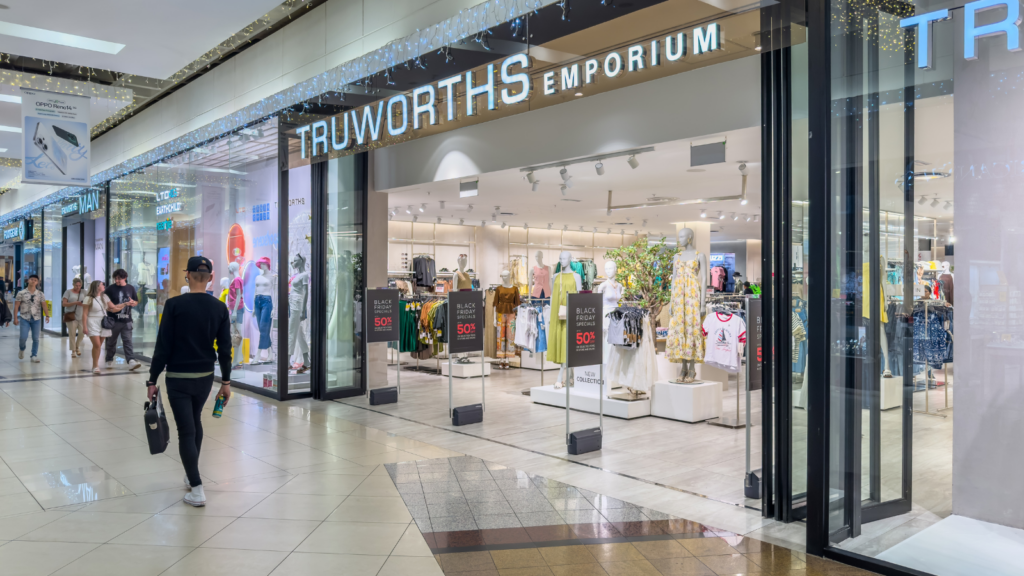
H&M’s South African expansion comes at a time when major local clothing brands have delivered consistently weak financial results.
South Africa’s two largest listed clothing retailers, Truworths and TFG, have both come under pressure as weaker consumer spending, rising costs and tougher competition weigh on their performance.
For the first half of its 2026 financial year, Truworths reported a slight decline in revenue to R12.93 billion. Meanwhile, its profit increased by only 0.3% to R1.83 billion. Sales of merchandise rose by just 0.4%.
The biggest drag came from its Truworths Africa business, where retail sales fell 3.6% to R8 billion. As the group’s largest source of revenue, the division’s performance is critical to the retailer’s overall results.
The bright spot was online shopping. Truworths Africa’s online sales increased by 23.3%, accounting for 7.4% of the division’s retail sales. Its UK business, Office, also saw retail sales rising 7.1% in rand terms.
TFG – which includes popular brands such as Foschini, Jet, Markham and Bash – has faced even greater challenges.
The retailer’s annual profit has fallen sharply over the past few years, dropping from R2.91 billion in the 2022 financial year to R1.32 billion in 2026.
Its share price has also collapsed, falling about 69% over an 18-month period as investors lost confidence in the business.
The company said rising costs, impairments from overseas acquisitions and higher finance costs have put pressure on profitability.
At the same time, slower economic growth, weaker consumer spending and increased competition from online retailers such as Shein and Temu have made trading more difficult.
In response, TFG has started a major restructuring programme. The retailer has already closed 100 stores and has identified around 300 underperforming and marginal stores that could be closed in the future.
Chief executive Anthony Thunström said the company is reducing costs, simplifying its business, and relying more on its Bash e-commerce platform rather than opening large numbers of new stores.
Bash has become an important part of TFG’s strategy. Online sales now account for more than 10% of TFG Africa’s turnover, compared with just over 3% four years ago.
The company explained that expanding online is a more cost-effective way to grow than opening more physical stores.






Comments