Cash is still king in South Africa


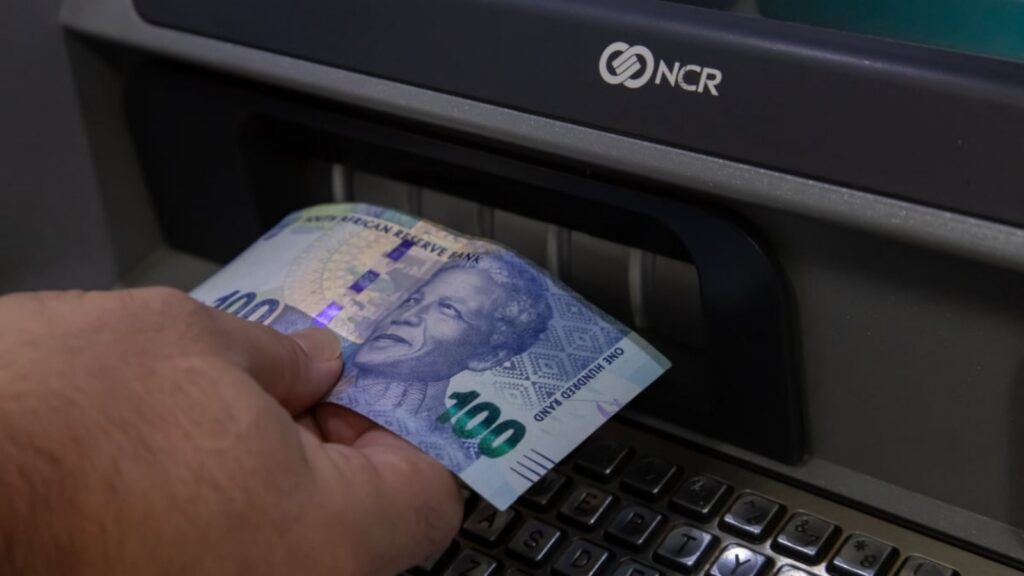
Despite rising adoption of digital payment methods, physical cash remains the preferred payment option for a majority of South Africa’s population.
The latest Cost of Cash study from the South African Reserve Bank (SARB) has revealed that 56% of all consumer transactions in the country are done in cash.
The study examined the direct and indirect costs of cash use in South Africa, with 2024 as the base year.
“Although digital payment alternatives continue to expand, cash remains widely used by consumers and merchants across both the formal and informal economies,” the SARB said.
“The continued importance of cash is reflected in the extensive infrastructure required to manufacture, distribute, store, transport, access and accept cash throughout the economy.”
The annual cost of South Africa’s continued use of cash is R88.5 billion, which is passed on to consumers.
This includes direct costs such as withdrawal and deposit fees, as well as indirect costs like travel time, crime losses, retailer pass-through costs, and more.
Direct costs accounted for 49% of the total cost of cash in South Africa, at R43.5 billion, while indirect costs made up the remaining 51%, at R44.9 billion.
Cash usage is particularly prevalent in South Africa’s townships and rural areas, where it remains the primary payment method across the country’s informal economy.
The SARB’s report found that 39% of informal traders and 10% of South Africa’s taxi drivers accept electronic forms of payment, with access to these services less common in these areas.
Additionally, it found that cash usage is strongly linked to income levels, with 55% of low-income South Africans (earning up to R1,250 a month) relying exclusively on cash.
By contrast, among South Africa’s high-income earners earning more than R20,000 a month, just 1% used cash exclusively.
“The findings suggest that restricted cash access may lead to significant negative impacts for at least 27.6% of the population, who would not have any other payment options,” the SARB said.
Moving towards a cashless society
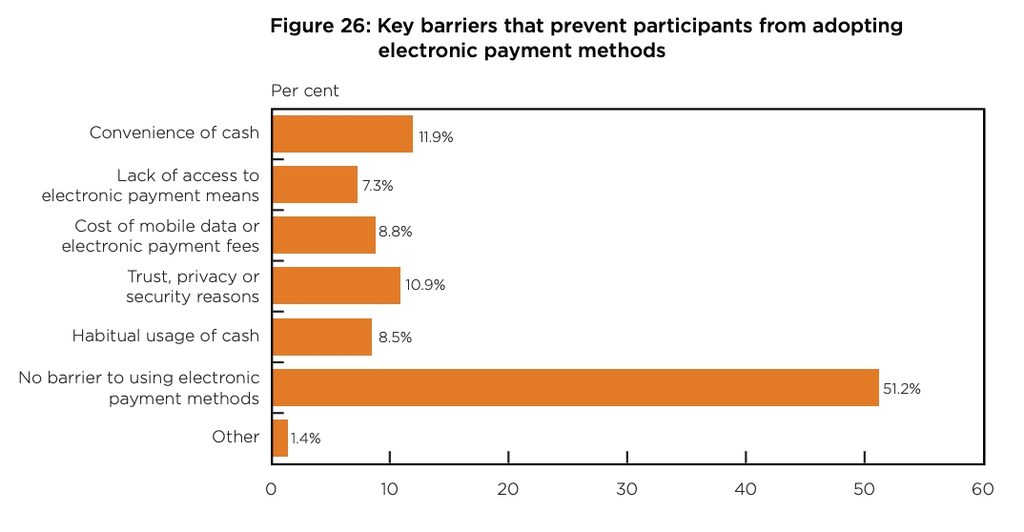
While cash remains the preferred payment method for a large portion of South Africa’s population, digital payments continue to gain popularity.
A survey conducted as part of the SARB’s report found that 59.8% of respondents said they preferred electronic payments to cash, with 28.8% being electronic-only.
Thabiso Legodi, a market researcher at The Entries, explained to CapeTalk that businesses and households are increasingly switching to digital due to the high administrative costs of using cash.
“If I’m tapping my phone every day, everywhere, the fees to me as a user are very low compared to someone who has to withdraw cash,” Legodi said.
“There are hidden costs that we don’t even think about, including transport or time spent just getting to an ATM.”
The SARB’s report placed direct cash-related travel costs at R12.5 billion, while indirect travel-related time costs were R8.3 billion. Together, these account for 23% of the total cost of cash, R88.5 billion.
However, while Legodi said many small businesses were open to going cashless, they remain structurally excluded and thus dependent on cash.
On the other hand, more businesses in the formal sector have begun adopting digital-only payment policies, refusing to accept cash.
Legodi said this could be seen particularly among South Africa’s hospitals, many of which no longer accept cash for medical fees.
“While there is a legal argument to be had there, the Reserve Bank is now looking towards this national payment system for unbanked people,” Legodi said.
Legodi pointed to successful mobile money options in countries such as Kenya and Brazil as examples which South Africa should follow.
Brazil’s PIX instant payment system, created and managed by the Central Bank of Brazil, has been credited with promoting financial inclusion for low-income households.
“That’s where we would like to get to,” Legodi said. “The safety and convenience of going cashless, but without the barriers of having to be banked and have a bank account and a card.”




Comments