South Africans are poorer today than they were in 2008


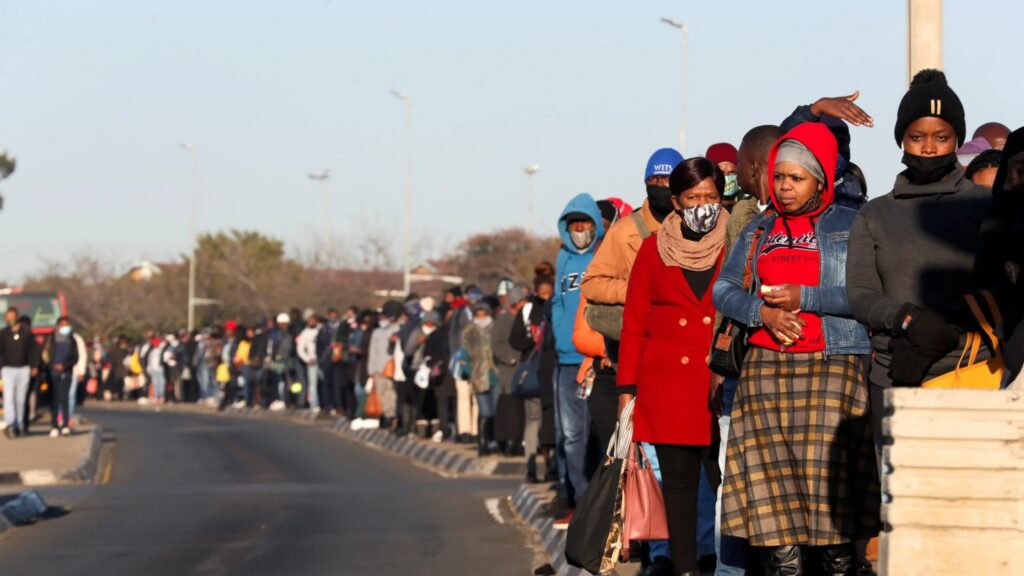
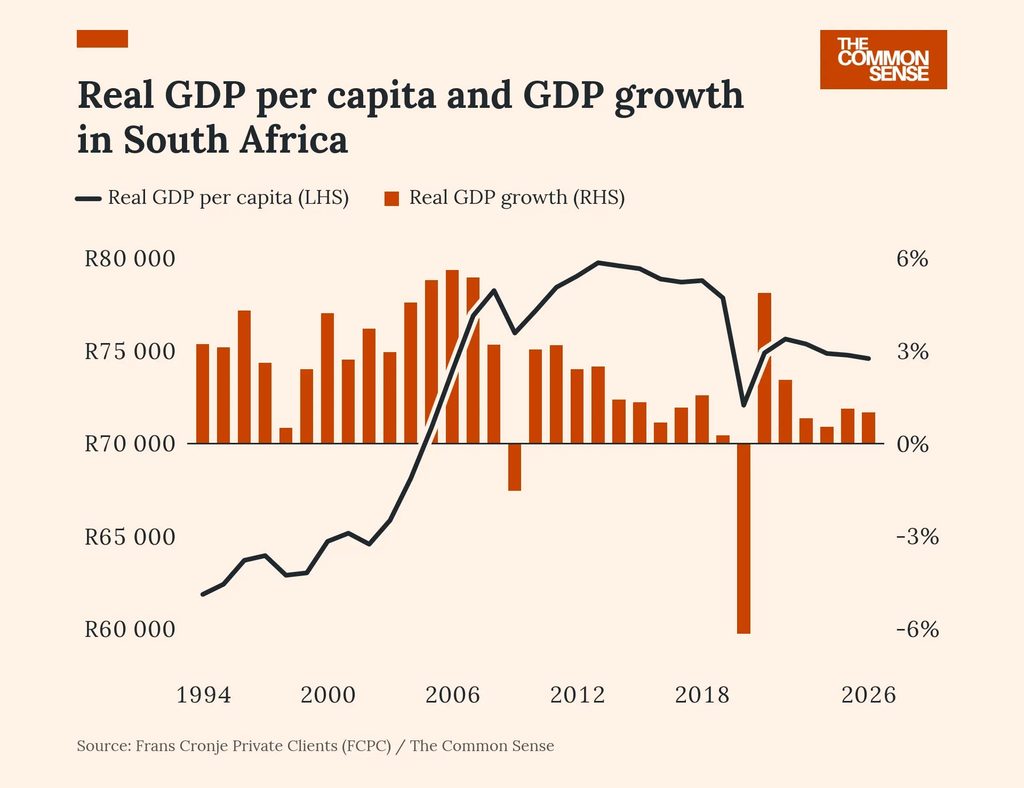
The average South African is poorer in 2026 than they were 18 years ago, as the country’s economic growth has struggled to keep pace with its growing population.
The country’s annual GDP growth rate slowed to 0.9% during the second quarter of 2026, down from 1.9% in the first quarter.
Meanwhile, the country’s population growth rate reached 1.2%, with Statistics South Africa estimating the population at 63.52 million as of the end of June.
Economist and partner at Frans Cronje Private Client, Bheki Mahlobo told The Common Sense that this had effectively made South Africa’s citizens poorer per capita.
GDP per capita, which measures the total wealth of an economy divided by its population, provides a baseline for understanding a country’s general living standards.
“Over the past decade-plus, South Africa’s economic growth rate has on several occasions fallen behind the population growth rate,” Mahlobo said.
“Real per capita GDP grew strongly between the end of the Asian financial crisis in 1998 and the collapse of Thabo Mbeki’s government a decade later.”
Throughout the 2000s, South Africa’s real GDP per capita grew consistently, peaking when Thabo Mbeki left office in 2008.
However, a combination of the breakdown of Mbeki’s administration and the onset of the global financial crisis that same year led the country’s GDP growth to decline.
In 2008, real GDP growth was around 3.2%, almost half of what it had been the year before. The following year, South Africa posted a 1.8% contraction in GDP.
Following a slight recovery between 2010 and 2013, the next decade saw stagnation and reversal as the country’s annual GDP growth rate continued to decline.
2020 saw the biggest hit to South Africa’s economy, with its GDP contracting by approximately 7.0% as a result of the Covid-19 pandemic.
Since then, recovery has been slow, with real GDP per capita in South Africa now sitting lower in 2026 than where it was at the end of Mbeki’s presidency in 2008.
What this means for South Africa
According to Mahlobo, South Africa’s consistently low economic growth rate since 2008 has been the catalyst for all of the country’s social and political issues.
He pointed to declining business confidence in the country as the primary cause, which has led to a subsequent drop in fixed investment and, in turn, to low growth.
“In South Africa’s first decade as a democracy, its economic growth rate was rising faster than that of its population growth,” Mahlobo explained in an interview on The Common Sense.
“The consequence of that is that people were getting richer over time. Jobs were created, and from those jobs, people earned income. The size of South Africa’s economy grew.”
Between 2004 and 2007, South Africa’s GDP growth averaged roughly 5.2%, in stark contrast to 2026, when it sits around just 1%.
This lacklustre growth has led to limited job creation among South African citizens, with the country’s official unemployment rate rising to 33.6% in Q2 2026.
This means fewer wages entering the average South African household, weaker bargaining power for working South Africans, and more dependants on each income.
In addition, fewer jobs mean less tax revenue the South African government can collect, leading to deteriorating service delivery as less taxpayer money is spent on services.
According to Mahlobo, this has serious political implications ahead of the country’s next local government elections, which are set to take place on 4 November.
“In 2024, the ANC lost its national majority because of a decade-long stagnation in the material circumstances of South Africans, which is what underpins political support,” Mahlobo said.
“If people’s lives improve when they get richer and get jobs, they reward the government. But as those living standards reverse, they punish the government.”
Mahlobo expressed the same sentiment that befell the ANC, saying it could extend to the current Government of National Unity (GNU) should significant reforms not be implemented.
Polling conducted by The Common Sense in 2024 showed that 58% of respondents rated the GNU as performing well. This had declined to 48% of respondents by 2026.




Comments