Shoprite, Pick n Pay, and SPAR go to war over R109 billion pot of gold


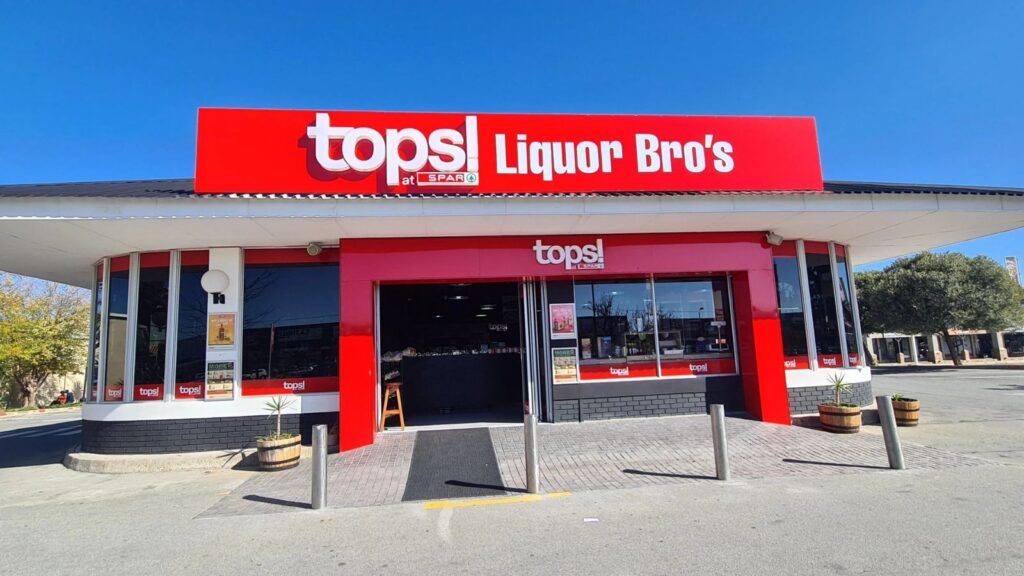
South Africa’s major retailers are rapidly expanding in the country’s R109 billion off-trade liquor market in a corporate land grab.
These retailers, including Shoprite, Pick n Pay, and SPAR, are looking to snap up real estate and bundle liquor and food stores to beat competition from independent wholesalers.
This has resulted in these retail chains opening new liquor stores at double the rate of grocery stores as they hunt for growth.
Trade Intelligence explained in its most recent Liquor Retailing Report that large retailers are looking to overwhelm independent wholesalers.
These retail giants are looking to leverage their scale and efficiency to win over customers ranging from South Africa’s wealthy suburbs to townships.
This has historically proven challenging, as wealthy South Africans frequent boutique stores that offer luxury brands and premium products.
On the other hand, the township and informal market have been dominated by taverns, traders, and small liquor stores that cater to local tastes and offer smaller product sizes, such as quarts.
Now, major retailers are looking to capture market share by bundling their traditional grocery stores with in-store liquor sections or nearby standalone liquor stores.
This competition has intensified as retailer growth in the formal economy has stagnated over the past decade, with consumer spending under pressure.
Major retailers have been forced elsewhere to look for growth in South Africa, predominantly turning to the township and informal economy.
The shift to the liquor market is part of their search for growth in a stagnant economy, with liquor sales outpacing grocery sales.
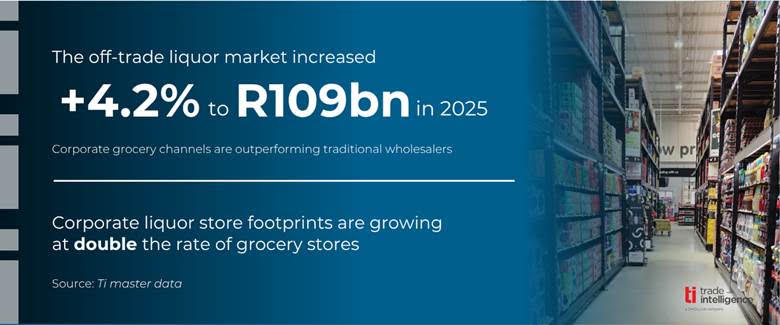
Trade Intelligence data shows that the off-trade liquor market increased sales by 4.2% to R109 billion in 2025. This refers to physical or online sales of alcohol for later consumption off-site.
The data also shows that corporate grocery chains are increasingly outperforming traditional wholesalers, putting independent players under immense pressure.
This has been driven by aggressive real estate expansion, with corporate liquor store footprints growing at double the rate of grocery stores.
Retailers go to war
As they expand, South Africa’s major retailers are increasingly bumping into stiff competition from one another as they fight for market share.
Trade Intelligence explained that it is difficult for these brands to offer a different or unique liquor store experience from each other, given that they sell the exact same products.
Given their similar scale, no party can leverage it to the point of offering significantly lower prices or unique product offerings.
This has led them to focus on bundling their grocery and liquor offerings to leverage differentiation in that arena to capture alcohol purchases.
“Store adjacency is a huge competitive weapon, creating shopper convenience while capturing larger weekend shopping missions,” Trade Intelligence said.
“The result is a shift away from fragmented purchasing of liquor products towards increasingly integrated grocery-and-liquor shopping occasions.”
This applies equally to the physical in-store world and online shopping channels, with shoppers increasingly demanding convenience.
“The knock-on effects of this include shoppers moving away from large, planned stock-up trips towards more impulse purchases,” Trade Intelligence said.
This refers to immediate, convenience-driven digital purchases triggered by social gatherings and even something as small as a change in the weather.
“Buying online also leads to a decline in in-store foot traffic, reducing opportunities for in-store brand visibility and shopper engagement,” the firm said.
“Both these behaviours create challenges and opportunities for manufacturers and retailers alike to capture impulse spending.”
The in-store vs online market is also vastly different, with SPAR’s Tops enjoying a healthy lead in physical store footprint.
However, Checkers Sixty60 dominates digital liquor purchasing, enjoying a near monopoly on the delivery of beer, spirits, and mixers.
Checkers, through its liquor stores adjacent to grocery outlets, is able to offer broader shopping than most of its peers.
This, combined with its efficiency, makes the platform perfect for impulsive liquor purchases that can tie in with grocery sales as well.





Comments