End of a 48-year era for Dis-Chem



“Does the price of medicine make you sick?”
That’s the tag line of a 1980s advertisement that helped propel a mom-and-pop discount pharmacy into one of South Africa’s biggest listed drugstore chains.
Now, Dis-Chem Pharmacies faces a new test: founder Ivan Saltzman, 76, who built the business from one Johannesburg store to a $1.7 billion healthcare chain spanning three countries, retires as chairman of the board this month.
The move reduces Saltzman’s direct involvement in the company and raises questions about whether the entrepreneurial culture that built the firm can retain its edge under Rui Morais, a company insider who worked on its listing and was appointed chief executive about three years ago.
More broadly, it spotlights the beginnings of a generational transfer of wealth that’s set to occur in Africa’s biggest economy more than three decades after democratic rule and economic liberalisation.
More than 40% of South Africa’s high-net-worth individuals are older than 60 and are expected to pass on about $85 billion over the next decade, according to data based on Henley & Partners’ Africa Wealth Report.
The Saltzman family has a fortune of $1.3 billion, according to the Bloomberg Billionaires Index, which is valuing its net worth for the first time.
Saltzman and his wife, Lynette — pharmacists who built Dis-Chem together — gifted two of their sons company shares before his retirement, ensuring the family still holds more than a quarter of the firm.
The transition at Dis-Chem is part of a broader succession story playing out across boardrooms and family empires worldwide, with implications far beyond individual dynasties.
An estimated $83 trillion in assets is expected to change hands globally over the next two decades as founders and first-generation wealth creators confront questions of control, governance and inheritance.

Founded in 1978, when the selling price of medicines wasn’t generally regulated, Dis-Chem disrupted South Africa’s pharmacy model by discounting prescription drugs.
Saltzman, who borrowed 10,000 rand — about $12,000 in those days — from his mother to purchase the chemist he managed, doubled turnover in the first year of business.
Fortunately for him, the former owner didn’t cash the check for nearly a year, giving the young company some breathing room.
“I never missed an opportunity to disrupt the status quo,” Saltzman said in an interview. “We punched far above our weight.”
Over time, Dis-Chem turned its stores into one-stop wellness destinations offering vitamins, cosmetics and toiletries, including from its own private label.
It also built bespoke supply chains, became the country’s first retail pharmacy with clinics in every outlet, and started another franchise allowing local pharmacists to own and run their stores while benefiting from lower, corporate prices on goods.
“Saltzman was a visionary and committed to filling a gap in the market that was consumers seeking value and range,” said Alec Abraham, an analyst at Otto1890, recalling 60-kilometre round trips to shop at his nearest Dis-Chem decades ago.
“Adjusting strategy to the evolving landscape is particularly important, and can destroy founder-led, even pioneering businesses,” he said.
Retail history in South Africa, Dis-Chem’s main market, offers mixed lessons.
The struggles at the Ackerman family’s Pick n Pay show the risks of delayed succession planning and resistance to strategic change.
Pepkor had to reinvent itself beyond the influence of retail magnate Christo Wiese, particularly after Steinhoff’s collapse highlighted the dangers of concentrated founder power and interconnected corporate empires.
South Africa-born billionaire Natie Kirsh built Jetro Holdings into one of America’s largest cash-and-carry operators, but much of its longevity rests on institutional structures that reduce dependence on a single personality.
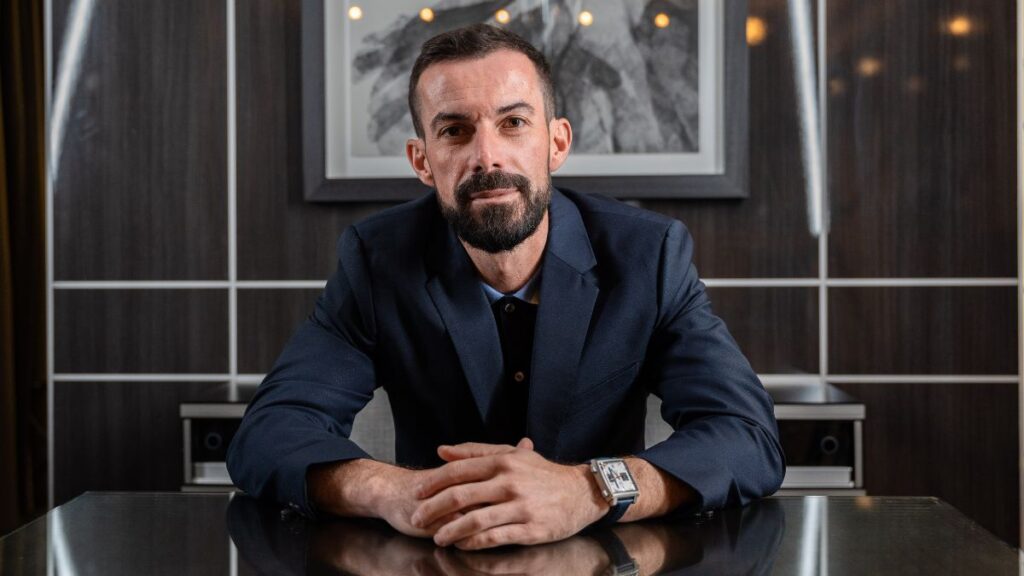
Morais, who has spent over 15 years at Dis-Chem, frames his leadership as an evolution rather than a complete break from the company’s founder-led model.
He said the chain has always been professionally run and that its growth requires clearer accountability and a structure that can outlast the original leadership style.
Still, investors remain focused on delivery as Morais shifts its strategy deeper into healthcare.
Shares in the company fell the most on record on May 29, when earnings missed estimates largely because it front-loaded a major investment in a new innovation hub.
Dis-Chem is now positioning its Health Hub concept, a format that offers a pharmacy, wellness retailer, in-store clinic, diagnostic testing facilities, virtual consultations with primary-care physicians and medical-insurance services under one roof.
This is the cornerstone in a strategy to reduce healthcare costs, expand access and improve patient outcomes for South Africans.
“We need to service a market that is not just mature in script, but that is growing in the primary healthcare space,” Morais said in an interview.
“If we’re able to achieve what we want and get penetration of financial services into our ecosystem close to retail margins, it means we’re able to use the ecosystem to reduce the price of healthcare delivery in South Africa.”
The new store structure aims to cut dispensing time to less than six minutes per customer from about 20 minutes, freeing up pharmacists to provide care.
Products such as medical insurance, funeral cover and life insurance are designed through a healthcare lens and supported by Dis-Chem’s data, which shows how diligently customers take their medication, among other things.
The initiative underscores how Dis-Chem sees itself less as a traditional retailer and more as an integrated healthcare platform.
The shift potentially creates more stable recurring revenue streams in South Africa, where vast healthcare needs aren’t always met by state institutions and where leveraging the facilities and scale of private pharmacy networks could expand access to cost-effective primary care for the majority of the population.
It also introduces operational and regulatory complexity that requires a different set of management capabilities than the entrepreneurial retail execution that defined its early growth years.
The strategy makes sense, but it remains a bet, with the risk being execution, said Merchant West Investments Managing Director Alyssa Viljoen.
“Insurance and healthcare are regulated, capital-intensive and very different from pharmacy retail,” she said.
“The market will not give management unlimited time, so the strategy now needs to translate into measurable proof points.”






Comments