How South Africa’s ultra-rich protect their wealth


South Africa’s ultra-wealthy are increasingly using luxury real estate as a cornerstone of wealth preservation and legacy planning.
Lew Geffen Sotheby’s International Realty CEO Yael Geffen explained that, for these families, real estate is far more than a place to live or a portfolio asset.
As the global economy becomes increasingly unstable, luxury real estate has become a favoured vehicle for financial growth, stability, and intergenerational continuity.
Geffen explained that these “legacy homes” are not just luxurious properties but enduring assets that carry financial, emotional, and familial significance across generations.
“Unlike volatile financial markets or short-term business ventures, real estate offers tangible, resilient value and, for high-net-worth individuals (HNWIs), luxury properties often serve as both lifestyle-enhancing retreats and reliable investment vehicles,” she said.
Property provides multiple wealth-preserving advantages:
- Appreciation potential: Prime properties in major cities, resort destinations or culturally significant locations tend to appreciate steadily over time.
- Tangible security: Unlike stocks or digital assets, real estate is a physical asset that can’t vanish overnight.
- Tax efficiency: Real estate offers a variety of tax planning tools, including depreciation and wealth sheltering trusts in international markets.
- Income generation: Properties can generate rental income through luxury leasing or short-term holiday rentals.
Geffen explained that legacy homes are properties acquired not just for personal enjoyment or appreciation, but for their ability to serve future generations.
“These are often architecturally significant, historically meaningful or located in desirable destinations with strong long-term market fundamentals,” she said.
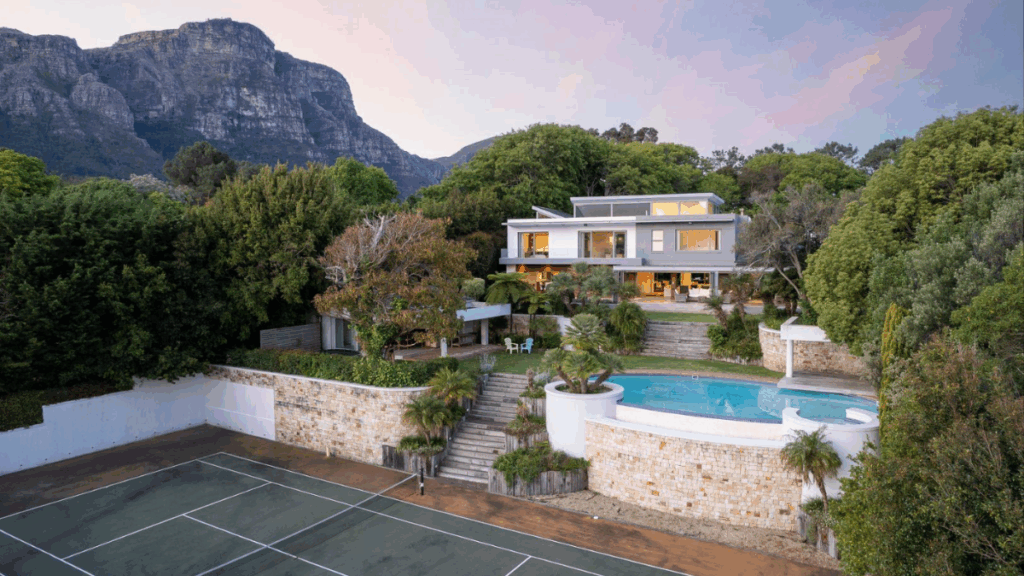
Good examples include London townhouses, Manhattan penthouses, villas along the French Riviera or contemporary architectural masterpieces in Bishopscourt.
“They are often passed down or held in trusts for future generations, representing both financial stability and emotional heritage,” she explained.
“These homes are sometimes custom-built with multi-generational living in mind, including separate guesthouses, dual master suites or private wings for extended family.”
For many families, legacy homes become touchpoints – places where important milestones are celebrated, family traditions are passed down, and wealth takes on a human, tangible form.
Real estate investments
Private wealth management firms established to serve affluent families play a central role in managing and expanding real estate portfolios.
These offices typically oversee a wide range of investments, but property often comprises a significant portion due to its balance of growth potential and risk mitigation.
The role of the private wealth management firms in real estate includes identifying long-term value markets based on global trends and demographic shifts, and structuring ownership to reduce tax liability and improve estate planning.
They also manage operations, especially for income-producing properties like luxury rentals or commercial holdings, and curate legacy assets.
These assets include art collections, land, and properties that align with the family’s values and long-term vision.
Geffen said many family offices today are diversifying across geographies, investing in New York, London, Paris, Dubai, Singapore, and emerging luxury hubs like Lisbon or Cape Town.
“Diversification helps hedge against local market fluctuations and political instability, while also offering the next generation global flexibility,” she said.
Geffen explained that in times of geopolitical uncertainty, high inflation or market downturns, real estate remains a favoured safe haven for HNWIs.
“During the Covid-19 pandemic, for example, luxury property markets in places like Aspen, the Hamptons, the Swiss Alps and the Garden Route in South Africa, saw a surge in demand as families sought safe, private refuges with long-term value,” she pointed out
“Similarly, amid economic turmoil or currency depreciation, real estate in politically stable, economically resilient countries can act as a hedge.”
According to Geffen, this is particularly important for families with international interests who wish to preserve wealth outside their home country.
Legacy homes in these “safe haven” markets are often acquired with the long view in mind, not just for their immediate use, but for their resilience over decades.