Top South African property investor dumping Eskom at its shopping malls


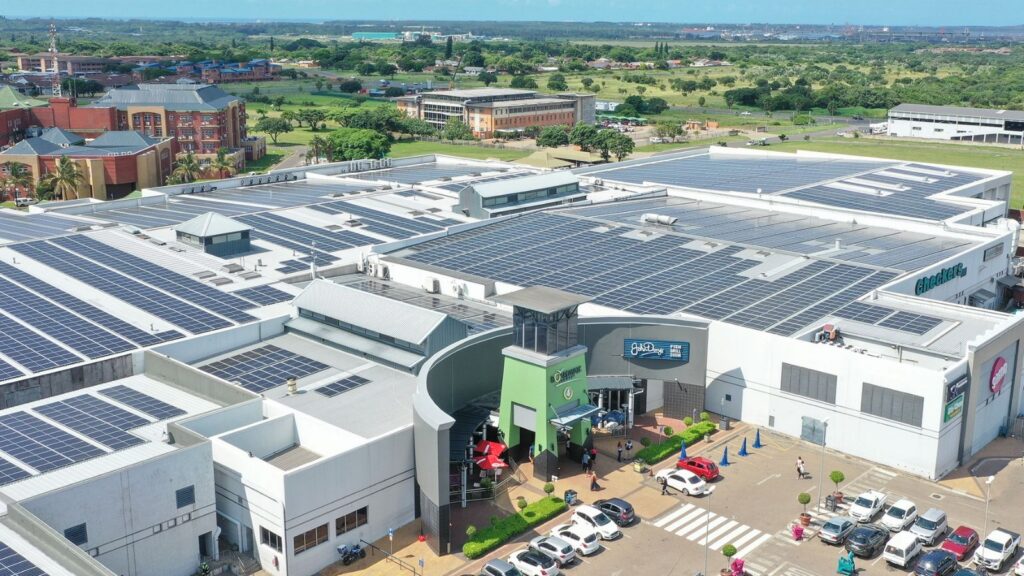
JSE-listed real estate investment trust (REIT) Resilient has invested in expanding its alternative power sources over the past few years.
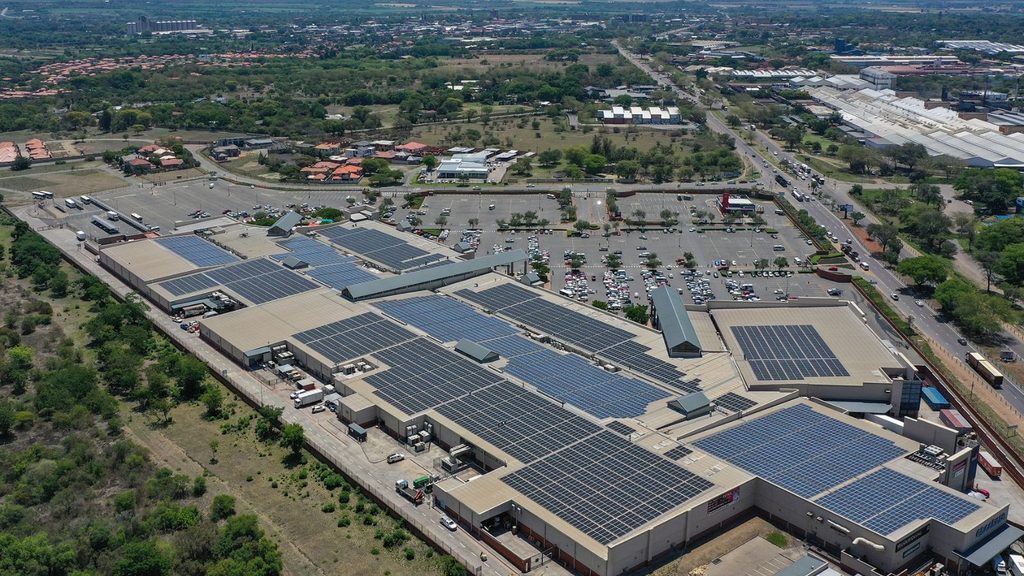
The group’s solar PV capacity is set to reach 94.4 MWp by the end of the year, along with battery capacity of 30.7 MWh.
Resilient is rolling out these alternatives at its retail outlets across the country as it seeks to contain rising electricity costs and reduce its dependency on the national grid.
These investments have the added benefit of providing additional growth and margin support for the REIT, making its stock more attractive.
Resilient is a retail-focused REIT that boasts a market capitalisation of R28.81 billion on the JSE.
Its portfolio includes many of South Africa’s most popular shopping centres, including Galleria Mall in KwaZulu-Natal, Mall of the North in Limpopo, and The Grove Mall in Gauteng.
Resilient also owns and manages properties in Europe, including retail malls in Portugal, France, and Spain.
In the first half of its 2026 financial year, Resilient reported that its distributable earnings rose 11.66% to R919.3 million.
In its South African portfolio, net property income grew by 6% on a like-for-like basis, while comparable retail sales grew 2.9%.
Renewals in the local portfolio were concluded at an average increase of 2.5%, with new leases concluded at 7.1%.
Resilient also maintained a low pro rata vacancy rate of 1.9% across its 28 retail centres in South Africa.
The group’s half-year results also provided an update on its alternative energy investments over the past six months.
Resilient reported that it is on track to add 6.4 MWp solar PV capacity by the end of its 2026 financial year.
This will bring the group’s total capacity to 94.4 MWp, supplying 43.2% of Resilient’s total electricity requirements.
This is up significantly from 59.9 MWp in its 2023 financial year, when it covered only 27.7% of the portfolio’s total electricity consumption.
At the same time, Resilient has been investing in its battery storage capacity, which expanded to 30.7 MWp in the first half of 2026.
Resilient’s investment case
In a recent presentation for PSG Financial Services, equity analyst Junior Yun explained that there is a lot to like about Resilient.
He said the REIT owns high-quality properties, predominantly retail assets, which boast low vacancies, positive leasing, and high visible growth opportunities.
Yun noted that much of this strength is already reflected in Resilient’s valuation, and that PSG has a hold recommendation for the company’s stock.
Among Resilient’s strengths, Yun listed its alternative energy investments, saying this has provided additional growth and margin support for the business.
“Investing in solar and battery solutions reduces the exposure to administered electricity cost increases,” he explained.
Resilient has made similar arguments in favour of its alternative energy investments in its previous annual results.
In 2024, Resilient explained that its long-term energy strategy will shield its property income from above-inflation increases in municipal rates and administered utility tariffs.
The company said its alternative energy initiatives also aim to reduce its reliance on grid-supplied electricity.
“Resilient’s objective is to reduce its reliance on grid-provided electricity by continuing the expansion of its solar and battery installations,” it said.
“Batteries support the further expansion of Resilient’s solar installations, and the introduction of automated micro-grid systems allows the effective management and optimisation of demand and consumption.”
At the same time, these investments will hedge Resilient against Eskom’s ongoing transition to a more cost-reflective electricity pricing framework and restructured tariffs.
Aside from energy alternatives, Resilient has also invested in backup water storage at each of its shopping malls due to interruptions in supply.