South Africa’s rand hits its worst level in eight months



The rand slumped to its weakest level against the dollar since March as a retreat in gold, a key South African export, added to worries that a Federal Reserve interest-rate hike will erode the South African currency’s yield advantage.
The currency fell as much as 1.9% on Wednesday after bullion dropped below $3,800 per ounce for the first time since September 2025 as Federal Reserve officials made the case for more interest-rate hikes to tackle stubborn inflation.
Fed Governor Christopher Waller said inflation remains headed in the wrong direction, urging the central bank to consider a larger, half-percentage-point rate hike at next month’s meeting.
An emerging markets currency gauge hit a session low on the remarks.
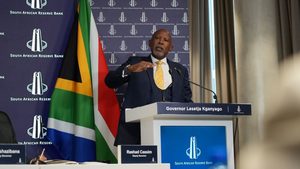
By contrast, South Africa’s central bank is expected to keep interest rates on hold at its final monetary policy meeting of the year on Thursday.
This comes after inflation, at 5.2%, accelerated in line with expectations in October and is forecast to slow.
Inflation has not been “sufficiently above expectations to require certain tightening”, said James Turp, a fixed-income portfolio manager at Ninety One.
“Core was a bit higher, I should note, but this is probably not enough to require tighter policy tomorrow, and as a result the currency reflects the weaker yield differential.”
South Africa’s benchmark 10-year government bond yield climbed about nine basis points to the highest level in four weeks at 8.91%.
Stocks in Johannesburg declined for a third day, their longest losing streak since 2023, as precious metals and mining shares dragged the index lower.
“A hike tomorrow would help, but not sure the South African Reserve Bank have the gumption to pull the trigger,” said Warrick Butler, head of foreign-exchange trading at Standard Bank.
Investors are also worried about the stability of South Africa’s coalition government amid ongoing negotiations following municipal elections on 4 November.
The African National Congress, the nation’s largest party, continued to lose ground with voters unhappy over its poor delivery of public services.
The resulting political fallout is raising questions about what this could mean for its continued alliance with the Democratic Alliance, the second-largest party.
Investors have been broadly positive on the so-called government of national unity, formed by the parties with smaller rivals following general elections in 2024.
“Hopefully the politics can be resolved soon so we know what we are dealing with,” because the uncertainty is weighing on sentiment, Butler said.
Login or register for unlimited free access.