Cape Town sitting on a goldmine


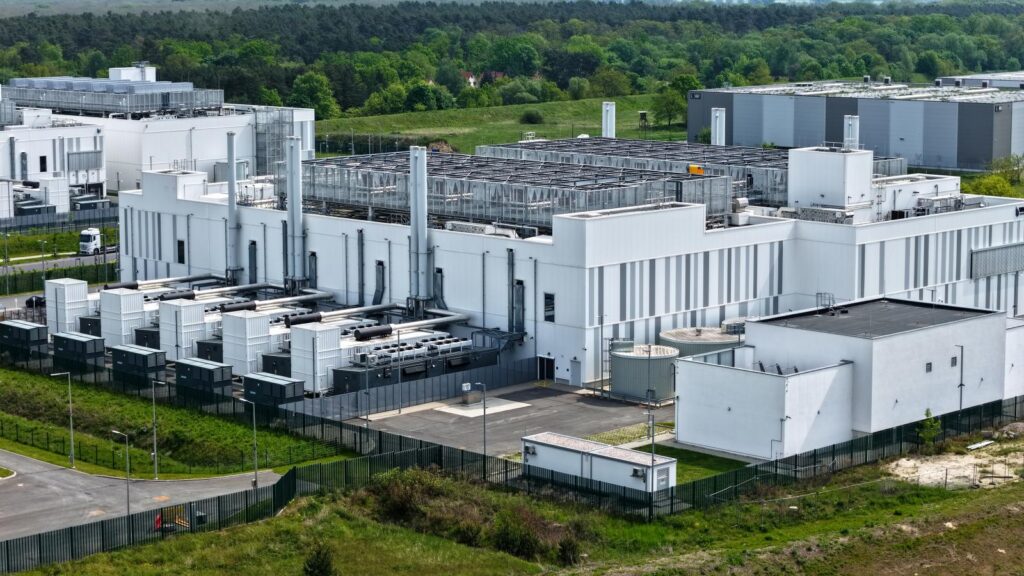
Inospace CEO Rael Levitt said that Cape Town can benefit from the global data centre goldmine, but that a legal gap could derail this development.
Levitt referred to the world’s largest data centre developer, Equinix, and its development of two data centre facilities at King Air Industria.
The land, near Cape Town International Airport on Pallotti Road, was originally linked to the former King David Golf Club.
Equinix explained that these data centres will focus on high-density, AI-ready colocation and cloud interconnection capacity designed to serve sub-Saharan Africa.
Data centres, especially high-density, AI versions, require a lot of electricity. In this case, the development is projected to need between 160 MW and 174 MW.
Equinix cleared Cape Town’s Municipal Planning Tribunal. However, this does not mean that it will be smooth sailing from here.
The development faces public scrutiny and formal objections from civic groups, including the local Housing Assembly and tech-justice non-profit Foxglove.
Opponents of the development said that the data centres could require large amounts of water for cooling in a region which is prone to droughts.
They also questioned uncertainties around diesel generator capacity, potential air pollution, and noise levels during power cuts or load shedding events.
Levitt bemoaned the groups objecting to the data centres as they will bring great economic benefits to Cape Town.
“It’s a genuine win. Data Centres are the gold mines in an AI-dependent world,” Levitt said in a statement.
He said that the development faces an appeal because South Africa has no dedicated legal framework for hyperscale data centres.
“Tribunals are now stress-testing 174MW facilities against planning rules written for warehouses,” Levitt said.
He explained that this gap is an open invitation to litigate, and some social justice warriors will take it.
He said that in this case, the opponents are the Legal Resources Centre, acting for Foxglove, a UK-funded tech justice non-profit.
“The group ran the same playbook against a UK government data centre earlier this year and won,” he said. “It is the same case, exported to Cape Town.”
“We’re not just fighting our own municipal bureaucracy. We’re now fighting an imported one, too.”
He said that South African cities need a fast, non-negotiable data centre approval track. This includes defined disclosure thresholds, fixed timelines, and one clean sign-off.
“Every second we spend re-litigating the same regulatory gap is a second that investment lands somewhere else,” he said.
“We should be Africa’s data centre goldmine. Real gold miners fled this country over poor policy. Let’s not repeat that mistake with data centres.”






Comments