Illegal mining, online gambling, and e-prostitution: Say hello to South Africa’s new economy


Statistics South Africa has benchmarked and rebased the country’s Gross Domestic Product (GDP) data.
Areas of activity included in the calculation of South Africa’s GDP have been expanded to account for illegal mining, household solar, e-hailing, online gambling, and online prostitution.
Stats SA announced on Thursday, 29 October, that it has rebased and benchmarked South Africa’s GDP based on 2022 prices.
This rebasing revealed that South Africa’s economy is 4.9%, or R300 billion, larger than previously estimated.
Stats SA, the state-owned agency responsible for collecting and publishing South Africa’s economic data, performed the rebasing and benchmarking in line with international standards and best practice.
This was done to ensure that major changes in the economy’s structure are incorporated into GDP calculations.
In South Africa, GDP estimates are rebased and benchmarked every five years.
2026’s rebasing will see growing activities such as online gambling, illegal mining, household solar, e-hailing, and online prostitution included in GDP calculations.
Bloomberg explained that this will result in the unobserved economy’s contribution, including parts of the informal economy and illegal activities, increasing to 8.7% from 7.3% previously.
Stats SA explained that its rebasing and benchmarking were done to ensure that the GDP measurement reflects the local economy and remains relevant amid structural changes.
On Thursday, 29 October, the agency explained that the 4.9% increase in South Africa’s GDP was primarily due to the inclusion of illegal mining.
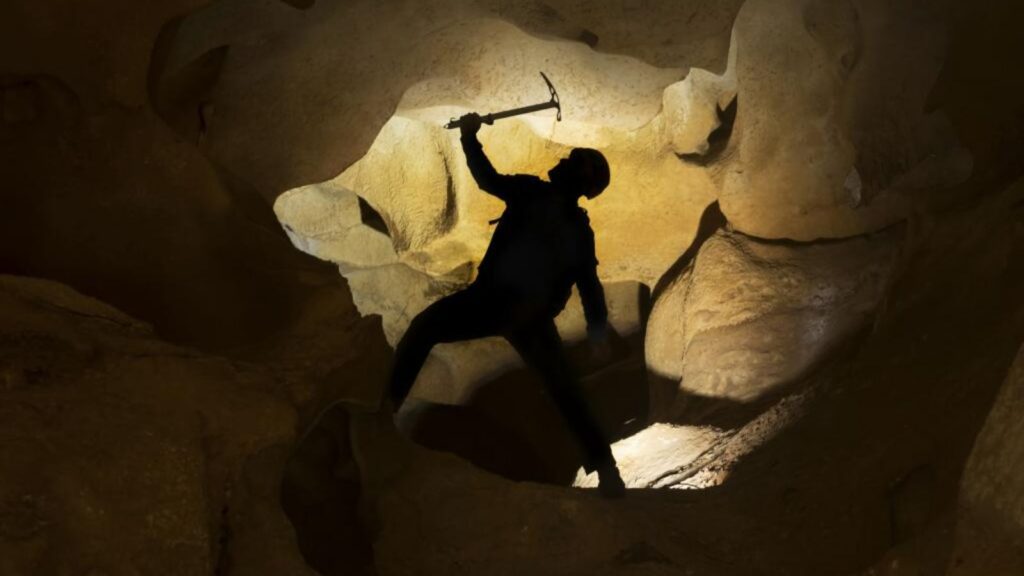
Illegal mining has grown significantly in South Africa, with the industry now valued at R60 billion. This represents an eight-fold increase since 2017.
Similarly, activities like online gambling have also proliferated in South Africa.
According to the National Gambling Board (NGB), R1.5 trillion was wagered across the local gambling industry in the 2024/25 financial year, with three-quarters of this taking place online.
The Solidarity Research Institute (SRI) found that online gambling in South Africa grew 390% between 2021 and 2025.
This was driven by increased accessibility on mobile phones and widespread gambling advertising.
“By incorporating these activities into the national accounts, the industry aggregates provide a more comprehensive representation of the personal services sector,” Stats SA explained.
South Africa’s GDP rebasing and benchmarking
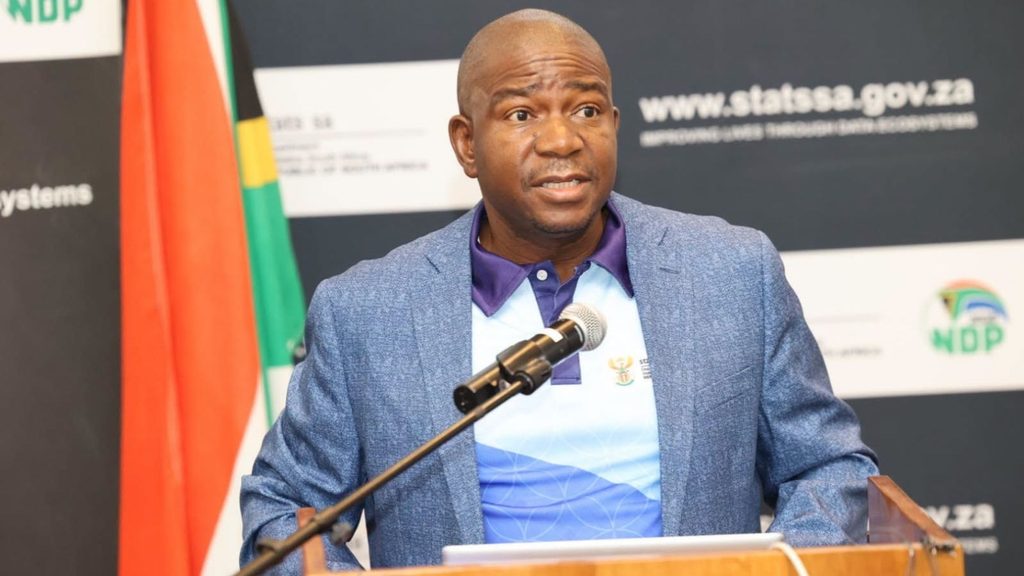
Stats SA explained that benchmarking and rebasing are interrelated processes that occur simultaneously.
“Rebasing involves changing the reference year for constant-price estimates in national accounts,” Stats SA said in a press release on 22 October.
“Benchmarking, by contrast, involves improvements in data, classifications, and methodologies for compiling national accounts.”
The agency explained that benchmarking is a critical analytical tool for identifying and correcting distortions in the national accounts.
“According to the IMF, poor benchmarking can quickly reveal inconsistencies between quarterly and annual sources, signalling areas that require further research to improve data concordance,” it said.
“Furthermore, in the context of seasonal adjustment, benchmarking is essential for detecting ‘drift’, ensuring that seasonally adjusted results remain accurately anchored to the original unadjusted figures.”
Stats SA said the new benchmarking for South Africa’s GDP data shows a notable shift in the composition of economic activity.
It explained that, pre-Covid-19, the data reflected consistent growth in both the observed and non-observed economies (NOEs).
However, post-pandemic, the NOE increased significantly. “Compared with previous estimates, the revised estimates show a larger contribution of the NOE to the economy,” it said.
The NOE can encompass various activities and refers to the extent of economic activity that is missing from statistical data collections and administrative sources.
This can include activities such as prostitution, narcotics, illegal mining, illegal and online gambling, and subsistence farming.
Stats SA’s new GDP estimation process will integrate fresh data sources, including advanced crime statistics, specialised academic research, and industry reports from bodies such as the NGB.
These new sources will help to bridge data gaps in these non-observed sectors.