South Africans flocking to small towns in one area with large and affordable homes


More South Africans are moving to smaller Karoo towns in search of space, affordability, community and a slower lifestyle, with demand for well-priced homes rising steadily as remote and flexible work becomes more common.
A subtle shift is underway as a growing number of home buyers reassess what kind of location offers them the lifestyle they desire.
Pam Golding Properties area principal in the Karoo, Wayne Rubidge, explained that, for lifestyle buyers, it’s not about architectural design style, but about reclaiming time, perspective, and calm.
“This is by no means a mass exodus from cities, it’s more a measured rebalancing, with a growing number of buyers reviewing their lifestyle priorities and what ‘value’ really means to them,” Rubidge explained.
“In many Karoo towns – which span vast areas across four provinces – buyers can secure a freestanding home for under R2 million, a price point that would typically only access a small, modest apartment in major cities.”
According to Pam Golding Properties agents operating across the Karoo, buyers in this market appear to have a clear sense of what they want their lives to look like, and the Karoo fits many of these ideals.
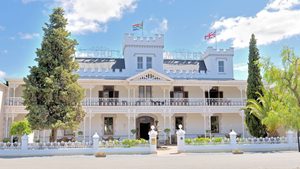
Similar trends have been noted in Karoo towns such as Graaff-Reinet – now known as Robert Sobukwe Town, in the heart of the Great Karoo in the Eastern Cape, and Prince Albert in the Western Cape’s Central Karoo.
“Buyers are relocating to towns like these in the Karoo after weighing all their options, before making a considered choice,” said Pam Golding Properties’ residential agent in Graaff-Reinet, Lynne Minnaar.
“A growing cohort is maintaining professional ties to cities while living in the Karoo, enabled by improved connectivity and more flexible work structures.”
They are also placing renewed value on walkable towns, knowing their neighbours, and a stronger sense of community and belonging.
In contrast to high-security urban living, Karoo towns offer a location rooted in visibility and connection, Rubidge explained.
What is drawing buyers to the Karoo

When it comes to what Karoo buyers are looking for, Pam Golding’s agents are reporting a consistent set of motivations:
- Space that extends beyond the home – quiet streets, open landscapes, and less density
- A sense of security rooted in community
- Schools and slower rhythms that support family life
- Homes with character, often with room to adapt or expand
“From young families looking for a different environment to raise children, to retirees and second-home owners, no single buyer type dominates,” Rubidge said.
“We see this as a sign of a more stable, lifestyle-driven market, with most buyers remaining economically active while reframing their daily lives.”
According to Rubidge, well-priced properties in sought-after Karoo towns are increasingly selling within weeks rather than months, particularly in the R1 million to R3 million price range.
“Due to the demand, stock is limited, especially for well-maintained heritage and character homes, and move-in-ready properties,” he said.
Value for money is naturally an important factor in the mix. In major cities, buyers often allocate significant budgets to compact, well-managed living. But in the Karoo, Rubidge said the equation changes.
“For the same investment, buyers can access freestanding homes with larger plots, heritage and character properties with long-term appeal, or additional structures that can be adapted into guest accommodation or workspaces,” he said.
“Buyers are often surprised by what their budget unlocks here. Apart from value for money, it’s also about possibility.”
Alongside residential demand, he said Pam Golding is also seeing steady interest in smaller farms and lifestyle land parcels.
This is often driven by investors or purchasers seeking to diversify into tourism, agriculture, or long-term landholding.
“While distinct from the residential market, this trend reflects a broader shift in how a diverse range of individuals are thinking about value and opportunity in the Karoo,” he said.
Rubidge added that a notable portion of activity emanates from those the market describes as “second chapter” buyers.
“These include farmers transitioning into town, couples downsizing from large family homes in cities, and professionals looking to simplify without stepping back entirely,” he said.
“The common thread is not retirement, but a reset. Towns like Vanderkloof in the Northern Cape, with its appealing dam lifestyle and lock-up-and-go options, are seeing particular interest from this segment.”
Rubidge stressed that while stock remains limited in many towns, activity growth is steady and sustainable, suggesting that smaller towns can play a meaningful role alongside major metros.
“The Karoo has always drawn people in,” he added. “What’s emerging now is that more people are choosing to stay.”
R2.85 million three-bedroom house in Graaff-Reinet, Eastern Cape


R3 million three-bedroom house in Vanderkloof, Northern Cape


R3.6 million five-bedroom house in Graaff-Reinet, Eastern Cape


R4.6 million lifestyle property in Graaff-Reinet, Eastern Cape


R4.76 million four-bedroom house in Vanderkloof, Northern Cape


R5.95 million three-bedroom house in Prince Albert, Western Cape





Comments