The province coming after the Western Cape’s crown


Mpumalanga is rapidly closing the gap on South Africa’s traditional property heavyweights, such as the Western Cape and Gauteng, with strong house price growth, rising buyer incomes and improved affordability.
According to BetterBond’s National Head of Sales, Bradd Bendall, a combination of strong price growth and above-average house prices has seen the province become one of the country’s most valuable residential regions.
In fact, Mpumalanga is even rapidly catching up to perennial favourites such as the Western Cape and Gauteng.
BetterBond’s latest data, as reported in the January 2026 Property Brief, shows that Mpumalanga recorded average house price growth of 7% year-on-year in 2025.
This made it the second-best performing province in the country, narrowly trailing the Western Cape, which recorded growth of 7.3%.
“This performance – with a growth rate four times stronger than the national average – is being driven by the region’s tourism, agricultural and mining sectors,” Bendall said.
“These industries create employment opportunities and attract a diverse range of buyers. Mpumalanga also offers a compelling lifestyle proposition, including proximity to iconic destinations such as the Kruger National Park.”
Mpumalanga was also one of only four regions – alongside the Western Cape, Greater Pretoria and KwaZulu-Natal – where house price growth outpaced inflation in 2025.
As a result, the province now boasts the third-highest average house price in the country, at R1.63 million.
“This means Mpumalanga has surpassed the national average house price of R1.6 million,” Bendall explained. “Only the Western Cape, at R2.1 million, and Greater Pretoria, at R1.7 million, currently rank higher.”
The province is now outperforming several major metros and regions, including Johannesburg’s north-western suburbs and parts of KwaZulu-Natal, both in terms of growth and overall price positioning.

First-time buyer opportunities
Mpumalanga’s housing market is also creating meaningful opportunities for first-time buyers. In August 2025, BetterBond data showed that the province recorded the smallest home loan gap in the country, at just R75,000.
This gap reflects the difference between the average home loan approved for all buyers and that of first-time buyers. By comparison, the average home loan gap in the Western Cape stands at R252,000.
“Greater accessibility for first-time buyers plays an important role in supporting activity in emerging regions such as Mpumalanga,” Bendall said.
Notably, the province also recorded South Africa’s highest average first-time buyer income in 2025, at R56,000.
“This points to improved purchasing power among first-time buyers and helps explain the shift towards higher-value property purchases in the region,” he said.
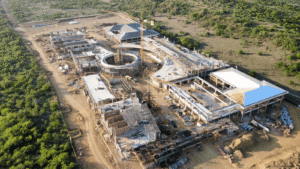
New residential estates, including the exclusive Matumi Valley and the nature-inspired Green Valley development in Mbombela, are meeting the needs of buyers willing to pay a premium for a secure, lifestyle-focused offering.
“With strong price growth, rising buyer incomes and improving accessibility for first-time buyers, Mpumalanga is no longer simply an affordable alternative,” Bendall said.
“It is fast becoming a serious contender in South Africa’s residential property landscape and is well positioned to sustain its upward momentum into 2026.”

Mpumalanga’s rental market slump
Despite Mpumalanga’s positive performance on the residential property market, its rental market still leaves much to be desired.
PayProp’s latest Rental Index revealed that the average rent fell by 0.2% year-on-year in the third quarter of 2025, making it the first province to dip into negative territory since KwaZulu-Natal in the first quarter of 2024.
In the third quarter of 2025, the average rent in Mpumalanga reached R8,441 per month. In comparison, the national average rent climbed to R9,286 during the quarter.
PayProp explained that the province has been South Africa’s slowest growing for five quarters in a row, and “it would take a major turnaround to change that”.
“As we’ve seen since the start of 2024, rental market turnarounds are few and far between in Mpumalanga.”
Positively, though, arrears in the province have improved from 19.5% of tenants in arrears in the second quarter of 2025 to 19.2% in the third quarter. The average arrears percentage also fell to 64.9% in the third quarter, the second-lowest of all nine provinces.
R1.8 million four-bedroom house in Sabie


R3.45 million seven-bedroom house in Dullstroom


R10.95 million six-bedroom house in Sabie Park


R21.5 million seven-bedroom house in Elawini Lifestyle Estate





Comments