South Africa’s most important company chased out of the country


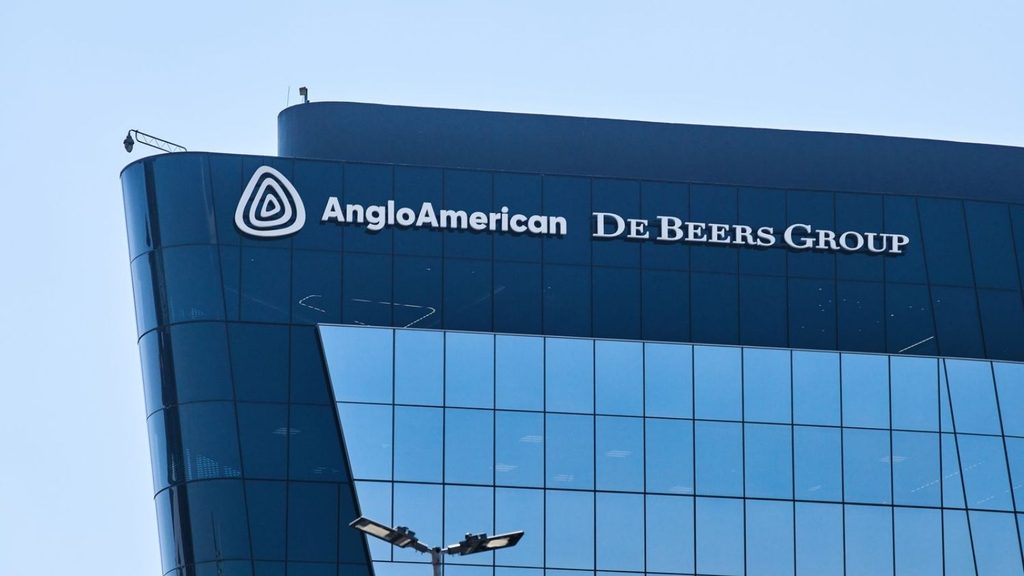
“We see our future as a mining house rooted in South Africa and are committed to seeking every opportunity for expansion at home,” Anglo American declared in 1996.
Three years later, the company moved its headquarters to London and listed primarily on the London Stock Exchange, with South Africa relegated to just another operating area.
This was a direct result of the company’s fears surrounding the nationalisation of mining assets in South Africa, demands for transformation, and aggressive trade unions.
As trade unions found themselves with a partner in government in the ANC, they demanded drastic salary increases, improved working conditions, and the breakup of the giants that built the South African economy.
Mining historian Jade Davenport describes Anglo’s retreat from the country as “the most profound betrayal of the South African economy”.
In her book, Digging Deep, Davenport analyses why Anglo dumped South Africa for London and rapidly sold its local assets.
This process of exiting the country is near completion in 2026, with Anglo unbundling its coal business and Anglo American Platinum (Amplats), and selling De Beers. Its only asset in South Africa is Kumba Iron Ore.
Anglo’s head offices are on the move again, as it teams up with Teck Resources in Canada to create one of the world’s largest copper miners.
Davenport explained that Anglo’s exit was partly to improve its global competitiveness by accessing capital in London, but was mainly to avoid what had happened to its peers in South Africa.
In 1994, South Africa’s mining industry was dominated by five companies – Anglovaal, Gold Fields, Gencor, Rand Mines, and Anglo American.
These companies were limited by the government from investing outside of South Africa to prop up the local economy. And so, they dominated everything from mining to groceries.
Anglo was the giant among giants, earning it the nickname “South Africa Inc” for how much it dominated the local economy.
It controlled 45% of the JSE’s listings, and the companies it owned accounted for a quarter of South Africa’s GDP.
This was before it had created Amplats as it is known today. When Anglo bundled its platinum assets, it became the largest producer of the precious metal overnight.
Davenport said Anglo knew it had to try something different to avoid being broken up like its peers, many of which no longer exist.
To this end, it complied with the ANC’s transformation agenda and tried to appease trade unions. It did not know that this would soon shift from a means of survival into a legislative agenda forced upon it.
This change, Davenport explained, sparked fears among Anglo executives that they would need to find a way to exit South Africa before it could be hacked apart.
Chasing away the company that built South Africa
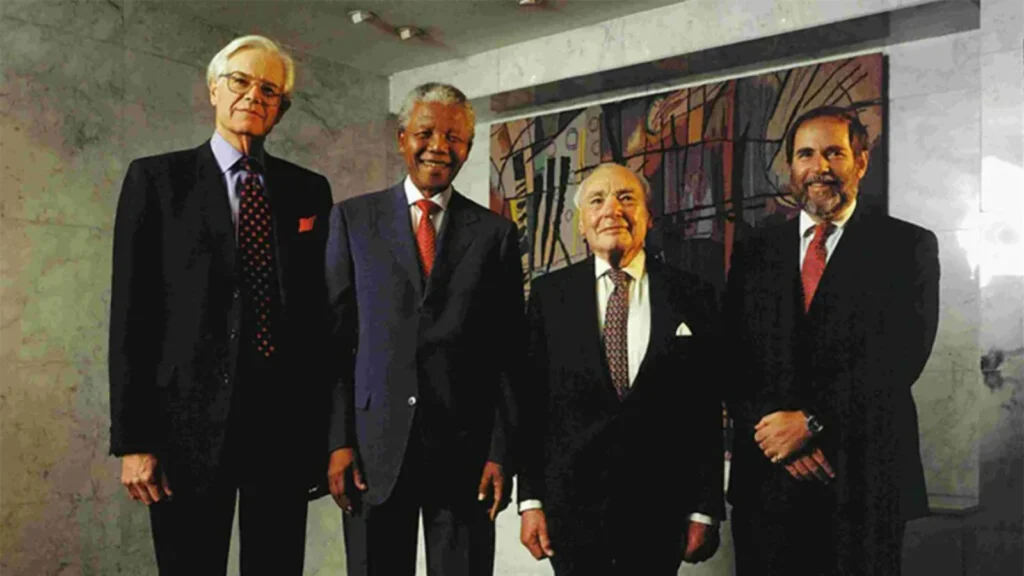
The 1990s were the most destructive decade for South Africa’s mining sector, decimating the backbone of the local economy.
Between 1990 and 1999, the number of mining stocks listed on the JSE fell from 45 to 14, and the five giants were broken up.
Gencor no longer exists, with its gold assets merged into Gold Fields and its base metal assets spun off into Billiton.
Anglo American was the only company to remain largely intact through skilful engagements with the ANC, but the warning signs were flashing at its 44 Main Street offices.
In 1996, chairman Julian Ogilvie Thompson reiterated the company’s commitment to South Africa, calling the country Anglo’s home.
Davenport said that behind the scenes, things were vastly different at the mining giant. Its management team was looking for ways to avoid the political and economic risks of an ANC-led government.
The ANC and its trade union partners called for the full nationalisation of South Africa’s mining industry in the 1980s and 1990s. In particular, they wanted Anglo to be broken up and taken over by the state.
Anglo had seen this movie before in Zambia, when the country nationalised its copper mines in the 1970s. The company had lost a fortune and vowed never to repeat this mistake.
In quiet rooms, Anglo began lobbying the ANC government to allow it to move its headquarters and primary listing to London.
While the ANC walked back from full nationalisation, it still wanted to break up Anglo using competition legislation. Unions wanted to break “apartheid-era monopoly capital”.
This pressure is what forced many of Anglo’s peers to voluntarily unbundle their assets in preparation for future regulations. These companies effectively sold themselves off.
Anglo’s public argument was that it needed the offshore listing to attract capital that could then be reinvested in South Africa.
A listing in London would also enable it to expand more aggressively outside South Africa and to improve governance, thereby creating stakeholder value.
The government gave way in a shock decision, allowing Anglo to move its headquarters to London and list on the stock exchange on 24 May.
Overnight, Anglo had become a foreign investor in the country that had created it and that the company had industrialised through sheer will.
In many ways, South Africa was Anglo and Anglo was South Africa. In one decision, that was broken, and the country lost all that came with it.
Over the next decade, Anglo cut its exposure to South Africa by two-thirds. 20 years later, all it has in the country are two iron ore mines and a closed diamond mine.
“Anglo left this country in 1999. I think the claws were out for them along with the grinders and the hacksaws,” mining analyst Peter Major said.
“The unions and the ANC in the 1980s said what they were going to do to Anglo when they came to power. They put the fear of God into Anglo and its investors.”
“When they had the chance to leave in 1999, they took it. Harry Oppenheimer argued against leaving South Africa, but his voice was not enough.”
“I give them credit, they read the situation pretty well, having seen what happened before in Zambia, Uganda, and Zimbabwe when mines were nationalised.”





Comments