What if everything we think about ESG is wrong?


By Stef Valenti, Fedgroup Alternative Asset Management MD
For almost two decades, ESG has shaped the language of responsible investing.
It has encouraged businesses to think beyond quarterly earnings, improved governance standards and forced investors to consider their environmental and social responsibilities alongside financial returns.
That has undoubtedly been positive.
Yet as ESG has matured, it has also become increasingly defined by frameworks, ratings, disclosure requirements and compliance.
In many investment committees today, the first question is no longer whether a business can become sustainable.
Instead, it is whether it already satisfies a predefined set of sustainability criteria. We believe that is the wrong place to start.
At Fedgroup we have spent years investing in businesses that many conventional financiers considered too complex, too unconventional or simply too difficult to evaluate through standard scorecards.
While we understand the principles behind ESG and what it is meant to achieve, we have always believed that it simply encouraged doing less harm in an attempt to obtain a good score.
That is why we intentionally practised something different: actively doing more to make a positive impact.
This stems from our investment philosophy which focuses on funding transformative systems rather than funding compliance.
Asking a different set of questions
Transformative systems has its roots in systems thinking, an approach used across economics, ecology and organisational development that recognises lasting change rarely comes from isolated interventions.
Complex systems improve when the underlying relationships, incentives and productive capacity improve together.
Applied to investment, that means asking a fundamentally different question. Rather than asking whether a business already looks sustainable, we ask what it would take to make that business genuinely sustainable over the long term. That shift in thinking changes everything.
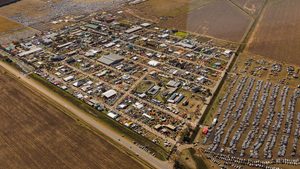
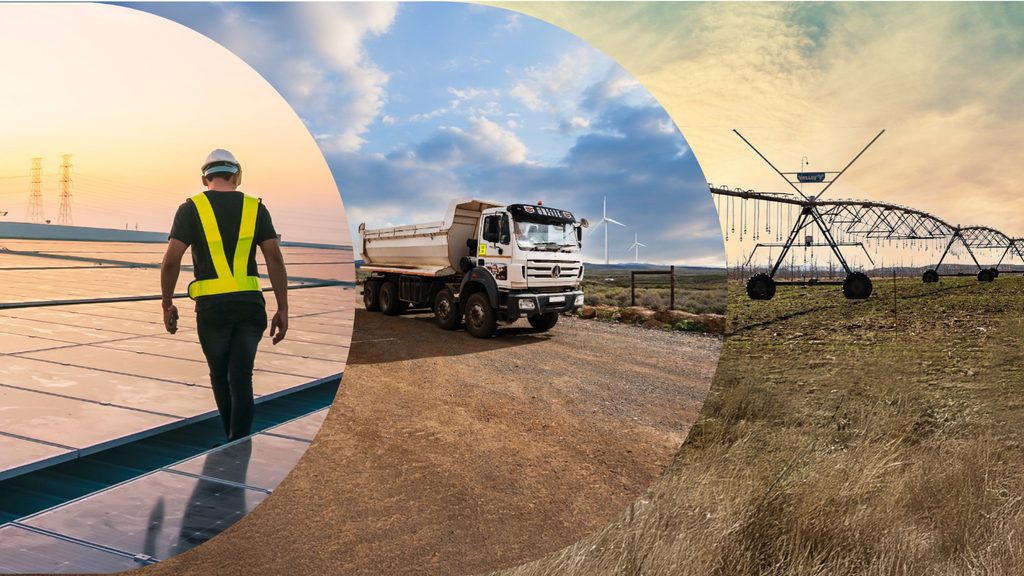
One of our agricultural investments illustrates the point. Funding a commercially viable farm was the easy part.
The real difference lay in understanding what the operation needed to remain viable and funding those requirements too.
In this case, reliable energy to the pump house was critical to maintaining irrigation, yet it was the kind of operational requirement a traditional funder might not ordinarily consider.
By investing in renewable energy for the pump infrastructure, we strengthened the resilience and efficiency of the entire operation.
It is this broader approach to funding, looking beyond the immediate capital requirement to understand what will make the underlying business stronger and more sustainable, that ultimately enables meaningful environmental and social outcomes.
In this way, commercial resilience is not separate from ESG. It is the foundation that allows those outcomes to endure and, ultimately, enables sustainable businesses to support sustainable communities.
We encountered the same principle while assessing a transition project involving the conversion of a carbon-based industrial asset into a hydrogen opportunity.
Institutional capital was willing to fund the hydrogen facility because it fit neatly into ESG mandates. Yet many capital providers were unwilling to finance the rehabilitation of the existing carbon asset because it failed their screening criteria.
The irony was obvious. Without funding the first stage of the transition, the second stage could never exist.
The destination qualified for investment; the journey did not. That is precisely where transformative thinking becomes essential.
Deep understanding
This is also why Fedgroup spends a considerable amount of time evaluating investment prospects.
We look beyond financial models to understand productive assets, management capability, operational realities and the commercial drivers that determine whether an enterprise can thrive over decades.
Complexity is not automatically risk. Quite often it is where the greatest opportunity exists, provided investors are prepared to engage deeply enough to understand it.
That philosophy influences how we structure capital. Rather than forcing businesses into predefined lending products, we increasingly build integrated capital solutions that combine senior debt, development finance, renewable energy funding, property finance, working capital and, where appropriate, profit participation or equity.
The objective is not simply to complete a transaction. It is to create a capital structure that evolves alongside the business throughout its lifecycle, preserving returns while supporting long-term growth.
Perhaps that is where sustainable investing is heading. The next evolution will not come from another reporting framework or another layer of disclosure.
It will come from recognising that sustainability is created through intelligent capital allocation.
Investors have a responsibility not only to identify sustainable businesses, but to help build them.
If we only finance businesses that already satisfy every metric, we risk starving the very transitions the global economy most needs.
ESG remains an important governance discipline and an essential measure of accountability. But it should not become a substitute for judgement.
At Fedgroup, our experience has reinforced a simple belief: when patient capital strengthens productive businesses, those businesses create employment, invest in communities, improve environmental outcomes and generate lasting economic value.
The greatest impact does not come from funding compliance. It comes from funding transformation. And perhaps that is the question investors should be asking first.