Government’s plan to cut thousands of jobs


The National Treasury has retained its provision for the early retirement of thousands of state employees, with the aim of improving the efficiency of government and reducing the public sector wage burden.
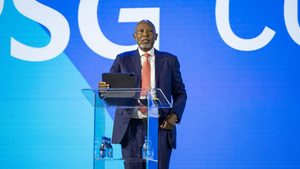
This was revealed by Finance Minister Enoch Godongwana in his third Budget Speech for the 2025/26 financial year after previous fiscal plans did not receive enough political support.
Godongwana and his team have had to reverse the planned VAT increase for this financial year and the next to ensure the third Budget will gather enough support.
This has left a gaping hole in the government’s finances, with the removal of the VAT hike and a weaker economic outlook expected to translate into R61.9 billion less in tax revenue over the next three years for the state compared to March projections.
Godgonwana proposed some measures to patch over this gap, including the scrapping of the expansion of the zero-rated VAT food basket and an increase to the fuel levy.
This is enough to cover the gap for the current financial year, but Godongwana warned that additional tax revenue will have to be found next year if spending cannot be contained further.
The minister also proposed cuts in expenditure to some areas, with PRASA’s allocation being cut and less funding for municipal trading entity reforms.
As part of these cuts, Godongwana also proposed reducing the size of the government’s early retirement programme from R11 billion to R5.5 billion across the next two years.
This programme aims to incentivise older public servants to retire early, resulting in the state’s workforce being younger and relatively cheaper.
Those wishing to pursue this option will have to apply, with approvals given only by the relevant executive authority.
Up to 30,000 state employees are expected to opt for early retirement. The programme aims to manage staff headcount in a targeted manner and revitalise the public service.
The money will also be used to attract younger employees into the public sector workforce to ensure that when key staff are lost due to natural attrition, these posts are able to be filled.
The National Treasury said in the Budget Overview that discussions with organised labour are ongoing, and the amount allocated towards it will be revisited as part of the next Budget process.
South Africa’s bloated public service

There are significant questions regarding how this programme will work in practice, with it not being clear as to how state workers will be encouraged to enter into early retirement.
It is speculated that state workers aged between 55 and 60 are likely to be offered two weeks’ pay for every year they have worked, up to a maximum of 20 years, and one week’s pay for every year they have been employed after that.
Any penalties usually incurred by those taking early retirement will likely be waived.
Godongwana estimated that the early retirement incentive will result in average annual savings of R7.1 billion per year over the medium-to-long term. Previous early retirement offers had limited take-up, casting doubt on the projected savings.
However, the issue needs to be addressed, with the government’s employee base becoming extremely expensive and unproductive.
The National Treasury has attempted to slow the growth of the public sector wage bill by trying to encourage government departments to hire higher, younger workers, who are relatively cheaper to employ.
This wage bill includes the compensation of government employees at the national, provincial, and local levels. It also includes the wages of employees at public entities and state-owned enterprises.
The government’s attempts to rein in spending on the public sector wage bill appear to be bearing fruit, with state employees receiving a below-inflation increase for the past financial year.
However, over the past decade, the wage bill’s growth has far outpaced inflation, and an increasing share has gone to the highest earners.
Treasury’s data shows that, inclusive of employees of SOEs, over 55,000 public servants earn over R1 million annually.
This is reflective of a trend within the compensation of government employees, where the highest earners are receiving a greater share of the wage bill due to increases in the cost of living adjustment.
The trend is not showing any sign of slowing down despite the government’s attempts to rein in spending on the public sector wage bill.
Over time, this has resulted in employees earning more than R1 million per year, increasing from around 10,000 a decade ago to over 55,000 in the 2023/2024 financial year.





Comments