The real cost of Trump’s tariffs


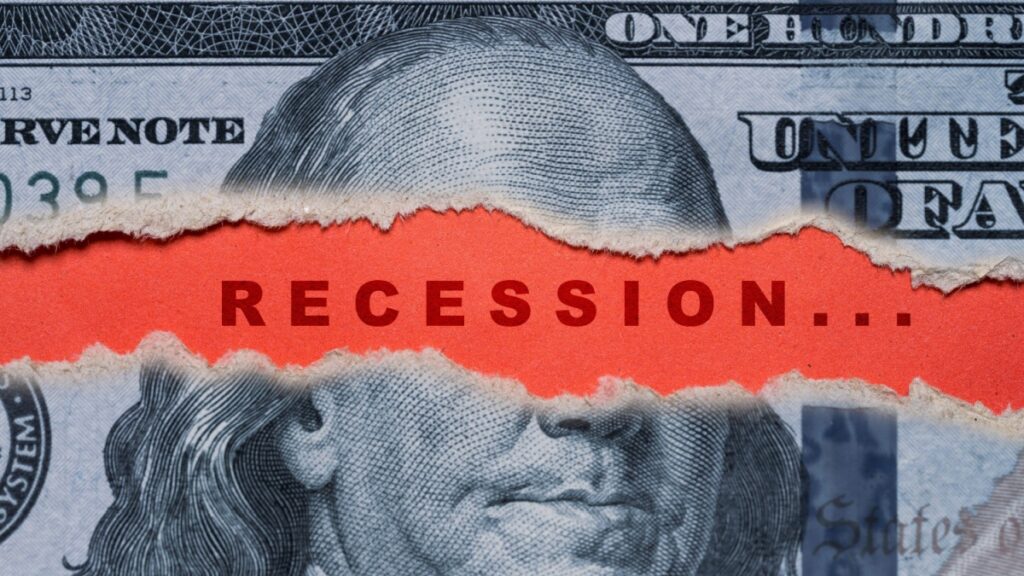
Although Trump’s tariffs may bring limited manufacturing back to the United States, American consumers will be paying much more than they realise, and force other countries to turn to China – the opposite of what Trump wants to do.
This was explained to Daily Investor by International trade law expert and extraordinary lecturer at the University of Pretoria Dr Gustav Brink.
Just hours after levies against over 50 of America’s trading partners came into effect, United States President Donald Trump announced a 90-day pause for countries hit by higher United States tariffs.
In a dramatic change of policy, Trump said he was authorising a universal “lowered reciprocal tariff of 10%” as negotiations continued.
However, at the same time, Trump escalated the trade war with China and increased the country’s tariffs on imported goods to 125%, accusing Beijing of a “lack of respect” after it retaliated by saying it would impose tariffs of 84% on US imports.
The state of this trade war with China and the rest of the world remains to be seen.
“Already, Trump is on the back foot, with the 90-day pause just announced,” Brink said.
“He is now full of bravado, indicating that it was the plan all along, but two days ago, he was adamant he would not back down.”
Brink explained that Trump was effectively forced to back down because some of his economic advisers might have convinced him that the United States consumers were actually the people suffering the most.
That means that keeping his initial tariffs in place could lead to a massive voter reversal next year, which might cost him both the House and Senate.
Brink explained that tariffs are taxes on imported products, and somebody has to pay those taxes. “The importer can only absorb part of the tax, so most of that will be passed on to the consumer,” he said.
What Americans will really be paying
Brink said most illustrations of the impact on consumers are too simplistic.
“They indicate that a product that now costs $100 and that attracted a duty of $10 and now a duty of $30 will increase from $110 to $130 when sold to the consumer,” he said.
“However, in both South Africa and the US, duties are calculated on the free on board (FOB) price, that is, the price once a product has been laded (not loaded) onto a ship in the harbour in the exporting country.”
Most countries, including the EU, levy duties on the cost, insurance, and freight (CIF) price, which is the price in the harbour in the importing country, thus including freight and insurance costs.
“Then there are the importer’s own costs, such as transport from the importing harbour to the warehouse, warehousing costs, overheads, etc,” Brink added
Thus, he said the actual calculation would look more like the following:
- FOB price 100, duty 10, freight & insurance 10, importer’s cost 20, importer’s profit 10 = 150.
“If the duty now increases to 30%, only the duty should increase, and the price to the consumer should increase to $170, an increase of 13.3%,” he explained.
“Of course, the importer can decide to decrease its profit and sell the product at $165. On the other hand, the importer can decide to maintain his profit margin percentage, in which case the selling price could become more than $170.”
“So, a lot depends on the current profit margin of the importer and the level of expenses the importer incurs after importation.”
If it is a raw material, such as hot-rolled steel, or an intermediate product, though, the final impact on the consumer will be much less.
Trump’s rationale behind these tariffs was to protect local industries and bring manufacturing back to the United States.
Brink said they will definitely move some manufacturing back to the United States or result in foreign companies, especially Chinese companies, investing in the US.
However, he warned this impact will be tiny compared to the trade deficit. “The United States will never again be a manufacturing country. Its costs are simply too high, and people are not interested in menial work,” he said.
Instead, the United States would be much better off to specialise in high-tech products and services to grow its economy.
“It would also be better to partner with your friends rather than to alienate them through tariff wars,” Brink said.
“The US has already lost most of its credibility in less than 90 days, and trust, once broken, takes a long time to rebuild.”
“Many countries, especially in Africa, Latin America and Asia, are now more likely to turn to China rather than the US, which is the exact opposite of what the US was trying to do.”




Comments