Finance Minister Enoch Godongwana set to drop the anchor


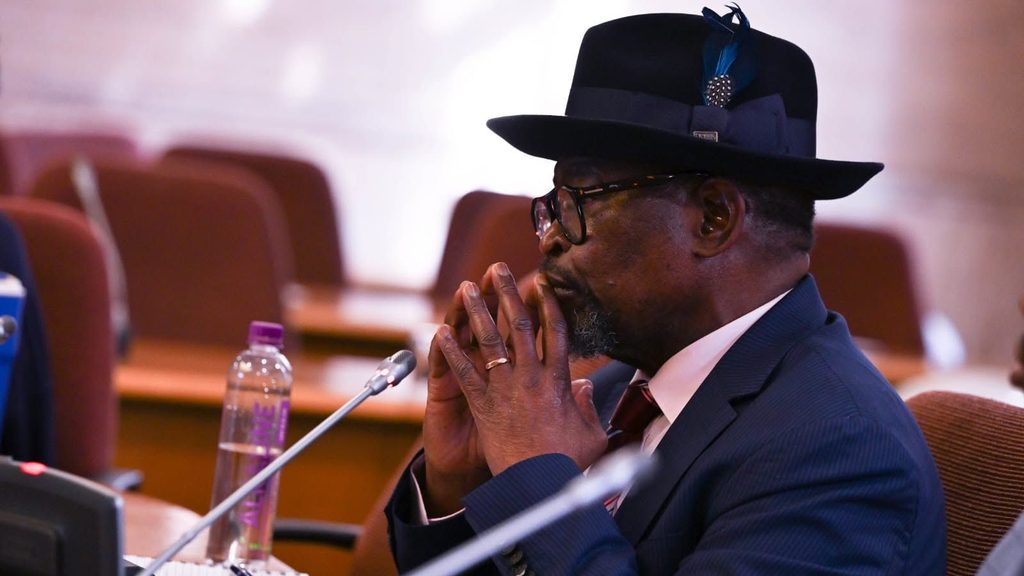
Finance Minister Enoch Godongwana is poised to unveil a fiscal anchor to entrench progress in repairing the nation’s public finances as the war in Iran puts those gains to the test.
In his medium-term budget update to lawmakers in Cape Town at 2 pm, Godongwana is widely expected to outline a framework to keep government debt on a sustainable path.
The plan would seek to turn stronger-than-expected revenue, contained spending and growing primary surpluses into lasting fiscal gains.
“While there is reason to be optimistic about the fiscal numbers, I think the real test will be whether National Treasury can demonstrate that the improvement is sustainable and underpinned by credible, enforceable fiscal discipline,” said Keabetswe Mojapelo, head of economic research at Old Mutual.
“Unless it is supported by a binding legal framework, ideally with constitutional protection, it risks becoming little more than a policy commitment that future administrations can amend at their discretion.”
Four of 10 economists polled by Bloomberg see the government introducing a fiscal rule targeting debt as a share of gross domestic product.
Three expect a combination of indicators, and the remainder anticipate that the main budget primary balance will be formally adopted.
The National Treasury has used the primary surplus, where revenue exceeds non-interest spending, as an informal fiscal guide since 2021.
In its February budget, Treasury forecast a fourth consecutive surplus of 1.6% of GDP in 2026-27.
It has also signalled reluctance to tie itself to a rigid numerical target and is working on legislation to enshrine sound fiscal principles in law and preserve the gains from consolidation without forcing sharp spending cuts or tax increases.
Most economists surveyed by Bloomberg expect the anchor to become legally binding by the end of 2028, constraining fiscal policy and increasing transparency and parliamentary accountability.
The framework would arrive at a turning point for South Africa’s public finances.
After years in which weak economic growth, persistent deficits and rising borrowing pushed debt higher, the Treasury is expected to show it has finally peaked.
Economists see gross debt declining to 77.5% of GDP this fiscal year from 78.9% in 2025-26.
They also predict the government will beat its February forecast for a consolidated budget deficit of 4% of GDP in 2026-27, projecting a shortfall of 3.8%.
They expect the Treasury will raise its 2026-27 gross tax-revenue forecast by R20 billion ($1.2 billion), helped by stronger mining receipts.
The analysts also see scope for the windfall to be used to reduce debt, boost infrastructure spending or provide further fuel-price relief as the wars in Ukraine and Iran strain global energy supplies and drive up local costs to record highs.
They anticipate the improving fiscal picture will be rewarded with credit-rating upgrades by next year, leaving South Africa one notch below investment grade. It could also lift investment sentiment.
The rand has gained almost 2% against the dollar since 1 October, among the best-performing currencies in emerging markets.
South Africa’s 10-year government yield has been steady at around 9%.
Even so, the Treasury is mindful of the pressure global turmoil is putting on the economy.
Surging energy prices have added to inflationary pressures and threaten economic growth.
The shock may force the Treasury to lower its GDP projections and reassess revenue forecasts, at a time when the boost from elevated commodity prices is also fading.
“The production side of mining has come off its highs,” said Frank Blackmore, an economist at KPMG, noting that higher tax revenue from elevated commodity prices won’t “be around for the rest of this year.”
Treasury had forecast economic growth of 1.6% in 2026. Maarten Ackerman, chief economist at Citadel, estimates it will expand just 0.8%.
Still, the fiscal starting point may prove stronger than Treasury anticipated in February, providing Godongwana with some cushion against the deteriorating global backdrop.
“Fortunately, despite all of that, it is potentially going to be much stronger than what they expected in February,” Ackerman said.
“They already started making adjustments to say you can’t expect the strong tax collection from specifically the commodities, the mining companies and the commodity cycle to continue.”