Woolworths Food goes from hero to zero


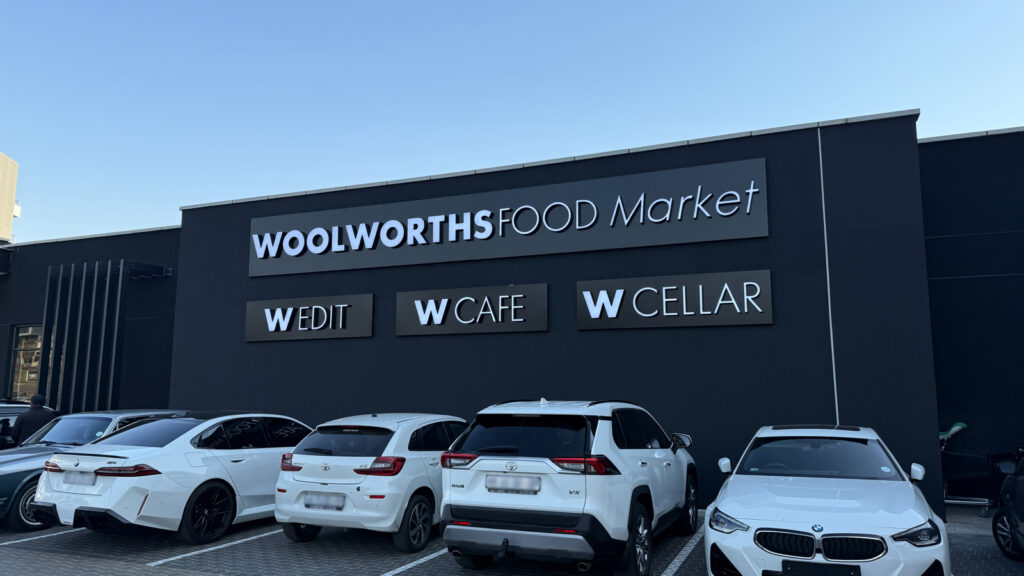
Woolworths Food, the crown jewel in Woolworths Holdings’ stable, has disappointed with the company’s latest results announcement.
The retailer has experienced a turbulent few years defined by missteps in Australia and the underperformance of its South African clothing division.
Woolworths’ disastrous 2014 acquisition of Australian department store chain David Jones was a drag on the company for years.
It was eventually sold at a significant loss in 2023. It was such a mess that Woolworths did its best to hide the financial details of the debacle from investors.
During these tumultuous years, there was one thing Woolworths shareholders could rely on: the food division.
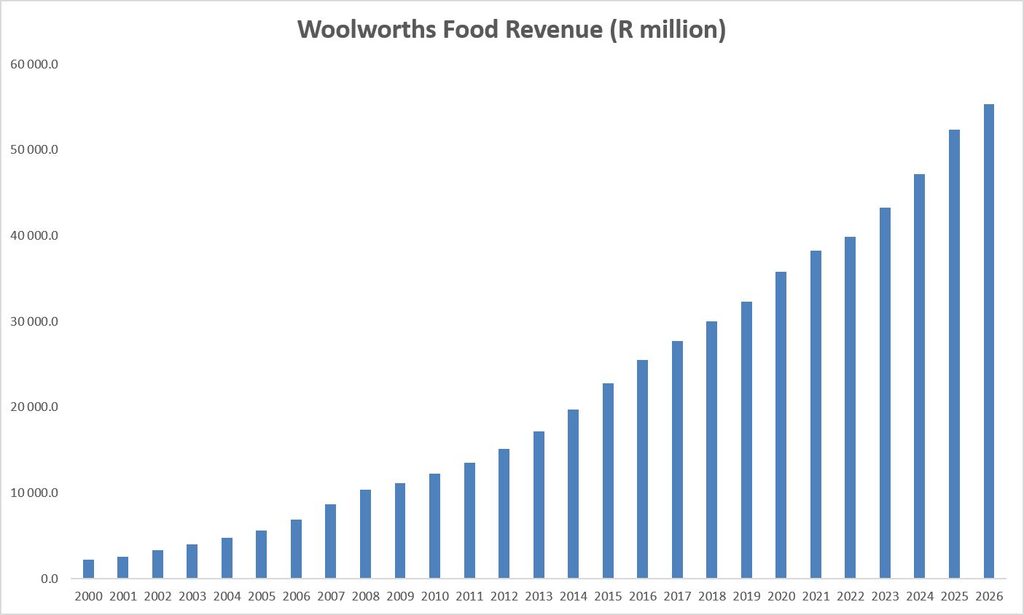
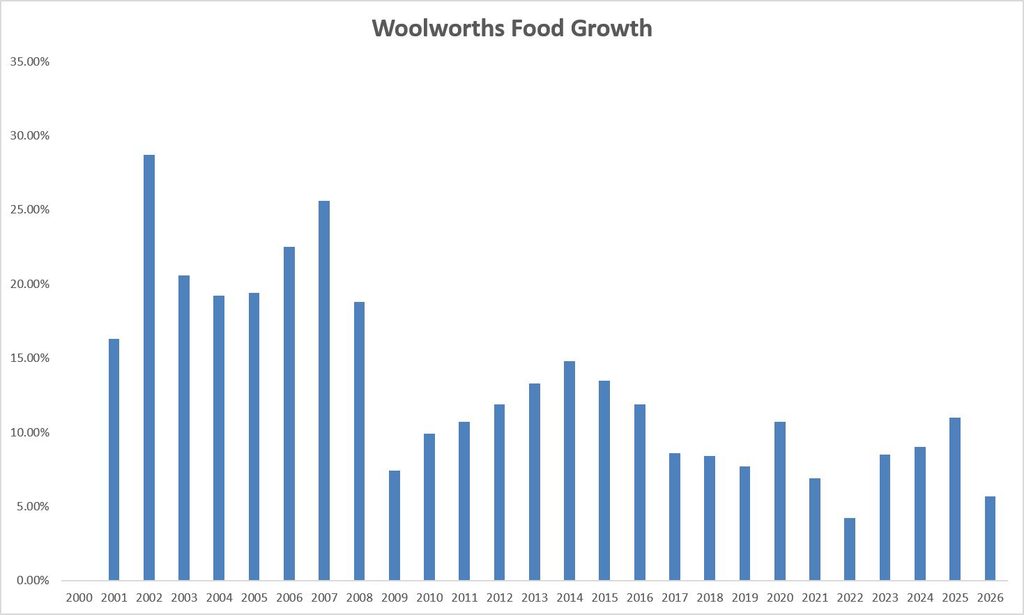
Woolworths Food grew revenue from R2.2 billion in 2000 to R54.4 billion in 2026, with no year of contraction.
The average annual growth rate for Woolworths Food between 2000 and 2026 was 13.3%, outperforming most other retailers in South Africa.
It was seen as untouchable in South Africa’s high-end food market, and for two decades it could not put a foot wrong.
It is such a fantastic business that many other retailers, including Checkers, Spar, and Pick n Pay, tried to enter this sector with their own high-end stores.
They achieved mixed results, but Woolworths Food remains the undisputed champion in the luxury food market.
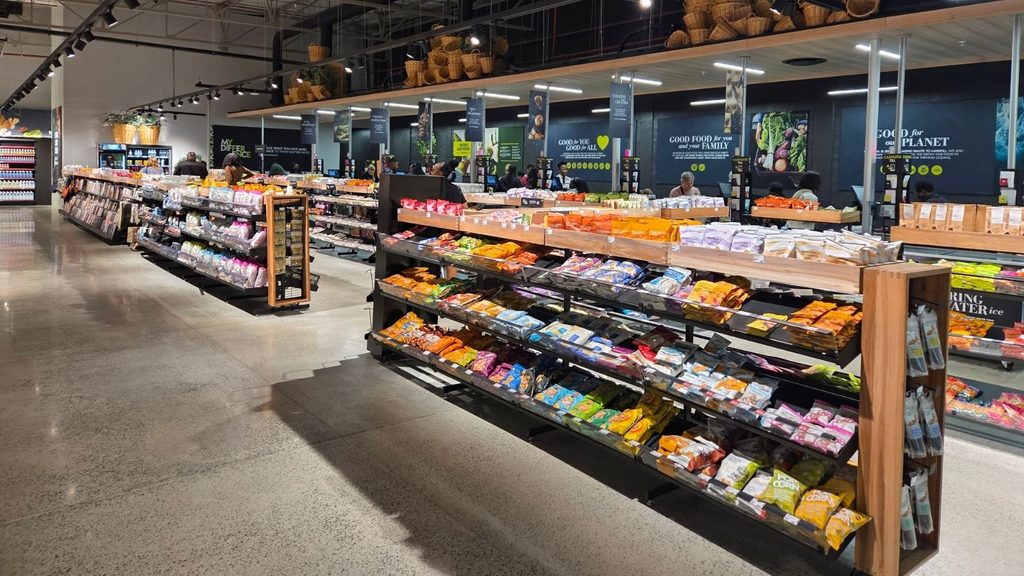
One of its biggest advantages is that, unlike other retailers that rely on third-party consumer brands, Woolworths Food is primarily a private-label business.
These private labels include many consumer favourites, such as Woolworths Chuckles and Woolworths Premium Ice Cream.
It has also captured the time-pressed, upper-income demographic with ready-to-heat meals and gourmet convenience ranges.
These top-quality products give Woolworths Food more price flexibility, allowing it to sidestep a price war with Checkers and Pick n Pay and achieve higher margins.
Woolworths Food cracks starting to show
For 25 years, Woolworths Food looked unshakable. However, this ended in the second half of the 2026 financial year.
It performed poorly during this reporting period, with sales growth declining by 4.4% due to poor performance in the electronics and grocery categories.
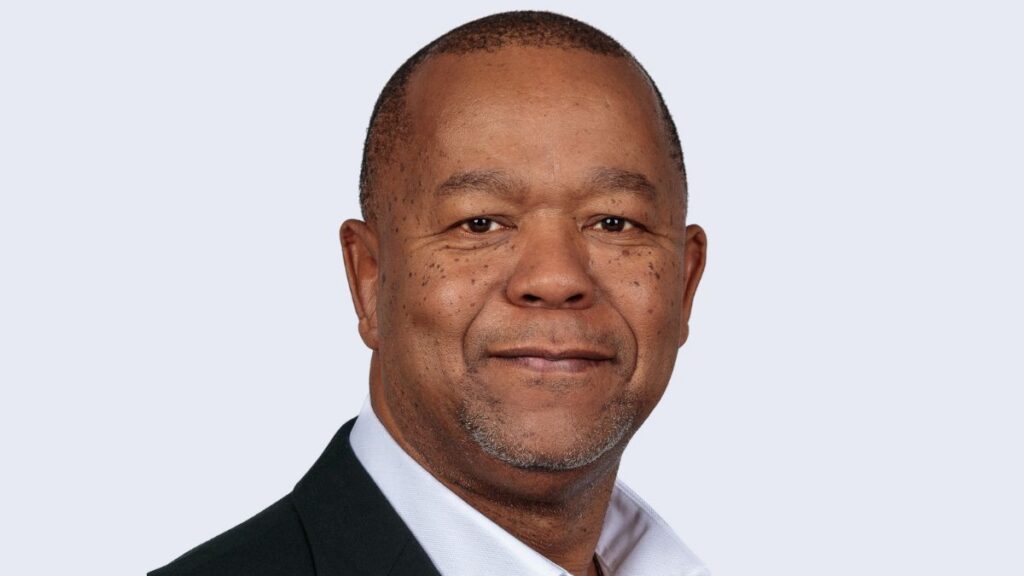
Woolworths CEO Sam Ngumeni admitted that volumes drive the Woolworths Food business, which means the issue had to be addressed.
“The problems were in our bakeries and produce. In produce, we have a closed group of suppliers that we buy from,” he said.
“Over the last six months, South Africa did not have the best weather, and we struggled with volumes from our suppliers.”
However, the problem was not the volume of products supplied. Instead, it was the quality of the products.
“We were uncomfortable with the quality of the products and, therefore, could not put these products on our shelves,” he said.
“I will make that call again. We cannot put a product on our shelves which is not of the quality which our customers expect.”
He said that they have worked with their suppliers to ensure a more predictable quality and a secure outcome in the future.
However, despite Ngumeni’s interventions, the latest Woolworths Food results were even worse than the second half of the 2026 financial year.
A trading update for the 19 weeks ended 8 November 2026 showed that Woolworths Food delivered sales growth of 1.9%, and 0.1% on a like-for-like store basis.
Price movement averaged 3.0% for the period, which means that Woolworths Food’s sales have declined again.
This shocked the market as it was always the division which carried the retailer, and the share price plummeted by 17% by the end of the week.
The company blamed high fuel prices, inflation, and interest rates, which it said continued to constrain consumer demand and discretionary spending.
However, a constrained consumer market is nothing new in South Africa and has been the norm for the past 15 years.
Analyst opinions about Woolworths
Schalk Louw, a portfolio manager and strategist at PSG Wealth, described the Woolworths results as concerning.
He said that in the past, Woolworths Food had always done well and was a solid, growing business.
In the latest trading statement, things changed. “The food side has stopped growing, expanding by just 0.1%,” he said.
“When you factor in the 3% price inflation we have seen in Woolworths Food, that means actual sales volumes have decreased.”
“That is really dangerous because the golden goose has suddenly stopped laying its golden eggs.”
Mark du Toit from Oyster Catcher Investments agreed, calling the trading update dismal with virtually no positive takeaways.
He added that revenue missed expectations across all divisions, alongside pressure in the Australian business.
Du Toit said another problem was that Woolworths is losing market share to Shoprite, attributing this to its inability to compete effectively against Checkers Sixty60.
Shane Watkins from All Weather Capital was more optimistic, saying people should give Ngumeni a chance to execute their turnaround strategy.
“It takes time for a new CEO to make an impact. He needs to identify issues, formulate a strategy, implement it, and report the numbers later,” he said.
“Because of the lag between strategy execution and financial results, investors must give Ngumeni a fair chance.”
Watkins credited the new CEO’s capital allocation approach, saying he is directing investment toward the highest-quality part of the business, Woolworths Food.
Woolworths Food revenue
Woolworths Food growth
Login or register for unlimited free access.






Conversation
11 commentsWoolworths leadership fell into the trap of aof believing their own advertising.. Their product range is too big, to fancy, too much. Their handling of the Chickles debacle made them look ruthless and the public noticed. They are trying to be all things to all people and are not succeeding.
I told them 35 years ago that they had lost the plot and they still have not learned.